Here is the honest verdict: mulch and compost are not competing for the same job, and the mulch vs compost question usually means someone is about to use one where they need the other. Mulch goes on top of soil to protect it. Compost goes into soil to feed it. If you had to pick just one for a struggling bed with mediocre soil, compost wins because it actually improves what is underground, but most established gardens end up wanting both.
The part almost nobody gets right is that mulch barely feeds your plants at all, no matter what the bag says. That surprises people who have been mulching for years thinking they were fertilizing.
There is also a specific situation where the usual advice flips completely, and it involves a plant disease you would not expect mulch to cause. Stick around, because the side-by-side card at the bottom is the one worth screenshotting before you buy either one.
The Key Differences That Actually Decide It
What Each One Actually Does
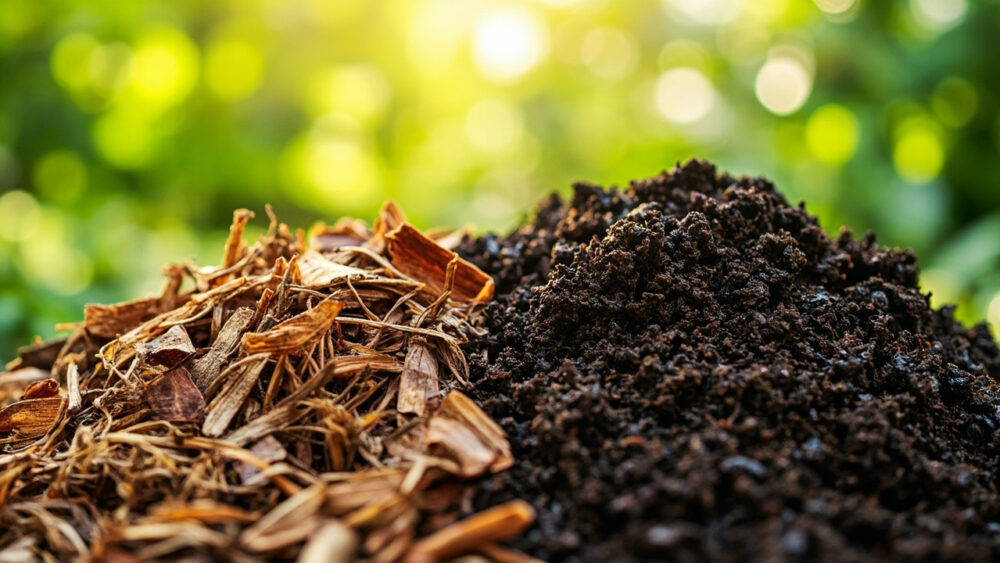
Mulch is a surface layer, wood chips, straw, shredded bark, dead leaves, that blocks weeds, holds soil moisture, and buffers soil temperature. Compost is decomposed organic matter, dark and crumbly, that you mix into soil or spread as a top-dress to add nutrients and improve soil structure.
Mulch protects. Compost feeds.
Nutrition
Compost is genuinely fertile. It carries nitrogen, phosphorus, potassium, and a wide range of trace minerals, plus billions of beneficial microbes that help roots access what is already in the soil.
Mulch made of bark or wood chips adds almost nothing nutritionally while it sits on top, and as it breaks down over a year or two it can actually tie up nitrogen at the soil surface temporarily. If your plants look hungry, compost is the fix, not mulch.
Moisture and Temperature Control
This is mulch’s real strength. A 2 to 4 inch layer cuts soil moisture loss dramatically and keeps root zones 10 to 15 degrees cooler in summer heat, which matters enormously for shallow-rooted plants like blueberries and hydrangeas.
Compost worked into soil improves water retention too, but it will not stop surface evaporation the way a mulch layer does.
Weed Suppression
Mulch smothers weed seeds and blocks the light they need to germinate. A thick enough layer, 3 inches or more, handles most annual weeds without any herbicide.
Compost does the opposite if you are not careful. Homemade compost that never got hot enough can be full of viable weed seeds, so spreading it can introduce a weed problem instead of solving one.
Cost and Effort
Bagged mulch runs cheaper per square foot than bagged compost in most regions, and bulk mulch delivered by the yard is the most economical way to cover large beds. Compost, especially quality bagged compost or worm castings, costs more per pound because it takes longer to produce and has more going on nutritionally.
If you make your own compost from kitchen scraps and yard waste, the math flips entirely in compost’s favor over time.
Now here is where the advice most people follow actually backfires.
When Mulch Is the Right Call
Reach for mulch when your soil is already decent and your real problems are weeds, moisture loss, or temperature swings. Perennial beds, shrub borders, and tree rings all benefit from a fresh mulch layer refreshed once a year.
New transplants need mulch immediately to protect fragile roots from heat stress and to cut down on watering frequency while they establish. Keep it pulled back 2 to 3 inches from stems and trunks, piling mulch against bark invites rot and rodents.
Vegetable gardens in hot climates lean on mulch hard through summer, straw and shredded leaves are the classic choices because they break down and add a little organic matter as a bonus.
Mulch is also the better call around plants sensitive to fungal disease if you use the right material, since some wood mulches actually suppress certain soil pathogens.
But there is one plant category where fresh mulch against the base causes the exact rot problem you were trying to avoid.
When Compost Is the Right Call
Compost is the answer whenever soil itself is the problem: compacted clay, thin sandy soil that drains too fast, or beds that have grown the same crops for years without amendment. Work 1 to 2 inches into the top 6 inches of soil before planting.
Vegetable gardens in particular are compost’s best use case. Tomatoes, squash, and leafy greens are heavy feeders, and compost mixed in at planting time plus a mid-season top-dress keeps them productive without synthetic fertilizer.
New beds and raised beds practically demand it. Compost is often 20 to 40 percent of a good raised bed mix because it provides both nutrition and the loose structure roots need to spread.
If a soil test or a simple squeeze test tells you your dirt is either bricklike or runs through your fingers like sand, compost is fixing the actual cause, not the symptom.
The real question most gardeners eventually ask is whether they even have to choose.
Can You Use Both?
Yes, and honestly this is how most experienced gardeners run their beds. The standard layering is compost first, worked into or laid on top of the soil, then mulch spread over that to lock in the moisture and block weeds while the compost does its slower work underneath.
Never bury compost under mulch expecting it to still act like mulch, and never expect mulch alone to feed a nutrient-starved bed the way compost will. They are stacked, not swapped.
One caution: keep both materials off direct contact with tree trunks and plant crowns. A compost or mulch volcano piled against bark holds moisture against the stem and invites rot and pests, regardless of which material you used.
Layered correctly, compost feeds the roots while mulch guards the surface, and that combination outperforms either one used alone.
The Verdict
If you are choosing one thing to buy this weekend and your soil is mediocre, buy compost, it is the only one of the two that actually changes what your plants are rooted in. If your soil is fine and your problem is weeds, water loss, or heat stress, buy mulch. Most gardens eventually need both, compost worked in once or twice a year and mulch refreshed on top, but when forced to pick a single winner for overall garden health, compost takes it because feeding soil beats merely protecting soil that was never fed in the first place.
Mulch vs. Compost at a Glance
- Main job: Mulch protects soil surface, Compost feeds and improves soil structure.
- Nutrition: Mulch adds little to none, Compost supplies real nitrogen, phosphorus, potassium, and microbes.
- Best use: Mulch for weed and moisture control on established beds, Compost for building or reviving soil.
- Application: Mulch spread 2 to 4 inches on top of soil, Compost worked 1 to 2 inches into the top 6 inches or top-dressed.
- Cost: Mulch cheaper per square foot in bulk, Compost costs more unless homemade.
- Weed risk: Mulch suppresses weeds, Compost can introduce weed seeds if not properly hot-composted.
- Placement caution: Both should stay a few inches clear of stems and trunks to avoid rot.
- Ideal pairing: Compost worked into soil first, mulch layered on top for moisture lock and weed block.
Keep this card handy the next time you are standing in the garden aisle deciding which bag to load into the cart.
Your soil will tell you which one it needs, you just have to look at it honestly first.