The real window for planting daylilies is anytime from about three weeks after your last spring frost through six weeks before your first fall frost, whenever the soil is workable and not soggy or frozen. Daylilies are about the most forgiving perennial you can plant, but that generous window hides one timing mistake that costs people a full year of bloom without them ever knowing why. There is also a signal in your own yard that matters more than any calendar date, and a follow-up question almost nobody asks until their new fan of leaves just sits there doing nothing.
Stick around and you will get all of that, plus a save-able Daylilies at a Glance card at the very bottom with the exact numbers for spacing, depth, and timing so you do not have to hunt through this page again on planting day.
The Actual Planting Window
Spring planting starts once the soil has warmed past about 50°F and dried out enough to crumble in your hand instead of forming a mud ball. That is usually two to four weeks after your last frost date, depending on how wet your spring has been.
Fall planting works just as well, sometimes better, and the cutoff is what people miss. You need roots established before hard frost, so stop planting when you are within four to six weeks of your average first fall frost date.
In much of zones 5 through 7, that gives you a spring window roughly mid-April through May, and a fall window roughly late August through September. Zones 8 and warmer can push planting into October and even November since the ground barely freezes.
Zones 3 and 4 gardeners have a tighter fall margin and should lean spring unless they can plant by early September.
That is the calendar answer, but your own yard has a better one.
How to Read Your Own Window, Not the Calendar’s
If you assumed the planting date on a calendar is the real signal, that guess is close but not quite right. Dig down four to six inches with a trowel. If the soil is cool, wet, and clings in a solid clump, wait, even if the calendar says you are in the window.
You want soil that breaks apart loosely and feels closer to room temperature than to cold tap water. A soil thermometer helps if you have one, but your bare hand tells you almost as much.
Sun matters too. Daylilies want six or more hours of direct sun to bloom well, so check the exact spot at the time of day you plan to plant, not just once in the morning.
Get the soil and light right and the exact week you plant becomes far less important than people assume.
What Too Early or Too Late Actually Costs You
Plant too early in spring, into cold, waterlogged soil, and the roots sit instead of growing. The fan may survive, but it stalls, and a stalled daylily often skips blooming entirely that first year.
Plant too late in fall, past that four to six week cutoff before frost, and the plant does not have time to grow anchoring roots before the ground locks up. Frost heave can push a shallow-rooted division right out of the soil over winter.
The honest answer to the question you are about to ask, which is why your new daylily looks fine but has not put up a single bloom stalk, is almost always timing, not disease or a bad division. A daylily planted even slightly outside its window frequently spends its first full season building roots instead of flowers. That is normal, not a failure, and it usually blooms on schedule the following year.
Knowing that in advance saves you from tearing out a perfectly healthy plant.
Prep to Finish Before the Window Opens
Loosen the bed to a full 12 inches deep if you can manage it. Daylily roots are thick, fleshy, and spread wide, and compacted clay stops them cold.
Work in two to three inches of compost across the planting area rather than just in the hole. Daylilies are not heavy feeders, but they do reward decent organic matter and drainage.
If you are dividing an existing clump, do it right before planting, not days ahead. Trim foliage back to about six inches and trim overly long roots to around eight to ten inches so they are easier to fan out in the hole.
- Have your planting site chosen and sun-checked in advance
- Amend and loosen the soil at least a few days before you plant
- Water the bed once before planting so it settles, then again right after
With the bed ready, the actual planting takes ten minutes.
Spacing, Depth, and the Planting Move Itself
Space daylilies 18 to 24 inches apart for standard varieties, since they will double or triple in clump size within two to three years. Miniature types can go as close as 12 to 15 inches.
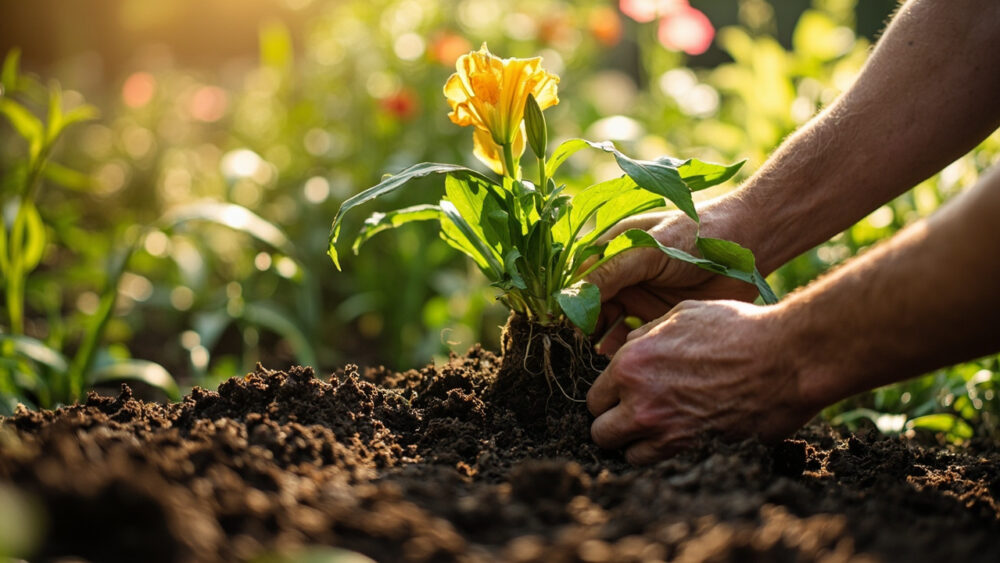
Dig a hole wide enough to spread the roots without bending them, and mound a cone of soil in the center. Set the crown, the point where roots meet leaves, right at or just barely below soil level.
Planted too deep, the crown can rot. Planted too shallow, it dries out and the fan struggles.
Backfill, firm the soil gently with your hands, and water thoroughly right away.
Once it is in the ground, the only real job left is patience through that first season.
Region and Zone Notes That Actually Change the Timing
Hot summer climates, zones 8 and 9 especially, often get better results from fall planting than spring, since a fall-planted daylily misses the brutal establishment stress of a first summer in 95°F heat.
Cold winter climates, zones 3 through 5, should treat fall planting as optional rather than default and lean toward spring unless the calendar clearly allows six full weeks before frost.
Wherever you garden, avoid planting during an active heat wave or right before a hard freeze, even if you are technically inside the window on paper. A day or two of patience on either end rarely costs you anything.
Everything you need for planting day is summed up below.
Daylilies at a Glance
- When to plant: three weeks after last spring frost through six weeks before first fall frost, whenever soil is workable, not cold and soggy.
- Soil temperature check: soil should feel cool to room temperature and crumble loosely, not cling in a wet clump, at four to six inches deep.
- Spacing: 18 to 24 inches apart for standard varieties, 12 to 15 inches for miniatures.
- Planting depth: crown level with or barely below soil surface, never buried deep.
- Sun needs: six or more hours of direct sun for good bloom.
- First-year expectation: stalled or absent bloom the first season is normal if planting timing was off, full bloom typically returns the next year.
- Zone notes: zones 8 and up favor fall planting, zones 3 to 5 favor spring unless six weeks remain before frost.
Get the soil feel right and respect that fall cutoff, and daylilies genuinely do the rest themselves.
Everything else about growing them gets easier once the timing is right.