Growing bonsai trees means starting with a young tree or rooted cutting, planting it in a shallow container with fast-draining soil, and shaping it over years through pruning, wiring, and controlled root restriction. There is no seed-to-tiny-tree shortcut worth taking. If you want to know how to grow bonsai trees successfully, the real answer is that you are managing a full-sized tree’s biology in a container the size of a cereal bowl, and almost every mistake comes from forgetting that.
Here is the thing nobody tells beginners: the tree does not know it is a bonsai. It still wants to send roots out three feet and push branches toward the sun. Your job is constant, patient redirection, not one clever trick that locks it into miniature forever.
Before you buy anything, you need to know which species actually tolerates this treatment, when to repot without killing it, and the one watering mistake that kills more bonsai than neglect ever does. Stick around for the save-able Bonsai Trees at a Glance card at the bottom, it has the numbers you will actually want pinned to your phone.
When to Start: Timing Depends on Your Material, Not the Calendar
You can start a bonsai project any time you bring home nursery stock, but the tree’s own dormancy cycle controls the risky work. For temperate species like juniper, maple, elm, and pine, do major root work and repotting in early spring, just as buds start swelling but before full leaf-out.
Tropical species (ficus, jade, Fukien tea) run on a different clock. Repot them when nighttime temperatures stay reliably above 60°F, since they do not have a true winter dormancy to protect them during root disturbance.
If you are collecting a tree from your own yard rather than buying stock, wait until the soil is workable but the tree is still leafless or just budding, typically 2 to 4 weeks before your last frost in temperate zones.
Get the timing wrong and the tree survives without complaint for months, then drops dead the following spring.
Choosing Your Tree and Preparing the Pot
Start with species forgiving of container life: Chinese elm, juniper, ficus, and Japanese maple are the classic beginner choices because they tolerate root pruning and recover fast from mistakes. Avoid starting with tropical rarities or anything labeled as needing specialist care until you have a season or two under your belt.
The pot matters more than people expect. A bonsai pot needs drainage holes you can actually see light through, not decorative slits. Depth should be shallow, roughly equal to the trunk’s diameter at the point it enters the soil for most styles.
Building the Right Soil
- Use a mix that drains in seconds, not minutes: equal parts akadama, pumice, and lava rock is the standard, or a coarse mix of fired clay granules and pine bark if those aren’t available locally.
- Skip regular potting soil entirely. It holds too much water and suffocates the fine feeder roots bonsai depend on.
- Screen out dust-fine particles before use, they clog drainage over time.
The soil you choose decides whether every future watering helps or hurts, which is exactly where most people go wrong next.
Planting Step by Step
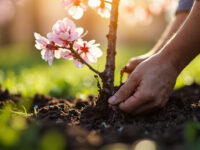
1. Remove and Inspect the Root Ball
Slide the tree from its nursery pot and gently rake out the growing medium with a chopstick or root hook. You want to see the actual root structure, not guess at it.
2. Prune the Roots
Cut back no more than one-third of the root mass on an established tree, focusing on thick, circling roots. Leave the fine, hair-like feeder roots alone, those are doing the real water and nutrient work.
3. Set the Tree in the Pot
Position the trunk off-center per classic bonsai composition, or centered if you’re keeping it simple for year one. The best root, thickest and most stable, should sit slightly toward the front.
4. Anchor and Backfill
Thread wire through the drainage holes and twist it over the root base to hold the tree firmly, since a wobbling tree cannot regrow fine roots. Work soil into every gap with a chopstick, no air pockets.
5. Water In Immediately
Water slowly until it runs clear from the drainage holes. This settles the soil around disturbed roots and removes trapped air.
The planting itself takes twenty minutes; the next six months of recovery decide if it worked.
Watering and Feeding Through the Season
If you assumed a fixed watering schedule keeps a bonsai alive, that guess kills more bonsai than drought does. Check the soil surface, not the calendar. Water when the top half-inch feels dry to a finger poke, which might mean daily in summer heat and every four or five days in cool weather.
Water thoroughly until it drains from the bottom every time, never a light sprinkle on top. Shallow watering trains roots to stay near the surface, which is the opposite of a healthy root system.
Feed with a balanced liquid or pellet fertilizer at quarter to half strength every 2 to 4 weeks during active growth, spring through late summer. Stop feeding entirely once a temperate tree drops leaves for winter dormancy, since pushing growth into a resting tree just wastes fertilizer and stresses roots.
Get the water right and you have solved most of what actually threatens this tree.
The Problems That Actually Take Down Bonsai
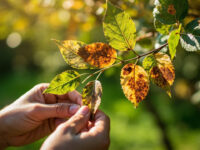
Root rot from overwatering is the number one killer, not underwatering like most beginners fear. Soggy soil that never dries between waterings suffocates roots and invites fungal decay, showing up as yellowing leaves and a trunk that feels soft or loose in the pot.
Spider mites and scale insects are the most common pests, visible as fine webbing or small bumps along stems. Treat with insecticidal soap or a horticultural oil, following the product label exactly for timing and reapplication.
Sunburn and windburn hit trees moved outdoors too fast after winter indoors. Harden off gradually over 7 to 10 days, increasing outdoor time a little each day rather than moving the pot straight into full sun.
- Yellowing lower leaves: usually overwatering or poor drainage, check soil mix first.
- Leaf drop with dry soil: underwatering, increase frequency and check pot size.
- Weak, leggy growth: insufficient light, most bonsai need several hours of direct sun daily.
- Trunk feels loose: root rot in progress, unpot and inspect immediately.
Catch these signs early and the tree bounces back within a season, which brings us to the part everyone wants to skip ahead to: actually shaping the thing.
When Shaping and Styling Really Begin
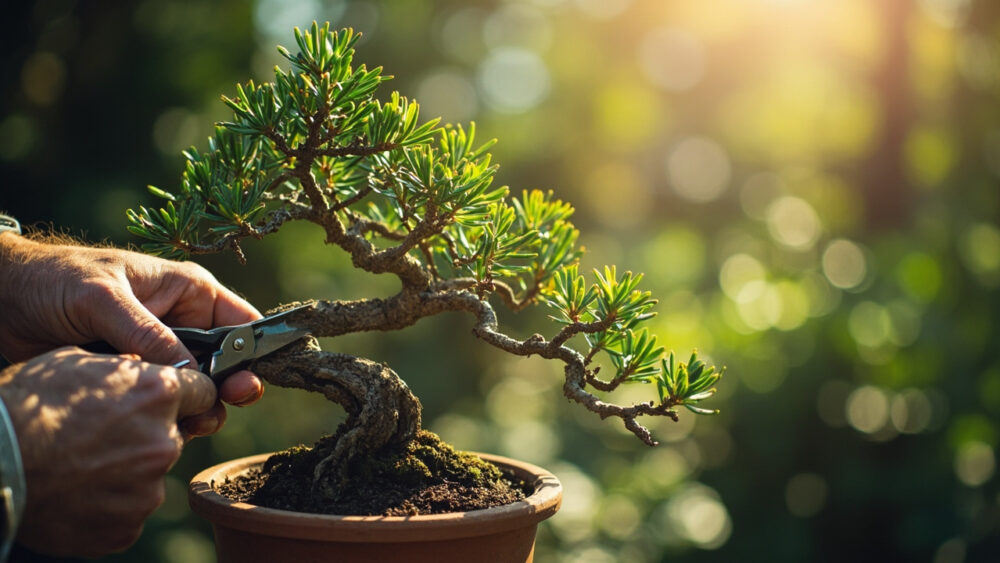
There is no harvest date on a bonsai, but there is a real maturity point where styling work becomes meaningful rather than premature. Wait until the tree has recovered fully from planting or repotting, usually one full growing season, before any heavy wiring or structural pruning.
Wire branches for shaping once they are pliable but not brand new, typically on second-year growth or older. Leave wire on 3 to 6 months for deciduous trees, up to a year for slow-growing conifers, and check every few weeks for wire cutting into bark as the branch thickens.
Light maintenance pruning, pinching new shoots and removing crossing branches, happens continuously through the growing season. The dramatic transformation people picture takes 3 to 5 years of consistent seasonal work, not one afternoon.
That patience is the actual craft, and it is also exactly what the at-a-glance card below helps you track.
Bonsai Trees at a Glance
- When to plant or repot: early spring at bud swell for temperate species, above 60°F nights for tropical species.
- Best beginner species: Chinese elm, juniper, ficus, Japanese maple.
- Soil needs: fast-draining mineral mix like akadama, pumice, and lava rock, never standard potting soil.
- Watering rule: water deeply when the top half-inch of soil is dry, never on a fixed schedule.
- Feeding schedule: balanced fertilizer at quarter to half strength every 2 to 4 weeks during active growth, none during dormancy.
- Biggest threat: overwatering and root rot, not underwatering.
- Time to real shaping: one full season of recovery before heavy wiring, 3 to 5 years for mature structure.
Master the drainage and the watering rhythm and everything else about bonsai becomes patience, not mystery.
Give the tree time you were not planning to give it, that is the whole secret.