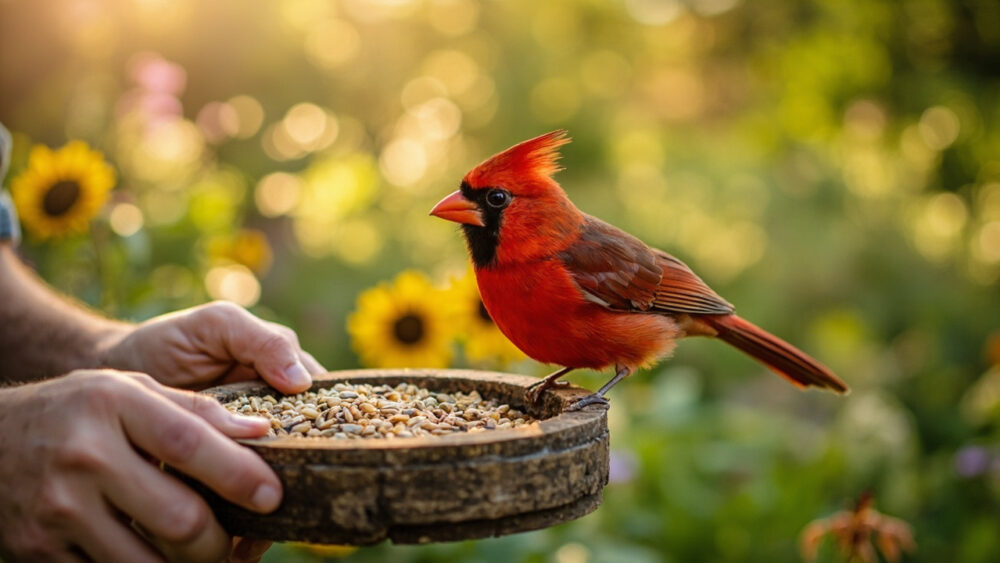
Cardinals show up where three things overlap: dense shrubby cover to hide in, black-oil sunflower seed or safflower seed at a sturdy feeder, and water they can actually reach without wading through open lawn. Get those three right and you will usually see cardinals within a couple of weeks if any live in your area at all. Get one wrong and you can fill a feeder with the best seed on the market and still watch it sit untouched.
Here is the part almost nobody expects: the feeder is not the thing that keeps them. It is the shrub six feet away that they trust. Cardinals are ground-and-cover birds at heart, not open-perch birds like finches, and most yards fail on cover long before they fail on food.
There is also a seasonal mistake that quietly wastes half the effort, a placement error that gets cardinals killed instead of fed, and an honest answer to “why did they visit once and never come back.” All three get fixed below, and the saveable Wildlife at a Glance card is waiting at the bottom once you have the full picture.
What Actually Draws Cardinals In
Cardinals key in on three things, in this order of importance: cover, food, water. Dense cover matters most because cardinals are a favorite target of hawks and outdoor cats, and they will not commit to a yard where the nearest hiding spot is more than a short flight away.
Native shrubs like viburnum, dogwood, winterberry holly, and even an overgrown privet hedge work because they branch thickly near the ground, not just up high. For food, black-oil sunflower seed is the reliable staple; safflower seed is the secret weapon because squirrels and grackles tend to leave it alone, so cardinals get more of it.
Millet and cracked corn scattered on the ground also pull cardinals down from cover, since they feed low far more than they feed at hanging tube feeders.
Cover gets them to stay, seed gets them to notice, and neither one works alone.
Setting Up a Yard Cardinals Will Actually Use
Start with a platform or hopper feeder, not a tube feeder. Cardinals have a heavier bill and a stockier body than finches or chickadees, and they feed more comfortably on a flat or semi-flat surface than clinging to a small perch.
Set it 4 to 6 feet off the ground and within 10 to 15 feet of dense shrub cover, close enough that a cardinal can dash to safety in under two seconds if a hawk shadow crosses the yard.
Add a second, low feeding station on the ground or on a wide flat rock, since cardinals often prefer feeding at or near ground level, especially early and late in the day. A shallow birdbath 1 to 2 inches deep, placed within sight of the shrub line, rounds out the setup.
Moving water, even a simple drip or small solar fountain, pulls in far more birds than still water because they can hear it from a distance.
The setup is only half the job, and timing decides whether it works this month or three months from now.
Timing: The Mistake That Wastes an Entire Season
Most people put out a feeder in spring expecting quick results, then give up by summer when nothing changes. Here is the honest answer: late fall through winter is when new feeders get discovered fastest, because natural seed sources are thinning out and cardinals are actively searching for reliable food.
Spring and summer cardinals are often busy nesting and feeding insects to chicks, so they visit feeders less predictably even in yards they already know.
If you are starting from scratch, set up your feeder and water source in October or November, ahead of the first hard frost in your area. By the time nesting season starts in spring, the pair will already consider your yard part of their territory, and that is when you start seeing them daily instead of occasionally.
Planting the shrubs themselves is its own timeline: fall or early spring, while the ground is workable and temperatures are cool, gives roots time to establish before summer heat or winter freeze stresses a young plant.
Get the calendar right and the next mistake becomes much easier to avoid.
The Mistakes That Quietly Undo the Effort
The single biggest yard-killer is feeding without cover. A feeder sitting in the open middle of a lawn, however well stocked, asks a cardinal to expose itself to predators every single visit, and most will simply skip it.
Placing the feeder too close to windows is the second costly error, and it is the one that actually gets birds hurt. Cardinals are notorious for window strikes during breeding season when males see their own reflection as a rival. Keep feeders either right against the glass (within 3 feet, so they cannot gain strike speed) or well past 10 feet away, never in that dangerous middle zone.
Mixed birdseed with a lot of filler like milo or wheat is a slow-motion mistake. Cardinals will pick out the sunflower and safflower and leave the rest to rot or mold, which can actually make sick birds sicker.
Free-roaming outdoor cats undo everything else on this list, since cardinals that feed low and nest low are especially vulnerable to them.
Fix the placement problems and the last piece is simply keeping it consistent.
Keeping It Working Long Term
Cardinals can live 3 years or more in the wild and tend to stay loyal to a territory once they settle into one, often returning to the same yard year after year if conditions stay good.
Consistency matters more than quantity. A feeder that goes empty for two weeks teaches cardinals to look elsewhere, and rebuilding that trust takes far longer than maintaining it would have.
Clean feeders every 2 to 4 weeks with a diluted vinegar or mild soap rinse to prevent mold and bacterial buildup, especially in humid weather. Let shrubs grow a little wild rather than pruning them into tight, see-through shapes; density is the whole point.
Leave some fallen seed heads and leaf litter under shrubs through winter instead of a full fall cleanup, since that layer holds insects and seed that cardinals forage through on their own.
Do all of this consistently for a full year and you stop attracting cardinals and start hosting a resident pair.
Wildlife at a Glance
- Best food: black-oil sunflower seed and safflower seed on a platform or hopper feeder, plus millet or cracked corn scattered at ground level.
- Feeder height and placement: 4 to 6 feet off the ground, within 10 to 15 feet of dense shrub cover, either against a window or more than 10 feet from any window.
- Cover that works: dense native shrubs like viburnum, dogwood, winterberry holly, or a thick overgrown hedge, branching low to the ground.
- Water setup: a birdbath 1 to 2 inches deep with moving water if possible, placed in sight of shrub cover.
- Best time to start: late fall through winter, ahead of the first hard frost, so the yard is established before spring nesting season.
- Shrub planting window: fall or early spring while soil is cool and workable.
- Maintenance rhythm: refill feeders consistently, clean every 2 to 4 weeks, and skip aggressive fall cleanup under shrubs.
Cover gets cardinals to trust a yard, food gets them to visit, and consistency is what turns a visit into a home.
Get those three in the right order and the rest takes care of itself.