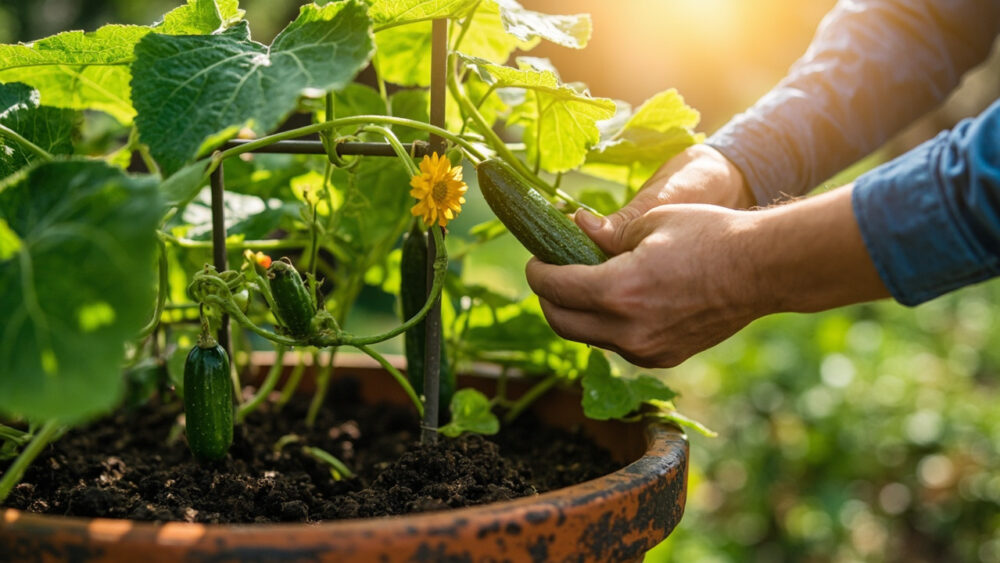
You can absolutely learn how to grow cucumbers in containers, and the short version is this: use a pot at least 5 gallons per plant (bigger is better), pick a bush or compact vining variety, give it 6 to 8 hours of direct sun, and keep the soil evenly moist. Do that and you’ll be picking cucumbers 50 to 70 days from planting. Miss any one of those four things and the plant will limp along all summer instead of producing.
Most container cucumber failures trace back to one mistake, and it’s not watering or fertilizer. It’s the pot itself, too small, too dark, drying out twice a day in July heat until the plant just stalls. There’s also a sign almost everyone misreads on their vines partway through summer, and it looks like disaster but usually isn’t.
Stick with me and I’ll walk you through the whole thing, planting through harvest, including the pollination question every container grower eventually asks. There’s a save-able Cucumbers at a Glance card at the very bottom with all the numbers in one place.
When to Plant Cucumbers in Containers
Cucumbers are heat lovers with zero frost tolerance, so timing matters more than most vegetables. Wait until soil temperature is consistently at or above 65 F, which usually lands one to two weeks after your last spring frost date. Cold soil just sits there and rots the seed.
Container soil actually warms faster than ground soil, which is one real advantage of growing this way. You can often plant a week earlier in a pot than in a garden bed, especially if you set the container on pavement or a deck that holds heat.
If you’re starting from transplants instead of seed, wait until night temperatures stay above 55 F before moving them outside permanently. A cold night or two won’t necessarily kill an established plant, but it stunts growth for a week or more, and cucumbers don’t forgive stalled starts easily.
Get the timing right and the next decision, the pot itself, is what actually makes or breaks the season.
Choosing the Right Pot and Soil
Here’s the mistake that sinks more container cucumber attempts than pests, disease, and bad weather combined: too small a pot. A 5-gallon container is the bare minimum for one plant, and I’d push for 7 to 10 gallons if you can manage it. Cucumber roots run deep and wide when they’re happy, and a cramped root zone means a plant that wilts by 2pm every single day no matter how much you water it.
Drainage holes are non-negotiable. Cucumbers hate wet feet almost as much as they hate drought.
Use a quality potting mix, not garden soil, which compacts hard in containers and suffocates roots. Mix in a couple of handfuls of compost for a nutrient head start.
Pick a spot with 6 to 8 hours of direct sun. Less than that and you’ll get a lot of leaf and very few cucumbers.
Pot and light sorted, now let’s get the plant in the ground, or rather, in the pot.
Planting Cucumbers Step by Step
Starting from Seed
- Sow seeds about 1 inch deep, 2 to 3 seeds per 5-gallon pot.
- Keep soil consistently moist until germination, which takes 3 to 10 days depending on soil temperature.
- Once seedlings have their first true leaves, thin to the single strongest plant per pot.
Starting from Transplants
- Dig a hole slightly larger than the root ball.
- Set the transplant at the same depth it was growing in its nursery pot, don’t bury the stem.
- Water in immediately and firm the soil gently around the base.
Either way, plan for a trellis or support from day one, even with bush varieties. A vertical cucumber plant takes up a fraction of the space, gets better airflow, and produces straighter fruit than one sprawling across your patio.
Support is up, seed or transplant is in, now the plant needs you to show up consistently for the next two months.
Watering and Feeding Through the Season
Container cucumbers are thirsty, more than almost any other vegetable you’ll grow in a pot. Check soil moisture daily once temperatures climb into the 80s, and expect to water every day, sometimes twice, in peak summer heat. Stick a finger 2 inches down; if it’s dry, water until it runs from the drainage holes.
Inconsistent watering is the direct cause of bitter cucumbers and misshapen fruit, so this is genuinely worth the daily attention.
Feed every 2 weeks with a balanced liquid fertilizer once flowering starts, since container soil runs out of nutrients fast with all that watering flushing them through. Before flowering, a lighter, less frequent feeding is fine, heavy nitrogen too early just grows leaves at the expense of fruit later.
Mulching the soil surface with straw or shredded leaves cuts your watering frequency noticeably and keeps roots cooler.
Get the water and food right and you’ve done most of the job, but a few problems still show up uninvited.
The Problems Most Likely to Strike
Powdery mildew is the one you’ll almost certainly meet eventually, a white, dusty coating on the leaves that shows up in humid weather or when plants get crowded with poor airflow. Space plants well, water the soil rather than the leaves, and remove badly affected leaves early. If it spreads, a fungicide labeled for powdery mildew on vegetables can help, follow the product label exactly.
Cucumber beetles, small striped or spotted yellow bugs, chew holes in leaves and can spread bacterial wilt, which will kill a plant outright with no cure once it takes hold. Floating row covers over young plants block them early, before flowers need pollinator access.
Now here’s the sign almost every new grower misreads. Midsummer, the lower leaves start yellowing and dying back while the top of the vine still looks lush and is still producing. That looks like disease or nutrient failure, and the instinct is to panic and dump on fertilizer.
Usually it’s neither. It’s the plant naturally retiring its oldest leaves as it pours energy into fruit production, completely normal aging, not a crisis. Trim off the dead lower leaves for airflow and keep going. The real warning sign is wilting that starts suddenly across the whole plant, especially on a well-watered day, which points to bacterial wilt or a root problem, not simple old age.
Handle the pests and read the leaves correctly, and you’re on the home stretch toward actual cucumbers.
When and How to Harvest
Most slicing cucumber varieties are ready 50 to 65 days from seed, pickling types often a bit faster, in the 50 to 55 day range. Harvest by size and firmness, not by counting days: slicing cucumbers at 6 to 8 inches, pickling types at 3 to 5 inches, both firm all the way through with no soft spots.
Color is a better cue than most people realize. A cucumber that’s turning pale yellow or dull has stayed on the vine too long and gone bitter and seedy. Pick a little early rather than late; you genuinely cannot undo an overripe cucumber.
Check plants every day or two once fruiting starts, since cucumbers can go from perfect to oversized in as little as 24 to 48 hours during a hot stretch. Cut them from the vine with scissors or garden snips rather than tugging, which can damage the stem and the fruit still forming behind it.
Regular picking is also what keeps the plant producing. A cucumber left to mature and yellow on the vine signals the plant that its job is done, and new flower production slows down fast.
That daily habit of checking and picking is the real secret to a long harvest window, not any fertilizer or trick.
Cucumbers at a Glance
- When to plant: soil at least 65 F, about 1 to 2 weeks after your last frost date.
- Pot size: minimum 5 gallons per plant, 7 to 10 gallons is better.
- Depth and spacing: seeds 1 inch deep, one plant per 5-gallon pot, give a trellis from day one.
- Sunlight: 6 to 8 hours of direct sun daily.
- Water: check daily in hot weather, water when the top 2 inches of soil are dry.
- Feeding: balanced liquid fertilizer every 2 weeks once flowering begins.
- Harvest: 50 to 65 days from seed, pick slicers at 6 to 8 inches, pickling types at 3 to 5 inches, firm and green, not yellowing.
If you remember one thing, remember the pot size and the daily water check, everything else is forgiving by comparison.
Skip a day of water in a heat wave and you’ll see it in the fruit within 48 hours, so make the check a habit, not an afterthought.