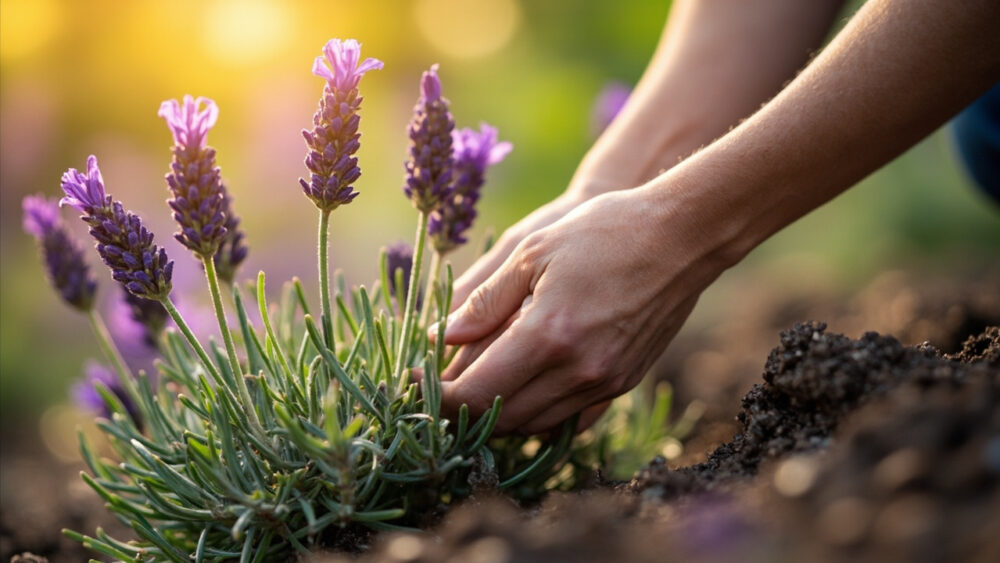
Growing lavender comes down to one non-negotiable: brutal drainage and full sun, more than any fertilizer or watering schedule you’ll read about. Plant it two to three weeks after your last frost once soil has warmed and dried out, space plants 18 to 36 inches apart depending on variety, and then largely leave it alone. If you’re wondering how to grow lavender successfully where other people’s plants have rotted out by August, the answer is almost always in the soil prep, not the care routine that comes after.
Here’s the mistake that kills more lavender than winter cold ever does: treating it like a normal garden herb and giving it rich soil, regular water, and a spot with afternoon shade. Lavender evolved on rocky Mediterranean hillsides. It wants to be a little neglected.
There’s also a sign most people misread completely, and a harvest timing question nobody answers clearly until their plant is already past its best cut. Both are coming up, and so is the save-able Lavender at a Glance card at the very bottom of this guide, the kind of thing worth screenshotting before you walk back outside.
When to Plant Lavender
Plant lavender in spring, two to three weeks after your last frost date, once the soil has warmed to at least 60°F and drained from winter wet. In mild-winter climates (roughly zone 8 and warmer), fall planting works too, giving roots a full season to establish before summer heat hits.
Cold, wet spring soil is worse than a late frost for lavender. Wait for dry ground even if that means planting later than your other herbs.
Lavender is reliably hardy in zones 5 through 9 depending on the variety. English lavender (Lavandula angustifolia) handles cold best; French and Spanish types are less winter-hardy and are often grown as annuals or containers north of zone 7.
Get the timing right and you’ve solved half the battle before a single root touches dirt.
Choosing the Spot and Prepping the Soil
Lavender needs six to eight hours of direct sun and soil that drains fast enough that water never puddles more than a few minutes after rain. If you have heavy clay, lavender will struggle no matter how sunny the spot is.
The fix isn’t compost, which is the guess almost everyone makes and it’s backwards here. Rich, moisture-holding soil is the enemy. Instead, work coarse sand or fine gravel into the top 12 inches, and if your soil is truly heavy clay, plant in a raised mound or bed instead of fighting the native ground.
Aim for a soil pH between 6.5 and 8.0. Lavender actually prefers slightly alkaline soil, which is one reason it thrives near old mortar, gravel driveways, and limestone.
Once the ground drains like a colander, you’re ready to actually put plants in it.
Planting Lavender Step by Step
1. Space plants correctly for their type
Compact English varieties go 18 to 24 inches apart. Larger French and Spanish lavenders, and hedge plantings, need 24 to 36 inches to allow airflow.
2. Dig a shallow, wide hole
Dig only as deep as the root ball, but twice as wide. Planting too deep traps moisture against the stem, which is a direct path to crown rot.
3. Set the crown at or slightly above soil level
The point where stems meet roots should sit level with, or even an inch above, the surrounding soil, especially in heavier soil.
4. Backfill with your amended, gritty mix
Firm it gently. Don’t stomp it down; you want air pockets, not compaction.
5. Water in once, then back off
Give it a thorough soak at planting to settle the roots, then let the top few inches dry before watering again.
Skip the mulch pile against the stems here, because that habit causes the next problem almost every new grower runs into.
Watering and Feeding Through the Season
Water new plants once or twice a week for the first month, checking that the top 2 inches of soil dry out between waterings. Once established, mature lavender wants water only every 10 to 14 days in summer, less if you get regular rain.
This is the sign everyone misreads: drooping or grayish leaves in July heat look like thirst, so people water more. Established lavender that’s overwatered shows almost identical wilting to lavender that’s underwatered. Check the soil before you reach for the hose. If it’s damp an inch down, the problem is too much water, not too little.
Skip fertilizer, or use it sparingly. A light dose of low-nitrogen fertilizer in spring is plenty. Rich feeding produces soft, floppy growth and fewer flowers, not more.
Keep mulch a few inches back from the stems, using gravel or light bark rather than heavy, moisture-holding mulch pressed right up against the crown.
Get watering right and you’ll mostly sidestep the diseases that take lavender down.
Problems Most Likely to Strike
The number one killer is root and crown rot from wet feet, usually showing up as blackened stems at the base and leaves that go from gray-green to brown seemingly overnight. There’s no reviving a plant once the crown has rotted through. Pull it and fix the drainage before replanting.
Woody, leggy growth with bare centers is the other common complaint, and it comes from skipping annual pruning, not from poor soil. Shear plants back by about a third each year right after the main summer bloom, cutting into the green growth but never into bare old wood, which most lavender won’t resprout from.
Watch for spittlebugs (small white foam masses on stems) and occasional aphids. Both are usually cosmetic and rarely need more than a strong water spray. If a fungal issue takes hold in humid climates, treat it with a fungicide labeled for the problem and follow the product label exactly.
Handle those two issues, drainage and pruning, and your plant should reward you with the harvest you actually clicked here for.
When and How to Harvest Lavender
Harvest when about half the flower buds on a spike have opened, not when the whole spike is in full bloom. That’s the honest answer to the timing question most guides dodge: cutting at full, showy bloom means the oils have already started to fade.
Cut in the morning after dew has dried, snipping stems with several inches of leafless stalk attached for bundling. Most lavender blooms once in early to mid summer, with some varieties offering a lighter second flush in late summer if you deadhead promptly.
Bundle stems with a rubber band and hang them upside down in a dark, dry, well-ventilated spot for two to three weeks. Darkness matters more than people expect. Direct light fades both color and fragrance fast.
That’s the whole cycle, and here’s the card that pulls it all together in one place.
Lavender at a Glance
- When to plant: Two to three weeks after your last frost, once soil hits 60°F and has dried out from winter, or in fall in zone 8 and warmer.
- Spacing: 18 to 24 inches for compact English types, 24 to 36 inches for larger French and Spanish varieties.
- Soil and site: Full sun, fast-draining gritty or sandy soil, pH 6.5 to 8.0, no rich compost.
- Watering: Every 10 to 14 days once established, checking that soil is dry an inch down before adding more.
- Feeding: Little to none, one light low-nitrogen application in spring at most.
- Pruning: Shear back by about a third after the main summer bloom, staying above old bare wood.
- Harvest: Cut in the morning when about half the buds on a spike have opened, then dry bundled upside down in a dark, ventilated spot for two to three weeks.
If you remember nothing else, remember this: lavender fails from kindness far more often than from neglect.
Give it sun, grit, and restraint, and it will outlast almost anything else in your garden.