Palm trees go into the ground once nighttime temperatures stay reliably above 55 F and the soil has warmed clean through, which for most people means late spring through summer, never right after a frost. Dig a hole no deeper than the root ball and about twice as wide, set the palm at the same depth it sat in the pot, and back off the fertilizer for the first month while roots establish. That is how to grow palm trees in one breath, but the details decide whether you get a thriving tree or a slow decline you won’t notice until it’s too late to fix.
Here is the mistake that sinks most first attempts: planting too deep. A palm buried even 2 to 3 inches below its original soil line will sit and sulk for years, sometimes rotting at the base before anyone figures out why. There’s also a sign almost everyone misreads, a palm that looks half-dead right after transplant, and the honest truth about whether your yard can even grow the kind of palm you’re picturing.
Stick with this and you’ll get all of it, including the mistake to avoid, the transplant scare that usually isn’t one, and a save-able Palm Trees at a Glance card at the bottom with every number in one place.
When to Plant a Palm Tree
Timing matters more with palms than with most trees because their roots need warm soil to initiate growth, and a palm planted into cold, wet ground just stalls. Wait until soil temperature is consistently above 65 F at a 6 inch depth, which usually lines up with several weeks past your last frost date.
In zones 8 to 11, where most cold-hardy and true tropical palms live outdoors year-round, late spring into midsummer is prime planting season. Give a new palm a full growing season to root in before its first winter; a palm planted in September has far less cushion than one planted in May.
If you’re in zone 7 or colder and eyeing a hardy species like windmill palm or needle palm, plant in spring only, never fall, so the root system has months to establish before cold hits.
Get the timing right and the next decision, where you actually put it, matters just as much.
Choosing the Spot and Prepping the Soil
Full sun is non-negotiable for most palm speciesat least 6 hours a day, though a few understory types like parlor palm or lady palm genuinely prefer filtered light. Check the mature spread before you plant, because a palm crowded against a foundation or power line becomes a removal project in 10 years, not a pruning project.
Drainage is the real make-or-break factor. Palms tolerate a wide range of soils but almost none tolerate standing water at the root zone.
If a test hole filled with water takes more than a few hours to drain, build a raised planting mound 6 to 8 inches high rather than fighting the native soil. Sandy, loamy soil with a handful of compost worked in is plenty; skip heavy manure or rich amended beds, since palms actually root better in leaner soil than gardeners expect.
Once the site passes the drainage test, it’s time to get the tree in the ground the right way.
Planting a Palm Tree Step by Step
1. Dig the hole to the right depth, not deeper
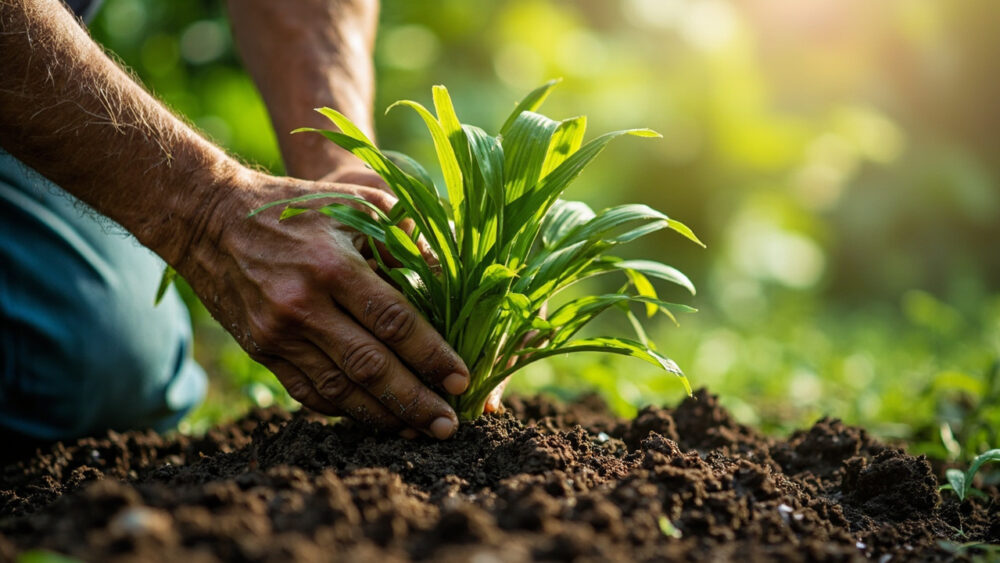
Dig only as deep as the root ball, never deeper. This is the single most common mistake, and it’s why so many new palms fail to thrive even in good soil. Planting too deep smothers the root initiation zone right at the base of the trunk, and that zone needs to breathe.
2. Widen it, don’t deepen it
Make the hole twice as wide as the root ball so the roots have loose soil to push into, but keep the bottom firm and undisturbed so the palm can’t settle downward after watering.
3. Set the palm at grade
The point where the trunk meets the root ball should sit level with, or very slightly above, the surrounding soil surface. A little high beats a little low every time, since settling always pulls it down slightly.
4. Backfill and water in stages
Fill halfway, water to settle out air pockets, then finish filling and water again. Skip the fertilizer at planting time entirely.
5. Stake only if truly needed
Spacing between palms depends heavily on species, but as a working range, give smaller clumping palms 4 to 6 feet and large single-trunk canopy palms 10 to 15 feet so their crowns have room at maturity.
Get the palm through planting day and the next few weeks are where most of the real anxiety happens.
Watering and Feeding Through the Season
Here’s the sign nearly everyone misreads: a newly planted palm often looks worse before it looks better, with browning on older fronds and a generally sad, droopy crown for the first several weeks. If you assumed that means the roots are dying, that guess sends people out to overwater a palm that’s actually fine.
What’s really happening is transplant shock, and it’s normal. The palm is rebuilding root mass before it pushes new growth, and the fix is patience, not more water.
Water deeply two to three times a week for the first month, letting the top few inches dry between waterings, then taper to once a week as roots establish. Feel the soil 3 to 4 inches down. If it’s still damp, wait.
Hold off on fertilizer for the first 4 to 6 weeks. After that, use a palm-specific fertilizer formulated with extra magnesium, manganese, and potassium, since palms are notorious for deficiencies in exactly those three nutrients. Feed lightly every 8 to 12 weeks during the growing season and stop by early fall in climates with real winter.
Once feeding is dialed in, the next thing to watch for is trouble showing up in the fronds themselves.
Problems That Actually Strike Palms
Nutrient deficiency, not pests, is the most common palm problem homeowners deal with. Yellowing or frizzled new growth at the crown usually points to a manganese shortage, often called frizzle top, while broad yellow bands on older fronds point to potassium or magnesium deficiency. A palm-specific fertilizer applied on schedule prevents most of this before it starts.
Overwatering and poor drainage cause root rot and trunk collapse, which shows up as a soft, discolored base and fronds that droop uniformly rather than just browning at the tips. There’s no reviving a palm once the trunk base has gone soft and mushy. At that point the honest move is to remove it and replant in better-drained ground.
Watch for these common pests and issues:
- Scale insects and mealybugs: show up as small bumps or cottony clusters on fronds and stems, treated with horticultural oil applied per the product label.
- Spider mites: cause fine speckling and webbing in dry, hot conditions, managed with regular hosing off and miticide only if the infestation is heavy.
- Ganoderma butt rot: a fungal disease showing conks (shelf-like growths) at the trunk base, with no cure once present. Remove the tree and do not replant a palm in that exact spot.
- Cold damage: browning and collapse of fronds after a hard freeze. Do not cut damaged fronds off until new growth confirms the tree survived, since they insulate the crown.
Get past the establishment period disease-free and pest-free, and the last honest question is when this thing actually starts producing anything.
When a Palm Tree Matures, Flowers, or Fruits
Here’s the part most guides skip: most ornamental palms grown in home landscapes never produce anything you’d call a harvest, and that’s fine, because people plant palms for the silhouette and the shade, not the crop. If you were hoping for a fruit-bearing timeline like an apple tree, that expectation needs adjusting now rather than three years in.
Palms that do fruit, like date palms or certain ornamental types, typically need 4 to 8 years from planting before they flower, and fruiting varieties need both a male and female plant nearby for pollination in most species. Growth itself is slow and steady. Expect roughly 6 to 24 inches of trunk height per year depending on species, climate, and how well-fed the palm is.
Maturity shows up as a full, symmetrical crown with fronds emerging in a regular rhythm rather than sporadic, stunted growth. That’s the real milestone to watch for, not a calendar date.
Everything you need to remember about growing one is right below, saved in one place.
Palm Trees at a Glance
- When to plant: late spring through summer, once soil at 6 inches deep stays above 65 F and nighttime temps hold above 55 F.
- Planting depth: same depth as the root ball, never deeper, with the trunk base level or slightly above the surrounding soil.
- Spacing: 4 to 6 feet for smaller clumping palms, 10 to 15 feet for large canopy species.
- Light and soil: full sun for most species, well-drained soil, raised mound if drainage is slow.
- Watering: deep watering two to three times weekly for the first month, tapering to weekly once established.
- Feeding: wait 4 to 6 weeks after planting, then use a palm-specific fertilizer with manganese, magnesium, and potassium every 8 to 12 weeks in the growing season.
- Maturity: full symmetrical crown and steady new frond growth, with fruiting varieties taking 4 to 8 years to flower.
Plant at the right depth and get the drainage right, and most palm problems never get the chance to start.
Everything else is patience, feeding on schedule, and resisting the urge to fuss over normal transplant droop.