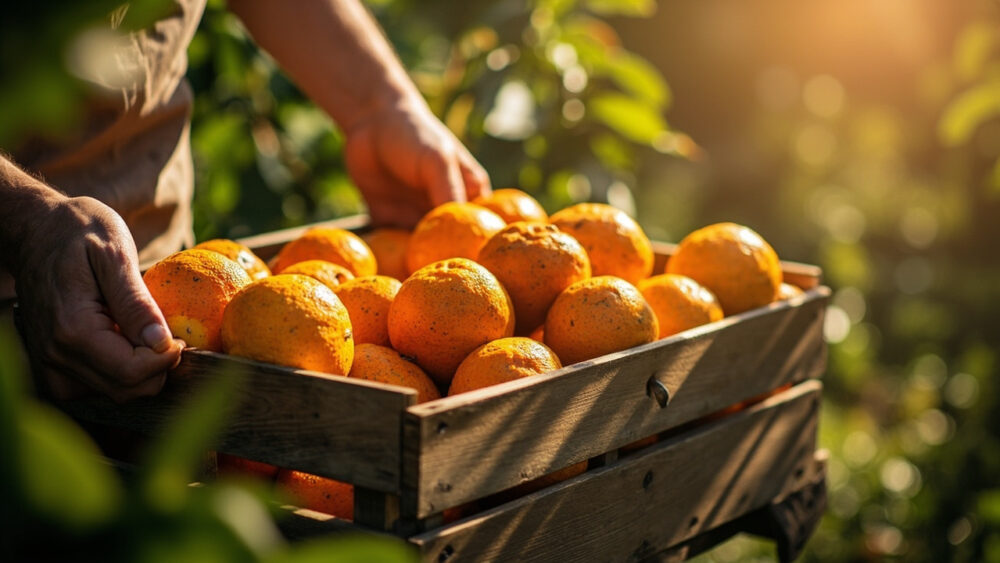
The right way to store oranges depends on how fast you’ll eat them. Loose on the counter, they hold about a week. In the crisper drawer of the fridge, unwashed and left slightly loose, they hold three to four weeks, sometimes longer for thick-skinned varieties like navels.
That part is simple. What trips people up is everything around it: the one prep step that quietly rots a whole bag from the inside, the “keeping them fresher” habit that actually starves them of air and speeds up mold, and the honest answer to the question you’re about to ask next, which is whether you can freeze them at all.
Stick around for the mistakes section, because it’s the difference between oranges that last a month and oranges that turn to mush in a week. And at the bottom, there’s a save-able Oranges at a Glance card with every number in one place.
The Best Method: Fridge, Loose, Unwashed
For anything beyond a few days, the fridge crisper drawer beats the counter every time. Keep oranges loose, not sealed in a bag, and don’t wash them until you’re ready to eat or juice them.
Set the drawer to high humidity if your fridge has that option. Oranges like moisture in the air around them, they just don’t like sitting in a puddle or a sealed bag where their own moisture has nowhere to go.
If your fridge doesn’t have a dedicated produce drawer, a mesh or perforated bag on any shelf works fine. The point is airflow.
Once you’ve got them settled in, the next question is how long you’re actually buying yourself.
How Long Oranges Actually Keep
On the counter, at normal room temperature, expect five to seven days before texture and flavor start sliding. Warmer kitchens shorten that.
In the fridge, unwashed and loose in the crisper, three to four weeks is typical. Thin-skinned varieties like clementines and mandarins run shorter, closer to two to three weeks, because their peel is a weaker barrier.
Frozen, oranges work but only in specific forms. Whole oranges freeze poorly, the flesh turns mushy and watery once thawed. Segments, juice, and zest freeze well, six to twelve months for juice and zest, about six months for segments packed in their own juice.
Cured isn’t really a thing for oranges the way it is for winter squash or onions, citrus doesn’t have a curing stage. Skip any advice that tells you otherwise.
That freezer answer is the one most people get wrong, and it’s worth unpacking.
The Freezer Question You Were About to Ask
If you assumed you could just toss whole oranges in the freezer like berries, that guess is what ruins a bag of good fruit. Whole citrus has too much water content locked in fibrous membranes, and freezing bursts those cells. Thaw one and you get a collapsed, weepy mess that’s fine for juicing under pressure but not for eating out of hand.
The move instead: peel and segment the oranges first, removing as much pith and membrane as you can. Lay segments on a tray to freeze individually, then bag them once solid.
Or skip segments entirely and just juice them, freezing the juice in an airtight container with an inch of headspace for expansion.
Zest freezes beautifully too, and it’s the easiest win in the whole list.
Prep is really where this whole process gets decided, so let’s back up to before anything hits the fridge.
Prep That Makes or Breaks the Batch
Do not wash oranges before storing them. This is the mistake almost everyone assumes is helpful and it’s actually the fastest way to shorten storage life.
Washing strips the natural wax and thin protective bloom on the peel, and it leaves surface moisture that invites mold, especially anywhere the fruit touches another orange or the side of a bag. Wash right before you eat or juice, never before storing.
Do a quick sort before they go in the drawer. Any orange with a soft spot, a bruise, or a break in the peel should be eaten first or set aside, because it will spread rot to its neighbors fast.
A single soft orange in a bag can take down the whole group within days, which brings us to what that spread actually looks like.
The Signs an Orange Has Turned
A truly spoiled orange is not subtle once you know what to look for. Soft, sunken patches on the peel are the first honest warning, especially near the stem end where moisture collects.
Fuzzy white, gray, or blue-green mold is a hard stop, discard that orange and check everything it was touching. Mold on citrus spreads through contact and through the air inside a closed bag faster than most people expect.
A fermented, boozy smell means sugars have broken down inside the fruit even if the outside still looks okay. That orange is done, even without visible mold.
Wrinkled, leathery skin isn’t spoilage, it’s just dehydration, and that fruit is usually still fine to eat, just less juicy.
Now for the habits that actually cause most of this in the first place.
The Mistakes That Ruin a Batch
If you guessed the biggest mistake was picking bad fruit at the store, that’s rarely it. Most ruined batches come from storage habits, not the oranges themselves.
- Sealing them in a plastic bag on the counter: traps moisture against the peel and accelerates mold within days.
- Washing before storing: strips the protective wax coating and adds surface moisture mold needs to start.
- Storing near bananas or apples: those fruits release ethylene gas that speeds ripening and softening in citrus nearby.
- Leaving one bad orange in the bunch: rot spreads through contact fast, especially in a sealed or crowded container.
- Stacking too many deep: the fruit at the bottom bruises under weight and starts breaking down first, out of sight.
Fix those five habits and you’ll get the full three to four weeks the fridge is capable of giving you.
Oranges at a Glance
- Counter storage: five to seven days at room temperature, away from direct sun and other ripening fruit.
- Fridge storage: three to four weeks, loose or in a mesh bag in the crisper drawer, unwashed.
- Freezer storage: whole oranges don’t freeze well, but segments and juice keep six to twelve months.
- Washing: never before storage, only right before eating or juicing.
- Best temperature: around 38 to 48°F for longest fridge life without chilling damage.
- Warning signs: soft sunken spots, visible mold, or a fermented smell mean it’s time to toss that piece.
- Keep away from: bananas, apples, and other ethylene-producing fruit that speed up softening.
Store them loose, unwashed, and cold, and sort out the weak one before it takes the rest down with it.
That’s really the whole trick, oranges don’t ask for much, they just punish shortcuts slowly enough that you don’t notice until the bag smells like a winery.