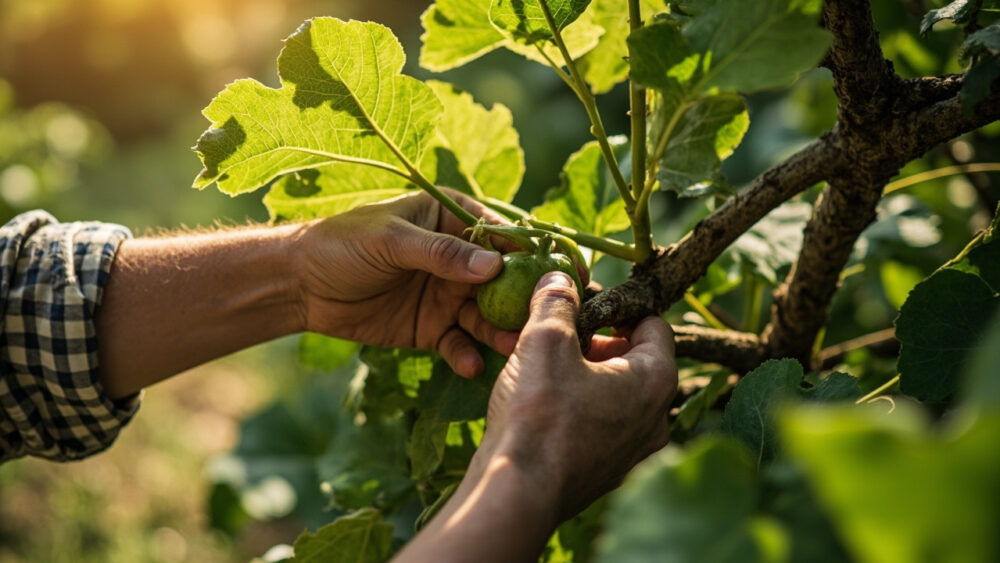
Fig trees want six to eight hours of direct sun, water only when the top two inches of soil dry out, and protection anytime temperatures drop below about 20°F for in-ground trees or 10°F for potted ones brought into shelter. Get those three things right and a fig is one of the easiest fruiting plants you can grow. Learning how to care for fig trees really does come down to sun, water discipline, and knowing when to intervene versus when to leave the tree alone.
Most people who kill a fig do it in one of two ways: they overwater a tree that’s actually dormant and thinks it’s winter, or they panic-prune a young tree right when it’s trying to set its first real crop. There’s also a sign almost everyone misreads completely backward, and it costs them a season of fruit without them ever knowing why.
Stick with me through the sections below and you’ll know exactly what your fig needs this week, not just in theory. At the bottom there’s a save-able Fig Trees at a Glance card with the numbers you’ll want to check again next month.
Light, Placement, and Temperature
Figs need full sunsix hours minimum, eight is better. A tree stuck in four hours of dappled light will survive for years without ever fruiting well, which confuses a lot of new growers who assume a living, leafy tree must be a healthy one.
Placement against a south-facing wall is close to ideal in cooler zones. That wall radiates heat back at night and can push your effective growing zone up by a full USDA zone.
In-ground figs handle short dips into the teens depending on variety and age, but sustained cold below 10 to 15°F kills wood back hard. Potted figs need to come into an unheated garage or basement once nights consistently drop below the low 20s.
Get the light right and the next question is almost always about the watering can.
Watering: How Much, How Often, and How to Tell
Water when the top 2 inches of soil are dry to the touch, then water deeply until it runs from the drainage holes or soaks well past the root zone in ground. That’s usually every 5 to 10 days in summer for potted figs, less for in-ground trees once established.
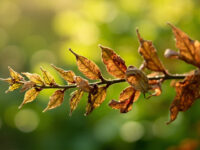
If you assumed yellow, dropping leaves mean the tree is thirsty, that guess is exactly backward for figs. Yellowing leaves that drop in clusters are the classic sign of overwatering, not underwatering. A fig would rather run a little dry than sit in soggy soil.
Underwatering shows up differently: leaves wilt, curl at the edges, and feel dry and papery before they drop. Fruit on a stressed tree will often shrivel and drop before it ripens, which is the heartbreaking version of this mistake.
Consistency matters more than volume. Wild swings between bone dry and drenched cause more fruit drop than either extreme held steady.
Once your watering rhythm is steady, the soil underneath it needs to be doing its job too.
Soil, Potting Mix, and Feeding
Figs want well-draining soil with a near-neutral pH, around 6.0 to 6.5. In pots, use a quality potting mix cut with 20 to 30 percent perlite or coarse sand so water moves through instead of pooling.
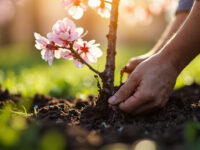
In the ground, amend heavy clay with compost before planting rather than trying to fix it later. Figs planted directly into wet clay routinely rot at the root collar within a year or two.
Feed lightly. A balanced, slow-release fertilizer in early spring as new growth starts is plenty for most trees. Heavy nitrogen feeding produces lush leaves, weak wood, and less fruit, which is the opposite of what most people are chasing when they reach for the fertilizer.
Potted figs need feeding more often than in-ground trees since nutrients wash out with every watering.
Feeding sets the stage, but it’s the seasonal tasks that actually shape the tree.
Pruning, Repotting, and Cleanup, and When to Do Each
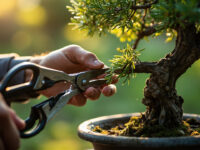
Prune in late winterwhile the tree is still dormant and you can see its structure clearly. Remove dead, crossing, or crowded branches, and shape young trees to an open center that lets light reach the interior.
Here’s the mistake that costs people their first real harvest: pruning hard in spring or summer after the tree has already broken dormancy. Figs set fruit on new wood, but aggressive cuts during active growth send the tree into repair mode instead of fruit production, and you lose the crop you were hoping to speed up.
Repot young trees every 1 to 2 years, mature potted figs every 3 to 4, always in early spring before growth resumes. Size up the container by only 2 to 4 inches in diameter each time; a fig given too much room too fast puts energy into roots instead of fruit.
Clean up dropped leaves and fallen fruit through the season. Rotting fruit on the ground is one of the fastest ways to invite the pests covered next.
Prune wrong and you lose a crop, but leave the tree alone at the wrong moment and pests take over instead.
Problems Most Likely to Strike, and the Honest Fixes
Fig rust shows up as yellow-brown spots on leaves in humid weather and causes early leaf drop. It rarely kills the tree, but it weakens it over successive years if ignored. Rake and destroy fallen leaves each fall and improve airflow around the canopy; a fungicide labeled for rust can help if you follow the product label exactly.
Root-knot nematodes and root rot are the two problems that can genuinely end a fig’s life, usually caused by poor drainage or reused infected soil. There’s no home fix for nematodes once they’re established. The honest answer is removing and replacing the soil, or the tree, rather than nursing it along indefinitely.
Spider mites and scale show up as stippled leaves or small bumps along stems, mostly on stressed or indoor trees. Insecticidal soap, applied per label directions, handles most infestations if you catch them early.
Fruit split after heavy rain is cosmetic, not fatal, and simply means picking that fruit sooner next time.
Most of these problems announce themselves in the leaves long before they touch the fruit, which is exactly where a thriving tree tells its story too.
How to Tell a Fig Tree Is Actually Thriving
A thriving fig pushes new leaves steadily through the growing season and holds them, glossy and deep green, without significant drop. New growth at the tips each spring is the clearest sign the tree is happy where it’s planted.
Here’s the part almost nobody expects: a fig that fruits heavily its first year in a new pot or location is often stressed, not thriving. Trees sometimes throw a survival crop under stress, then stall the following year once that energy is spent. Steady, moderate fruiting year over year is the real sign of a settled, healthy tree, not one enormous first-year flush.
Bark should be smooth to slightly rough, not cracked or oozing. Sap weeping from bark damage or splits usually points back to overwatering or frost injury, not disease.
If your tree is doing all of this, you’re past the hard part, and the card below is what to check when you start second-guessing yourself later.
Fig Trees at a Glance
- Light needed: six to eight hours of direct sun daily, less than four hours means little to no fruit.
- Watering: deep watering when the top 2 inches of soil are dry, roughly every 5 to 10 days in summer for pots.
- Soil: well-draining, pH 6.0 to 6.5, potting mix cut with 20 to 30 percent perlite or coarse sand.
- Feeding: light, balanced, slow-release fertilizer once in early spring, avoid heavy nitrogen.
- Pruning window: late winter only, while fully dormant, never during active spring or summer growth.
- Cold tolerance: in-ground trees handle brief dips into the teens, potted trees need shelter below the low 20s.
- Repotting: every 1 to 2 years for young trees, every 3 to 4 for mature ones, sizing up just 2 to 4 inches at a time.
If you remember one thing, remember this: figs fail more often from too much water and too much pruning than from neglect.
Give it sun, a steady drink, and a winter trim, and the tree will handle the rest itself.