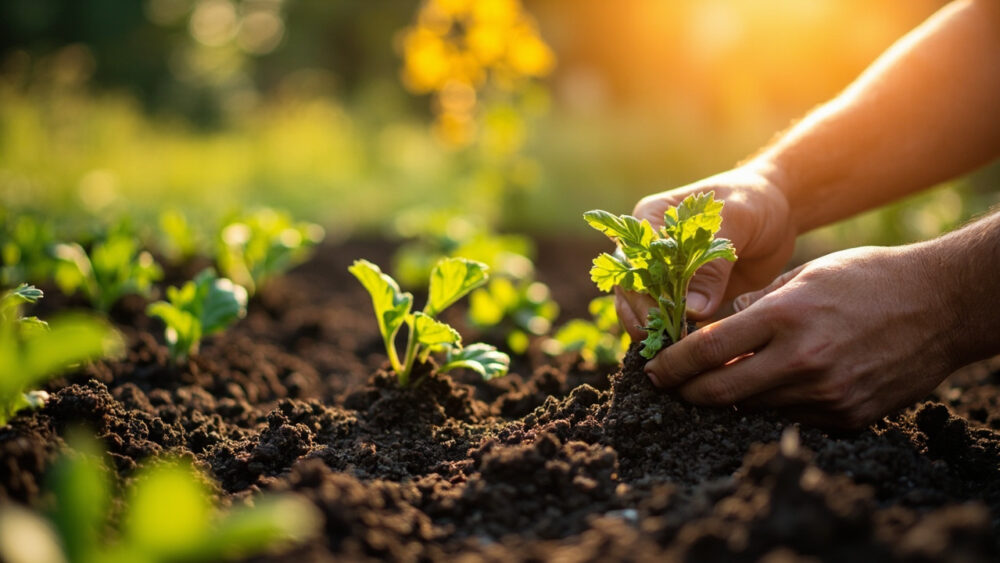
August splits into two completely different planting seasons, and confusing them is what wrecks most people’s fall gardens. Early August, while soil is still hot, is your last real shot at fast summer crops like bush beans and quick cucumbers. Mid to late August, once nights start cooling, is when you plant the fall garden proper: carrots, beets, kale, spinach, lettuce, and cool-season crops timed backward from your first frost date.
Here is the mistake that costs people the whole fall season: they plant everything the same week, treating August like one uniform window. It is not. Plant a heat lover too late and it never sizes up before frost. Plant a frost-tolerant green too early and it bolts or burns in the heat before it ever gets a chance to be a fall crop.
There is also a sign almost everyone misreads, a soil-temperature signal that looks like “too hot to plant” but is actually your green light for certain seeds. And there is an honest answer coming about whether you can still start tomatoes or peppers this month. Stick around, the full August at a Glance card is at the bottom, saveable in ten seconds and worth screenshotting before you head out to the garden.
The Real August Planting Window
Count backward from your first fall frost date, not forward from today. That’s the trick nobody explains clearly. Take the days to maturity on the seed packet, add 10 to 14 days as a fall slowdown buffer since cooler light means slower growth even for the same crop, and that total tells you the last safe planting date.
For a 50-day beet, with a first frost 70 days out, you’ve got room. For a 75-day cabbage, you likely needed to plant it weeks ago unless you’re setting out transplants instead of seed.
Early August, soil is often still 75 to 85°F, which is too hot for lettuce and spinach germination but perfect for beans, summer squash, and quick cucumbers if your frost date is late enough to let them finish.
The calendar says August, but your frost date is the only number that actually matters here.
How to Find Your Own Window, Not the Internet’s
Your yard’s window is not identical to your county’s average, and this is the part most guides skip. Microclimates shift things by two to three weeks in either direction.
Check these three things today:
- Soil temperature 2 inches down, midafternoon, using a simple soil thermometer or even a meat thermometer left in the ground for five minutes.
- Whether your planting bed sits in a low spot (frost pools there first) or against a south-facing wall (frost arrives there last).
- Your actual average first frost date from a local extension source, not a generic zone map, since two yards in the same zone can differ by weeks depending on elevation and airflow.
If your soil is still above 80°F at 2 inches, seeds like lettuce and spinach will sit there sulking or rot rather than sprout, that’s the misread sign. It looks like bad seed, but it’s just heat.
Once you know your real numbers, the early versus late question answers itself.
What Happens If You Plant Too Early or Too Late
Too early, in the heat, cool-season greens either fail to germinate or germinate weak and immediately bolt to seed once a warm spell hits, wasting the whole planting. Carrots and beets seeded into 85°F soil often germinate spotty at best.
Too late is the more common and more expensive mistake. A frost hits before the crop sizes up, and you’re left with baby carrots and half-grown kale that never gets a second chance. Unlike a lot of garden timing mistakes, this one is not really recoverable once frost hits.
The honest answer on tomatoes and peppers: starting them from seed in August is not realistic in most of the country, they simply need too many warm days left. If you’ve got 90-plus frost-free days remaining and a mild fall, a short-season pepper variety as a transplant can occasionally squeak by, but this is the exception, not the plan.
Guessing wrong here doesn’t just cost a few weeks, it can cost the entire crop.
Prep to Do Before You Plant a Single Seed
Pull whatever spent spring or summer crop occupied the bed, and don’t skip a light amendment even though it’s tempting to just tuck seeds in fast. Fall crops are shallow-rooted and want loose, fine soil.
Work in an inch of compost and break up any crust that formed over summer. If soil is still hot and dry, water the bed heavily two days before planting, then again right after, since cool-season seed germinates far better in evenly moist, cooling soil than in hot, dry crust.
A trick that actually works for beating the heat: shade the bed with a board or light row cover for the first 4 to 5 days after seeding greens, then remove it once seedlings emerge. It drops soil temperature just enough to trigger germination without smothering the sprouts.
Skip this step and you’ll blame the seed for what was really a soil problem.
Region Notes That Change Your Timeline
In the Upper Midwest and Northeast (roughly zones 3 to 5), your first frost often lands mid to late September through early October, so early August is your last call for anything with more than 60 days to maturity, and mid-August is for quick greens and radishes only.
In the Mid-Atlantic and much of the Midwest (zones 6 to 7), first frost typically runs mid to late October, giving you through mid-August for most fall crops and into early September for the fastest greens.
In the Deep South and coastal zones 8 to 9, frost may not arrive until November or later, so August is actually still summer-crop territory in spots, and you can push cool-season plantings into September and even October.
Your zone tells you the frost range, but your own soil thermometer still makes the final call.
August at a Glance
- When to plant fall greens: mid to late August once soil cools below about 75°F at 2 inches deep, or sooner with shade cover to help germination.
- When to plant quick summer crops: early August only, for bush beans, summer squash, and fast cucumbers, timed so they finish before your first frost.
- How to find your last safe date: take days to maturity, add 10 to 14 days for fall slowdown, and count backward from your local first frost date.
- Seeds to prioritize now: beets, carrots, kale, spinach, lettuce, radishes, turnips, and bush beans if your frost date allows.
- Prep before planting: add an inch of compost, water deeply two days ahead, and shade newly seeded beds for 4 to 5 days in hot weather.
- Biggest mistake to avoid: treating all of August as one window instead of two, which either bolts your greens or catches your beans in frost.
- Tomatoes and peppers from seed: not realistic in most regions this month, save that project for next spring.
Get the frost date and soil temperature right, and everything else in the fall garden falls into place on its own.
Plant by your own dirt, not the calendar, and August will treat you fairly.