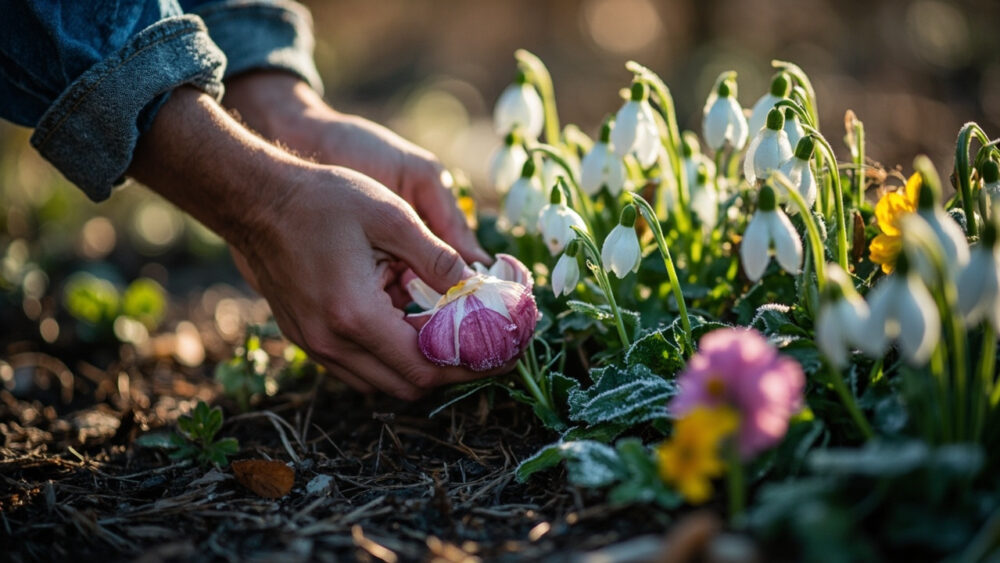
Yes, plenty of flowers bloom in winter, and depending on your zone and what you plant, you can have color from late November straight through March. Pansies, violas, camellias, hellebores, witch hazel, winter jasmine, and Christmas cactus all do their real work when everything else has shut down. The exact window shifts hard by zone though, and that’s the first loop worth untangling.
What counts as “winter bloom” in zone 8 is a different plant list than zone 4, and if you’re growing something in a pot indoors, the rules change again. There’s also a specific mistake that stops a lot of these plants from reblooming even when the plant itself looks perfectly healthy.
Stick with me and I’ll walk through the bloom window, what actually controls timing, how to coax out more flowers, why yours might be sitting there green and stubborn, and the aftercare that stretches the show. Save-able quick-reference card is waiting at the bottom.
How Long Winter Bloom Actually Lasts
Most true winter bloomers hold their flowers for six to ten weeks, though a few standouts go longer. Pansies and violas will flower on and off for the entire cold season in zones 6 through 9, pausing only during hard freezes. Camellias typically bloom for four to six weeks depending on variety, with sasanqua types starting earlier (November into December) and japonica types running later (January into March).
Hellebores are the marathoners: a single plant can stay in flower for two months or more, often pushing blooms right through snow cover. Witch hazel and winter jasmine tend to be shorter, three to five weeks, but they bloom when almost nothing else does, which is the whole point.
Indoors, a Christmas cactus or cyclamen will usually give you four to eight weeks of flowers if the room stays cool and bright.
That range is the baseline, but what actually sets the start date is more specific than “winter.”
What Controls When Winter Flowers Actually Open
Two things drive bloom timing far more than the calendar: night length and soil or air temperature. Many winter bloomers are triggered by shortening days, not cold itself, which is why a warm December can still see camellias flowering right on schedule.
Cold-hardy annuals like pansies actually need a cool snap to trigger heavy flowering. Plant them while it’s still warm and they’ll sulk, leggy and sparse, until temperatures drop into the 40s and 50s F.
Your zone sets the outer edges. In zone 9 and warmer, camellias and winter jasmine bloom nearly all winter with barely a pause. In zone 5 and colder, your realistic winter-bloom list shrinks to hellebores tucked against a warm wall, and indoor plants like cyclamen or Christmas cactus doing the heavy lifting.
Microclimate matters too. A south-facing wall, a spot out of the wind, mulch over the crown, all of that can push a borderline zone plant into reliable winter flowering.
So the same species can bloom on a completely different schedule ten miles away, and that’s exactly where reading your own yard comes in.
How to Get More Flowers, Not Just a Few
The single biggest lever is light. Winter sun is low and weak, so a spot that gets full sun in July might be shaded by a fence or neighboring building by December.
Move containers to the brightest available spot, even if that means chasing the sun to a different corner of the patio through the season. For in-ground camellias and hellebores, thin nearby shrubs if they’re casting new winter shade.
Feed lightly. A slow-release, phosphorus-leaning fertilizer applied in early autumn, before bloom set, gives plants the reserves to push a fuller flush. Don’t fertilize heavily once buds have formed, that just pushes leafy growth instead.
For pansies and violas specifically, deadhead spent blooms every week or two. It’s tedious but it’s the difference between a thin scattering of flowers and a solid mounded bed of them.
Get the light and timing right and you’ll have flowers, but there’s still one thing that stops even a well-placed plant cold.
Why Your Winter Bloomer Isn’t Flowering
If you assumed it just needs more water, that’s the guess that trips up most people, and it’s usually wrong. Overwatering a dormant-leaning winter bloomer is more likely to rot roots than encourage flowers.
The real culprits, in order of how often I see them:
- Not enough winter light, especially for camellias and Christmas cactus moved to a dim corner for the season
- Planted or potted too late to establish roots before the cold snap that triggers bud set
- Pruned at the wrong time, cutting off next winter’s buds during a spring or summer trim
- A late-fall warm spell that pushed buds too early, followed by a freeze that killed them
- Simply too young, since camellias and hellebores especially can take two to three years to bloom reliably after planting
Bud blast, where formed buds shrivel and drop without opening, is almost always a sudden temperature swing or a dry root ball right before freeze. Keep soil evenly moist heading into cold weather, not soaked, just not bone dry.
Once you’ve ruled those out, the last piece is keeping what you do get looking good as long as possible.
Deadheading and Aftercare That Stretches the Bloom
Deadhead anything with a soft, non-woody flower, pansies, violas, cyclamen, as soon as blooms fade. That signals the plant to keep producing instead of setting seed.
Leave camellia and hellebore spent blooms alone mostly, just tidy up any that turn brown and mushy, since heavy pruning on these is a spring job, not a winter one, and cutting now can remove next year’s buds.
Mulch two to three inches around the root zone of outdoor winter bloomers. It moderates soil temperature swings, which is the thing most likely to blast your buds overnight.
For indoor plants, keep them away from heat vents and drafty windows both. Stable temperature in the 55 to 65 F range extends bloom life more than any feeding schedule will.
That’s the full picture, now here’s the version you can actually save.
Winter: Quick Reference
- Direct answer: yes, winter bloomers exist and typically flower for six to ten weeks between late November and March, depending on species and zone
- Best cold-hardy annual: pansies and violas, blooming on and off all winter in zones 6 through 9, triggered by cool temperatures rather than hurt by them
- Best cold-climate shrub: witch hazel or winter jasmine, three to five weeks of bloom, hardy well into zone 4 to 5
- Best long-bloomer: hellebores, often flowering eight or more weeks, sometimes right through snow
- Main trigger: shortening day length and cooling soil, not the calendar date, so timing shifts by zone and microclimate
- Most common failure: insufficient winter light or a hard freeze right after a warm spell, not underwatering
- Biggest boost you can give it: the brightest available winter spot, light phosphorus feeding in early autumn, and weekly deadheading on soft-stemmed bloomers
Winter flowers reward the gardener who reads light and timing over the one who just waters more.
Pick the right species for your zone, and the color shows up right when you need it most.