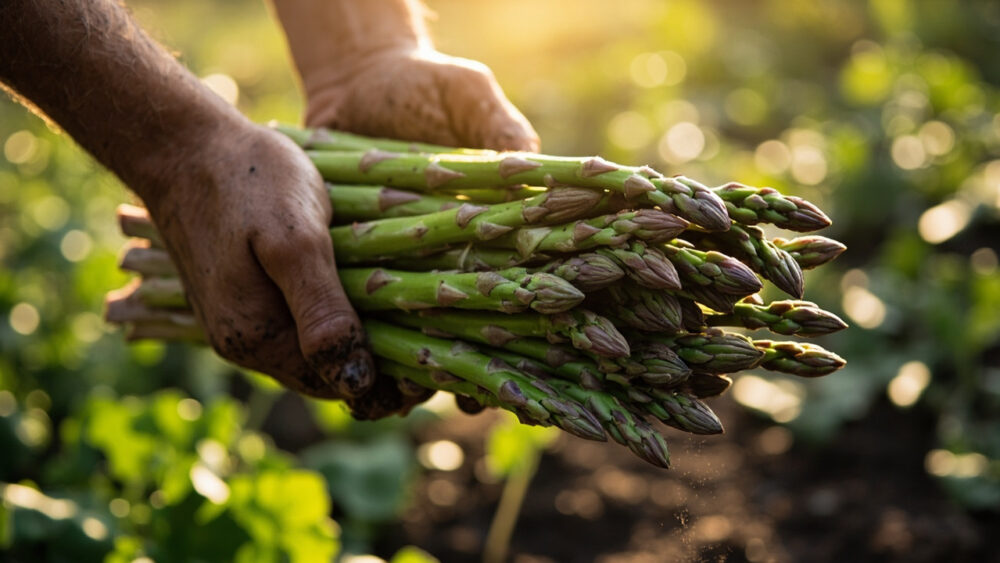
The best way to store asparagus is standing up in a jar with about an inch of water in the bottom, loosely covered with a plastic bag, in the fridge. Trim the stem ends first, treat it like a bouquet of flowers, and it will hold well for 7 to 10 days. Lay it flat in a crisper drawer wrapped in a damp paper towel and you are lucky to get four days before it turns limp and rubbery.
Most people get this wrong in one specific way that has nothing to do with water or wrapping, and it is the reason a beautiful bunch from the farmers market turns to mush by Wednesday. There is also a sign of spoilage almost everyone misreads as “still fine, just cook it fast,” when it actually means the asparagus is already past saving.
Stick around and you will get the full method, how long each storage option actually buys you, the prep step that either preserves or wrecks the spears, and a save-able Asparagus at a Glance card at the very bottom with every number in one place.
The Jar Method, Step by Step
Asparagus is a living stem that keeps trying to grow after harvest, which is exactly why the flower-bouquet approach works so well. Start by trimming about half an inch off the woody bottom ends with a clean cut, the same way you would refresh cut flowers.
Stand the spears upright in a jar or container with 1 to 2 inches of cold water in the bottom. Loosely drape a plastic bag over the tops, not sealed tight, just enough to hold humidity around the tips without trapping condensation.
Set the jar in the fridge, ideally somewhere it will not get knocked over. Change the water every two to three days, and re-trim the ends once if you notice the cut surfaces drying out or discoloring.
That single habit of standing spears in water is the difference between asparagus that is still snapping crisp a week later and asparagus that has gone soft and sad by day four.
How Long Asparagus Actually Keeps
Here is where the honest answer matters more than the optimistic one. Room temperature is a non-starter, asparagus left on the counter starts losing quality within hours and is noticeably tougher and more fibrous by the next day.
In the fridge, flat in a bag with a damp paper towel, expect 3 to 5 days before texture and flavor drop off. Standing upright in water, expect 7 to 10 days, sometimes longer with very fresh spears and a cold fridge.
Blanched and frozen, asparagus holds for 8 to 12 months, though texture softens noticeably once thawed, so it is best used in cooked dishes rather than anything meant to stay crisp.
Fridge-pickled asparagus, properly refrigerated in vinegar brine, keeps 2 to 3 weeks and often improves after the first few days as the flavor settles in.
None of those numbers hold up if the asparagus was already old when you bought it, which brings up the mistake almost nobody checks for.
The Prep Mistake That Ruins the Whole Bunch
If you assumed the biggest risk is forgetting to wash the asparagus before storing it, that guess is backwards. Washing asparagus before storage, then leaving it wet, is actually one of the fastest ways to bring on rot, since trapped moisture on the spears themselves (not the water in the jar) invites mold and slime within a couple of days.
Store it unwashed. Wash it right before you cook it, not before it goes in the fridge.
The real mistake that costs people a whole bunch is buying asparagus that was already several days old at the store or market and expecting fridge storage to reverse the clock. Storage slows decline, it does not undo it.
Check the cut ends when you buy: they should look freshly cut and moist, not dried, split, or grayish. Tips should be tight and closed, not splayed open or starting to flower, since open tips are the clearest sign the spear was harvested a while ago.
Good storage technique on already-tired asparagus just buys you a slightly slower path to the compost bin.
Should You Blanch Before Freezing
Yes, and skipping this step is the second most common way people ruin a batch. Blanching means dropping trimmed spears into boiling water for 2 to 4 minutes depending on thickness, then plunging them immediately into ice water for the same amount of time to stop the cooking.
Skip blanching and freeze raw spears straight into a bag, and you get asparagus that turns mushy, grayish, and off-flavored within a month or two, because the enzymes that cause breakdown are never deactivated.
After blanching, pat the spears dry, spread them on a tray to freeze solid for an hour or two, then transfer to a freezer bag with the air pressed out. This keeps individual spears separate instead of one solid frozen block.
Frozen asparagus never returns to crisp, so plan on using it in soups, stir-fries, or frittatas rather than expecting a side dish that snaps.
Freezer prep is forgiving on time but not on the blanching step itself, and that is where the next set of warning signs comes in.
The Sign of Spoilage Everyone Misreads
Most people watch for asparagus going limp and figure that is the point of no return. Limpness is actually an early warning, not the final verdict, and spears that have softened slightly but still smell fresh and green are often fine cooked into soup or a saute even if they will not hold up raw or grilled.
The sign that actually means “throw it out” is slime. A tacky, slick film on the spears, especially near the tips or cut ends, means bacterial breakdown has started, and no amount of trimming or rinsing reverses that.
Also watch for:
- A sour or ammonia-like smell, distinct from the mild grassy scent of fresh asparagus
- Tips that have turned dark, mushy, or have started to liquefy
- Spears that bend rather than snap, combined with any off odor
- Visible mold, which shows up as white, gray, or black fuzzy patches, usually starting at the cut ends
Slime and smell are the real deciding factors, not softness alone.
Knowing what ruins a batch matters as much as knowing what saves one, so here is the full list of habits to drop.
The Habits That Kill a Good Batch
A few small choices account for almost every disappointing bunch of asparagus, and none of them involve anything exotic.
- Storing it wet: washing before refrigerating traps moisture against the spears and speeds up rot
- Laying it flat and sealed: a fully sealed bag with no air movement encourages condensation and slime
- Ignoring the cut ends: dried out, woody bottoms mean the spear can no longer take up water even standing in a jar
- Freezing without blanching: skips the step that stops the enzymes responsible for mushy, off-flavored spears
- Buying old stock: splayed, flowering tips at the store mean the clock started days before it reached your fridge
- Forgetting the water change: stagnant jar water grows bacteria just as fast as a wet paper towel does
Fix those six habits and asparagus stops being a use-it-in-two-days vegetable and starts being one you can actually plan meals around for a week or more.
Asparagus at a Glance
- Best fridge method: trim stem ends, stand upright in 1 to 2 inches of water, cover loosely with a plastic bag, refrigerate.
- Fridge shelf life: 7 to 10 days standing in water, changing the water every 2 to 3 days, versus only 3 to 5 days wrapped flat.
- Freezer prep: blanch 2 to 4 minutes, ice-bath the same amount of time, dry, freeze on a tray, then bag.
- Freezer shelf life: 8 to 12 months, best used in cooked dishes since texture will not stay crisp after thawing.
- Wash timing: never before storing, always right before cooking, to avoid trapped moisture and faster rot.
- Signs it has turned: slimy film, sour or ammonia smell, mushy or dark tips, or visible mold at the cut ends.
- Buying fresh: look for moist, freshly cut ends and tight, closed tips, not dried or splayed ones.
Store it standing up, keep the ends fresh, and wash it only right before it hits the pan.
That alone will double how long your asparagus actually stays good.