Growing lotus means starting a dormant tuber in a heavy, undrained container of aquatic soil once water temperatures hold above 60°F, keeping that container submerged under 2 to 6 inches of water, and feeding it through a full frost-free season to get leaves the first year and blooms the second. That is the whole plan in outline. The details are where most people either get a thriving pond plant or watch an expensive tuber rot into mush.
Here is what nobody tells you upfront: the tuber looks dead when it is fine, and looks fine when it is already dying, and those two facts trip up almost everyone on their first try. There is also one planting mistake, made constantly, that snaps the growing tip clean off before the plant ever gets a chance. And if you are wondering why your lotus grew huge leaves last year but never bloomed, that answer is not what most guides tell you either.
Stick with me through planting, feeding, and troubleshooting, and I will hand you a save-able Lotus Plants at a Glance card at the very bottom with every number in one place.
When to Plant Lotus
Wait for warmth in the water, not just the air. Lotus tubers rot in cold, wet soil, so the safe window is two to three weeks after your last frost date, once water temperature is consistently above 60°F. In most of zones 4 through 10, that lands anywhere from mid-spring to early summer.
Planting too early is the single most common way people lose a tuber. It sits in cold water doing nothing but softening.
If you are buying a bare tuber by mail, get it in the ground or container within a day or two of arrival.
Timing gets the tuber alive, but the container it lands in decides whether it thrives.
Choosing the Spot and Preparing the Soil
Lotus wants full sun, at least 5 to 6 hours a day, and still or slow-moving water. Moving water from a fountain or waterfall stresses young leaves and can keep a lotus from ever settling in.
Use a wide, shallow container rather than a deep narrow one. A tub 18 to 24 inches across and 10 to 12 inches deep gives the rhizome room to travel outward, which is how lotus actually grows.
Fill it with heavy clay-loam garden soil or a dedicated aquatic planting soil. Skip potting mix with perlite or bark, both float straight out of an open container.
Leave the top 3 to 4 inches of the container empty so you can flood it with water once the tuber is in.
The container is ready, but planting the tuber itself is where a season gets ruined in about ten seconds.
Planting a Lotus Tuber Step by Step
- Handle the tuber by the body, never the tip. The growing tip is the pale, pointed end, and it snaps almost as easily as a breadstick. This is the mistake that ends more lotus attempts than any pest or disease ever does.
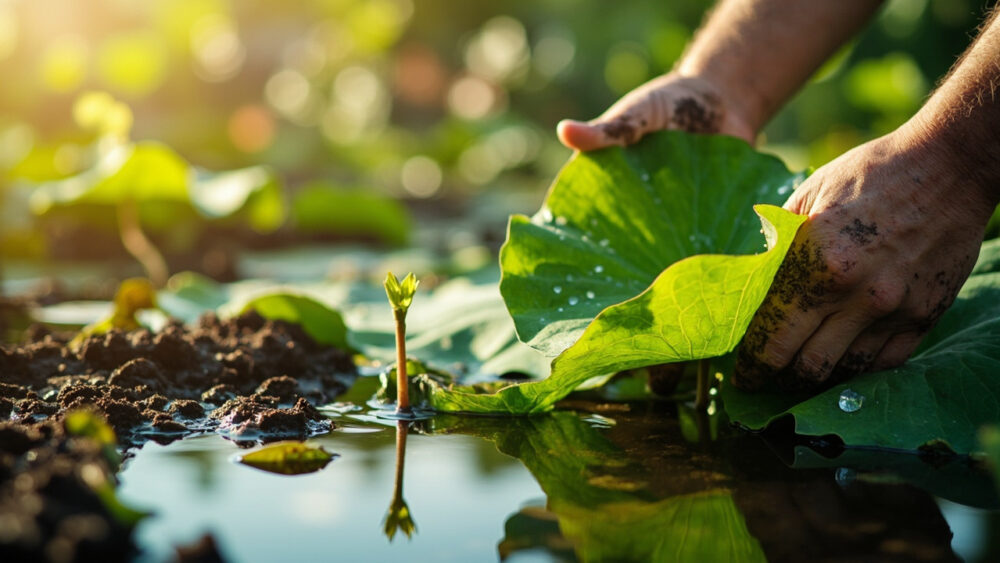
- Lay the tuber horizontally on top of the soil, growing tip angled slightly upward, instead of burying it upright like a bulb.
- Cover the body of the tuber with an inch of soil, but leave the growing tip exposed to open air and light.
- Anchor it with a clean rock or a U-shaped piece of wire if the tuber wants to float.
- Flood slowly with 2 to 4 inches of water above the soil line at first, adding more depth, up to about 6 inches, once leaves appear.
- Space multiple tubers at least 12 to 18 inches apart if you are planting a larger pond bed, since lotus spreads fast once established.
Get the tip right and the tuber above water, and most of the hard part is behind you.
Watering and Feeding Through the Season
Depth is not fixed, it changes as the plant grows. Start shallow at 2 to 4 inches over the soil for the first few weeks, then let water rise to 4 to 6 inches once you see floating leaves, and eventually up to 12 inches once upright leaves stand well above the surface.
Feed with aquatic plant fertilizer tabs, pushed down into the soil near the root zone, starting once the first leaves unfurl. Repeat every 3 to 4 weeks through the growing season. Never use general garden fertilizer loose in the water, it feeds algae far faster than it feeds the lotus.
Top off water lost to evaporation with plain water, and avoid letting the container fully dry out even for a day once the plant is established.
Feeding gets you leaves reliably, but blooms depend on something most people never check.
Why Lotus Grows Leaves but Skips the Bloom
If you assumed a lotus that grew huge leaves last year but never flowered just needs more fertilizer, that guess is wrong more often than it is right. The real culprit is usually insufficient sun or a container that is too crowded or too deep too soon.
Lotus blooms on mature, upright leaves once the rhizome network is established, which in a container often means the second growing season rather than the first. First-year plants frequently give you nothing but floating pads, and that is normal, not failure.
Give it another full season before you assume something is wrong, as long as leaves are healthy and upright by midsummer.
Patience solves the no-bloom problem more often than any product does, but pests and disease can still derail a season fast.
Problems Most Likely to Strike
Aphids cluster on the undersides of leaves and on unopened buds, especially in early summer. A strong spray of water knocks most colonies off; for a heavier infestation, an insecticidal soap labeled for aquatic or ornamental use works, applied exactly per the label.
Leaf spot and fungal blotching show up as brown or black patches, usually from overcrowded leaves with poor airflow. Thin dense growth and remove badly spotted leaves at the base.
Yellowing lower leaves as new leaves emerge above them is normal aging, not a problem, so resist the urge to fertilize harder in response.
Cold snaps below roughly 45°F can stall growth entirely; the plant usually recovers once water warms back up, but a hard freeze on an unprotected container can kill the tuber outright.
Rule out these common culprits early and you will spend the rest of the season watching growth instead of chasing damage.
When and How to Harvest Lotus
Harvest depends on what you are after. For blooms, flowers typically open in mid to late summer, each lasting just 3 to 5 days before dropping petals, so cut them for display right as the outer petals begin to loosen. For edible root, wait until the plant dies back in fall, after the first light frost blackens the leaves, then dig or lift the rhizome from the soil.
Seed pods left on the plant dry into the iconic flat seed heads, popular dried for arrangements, and can be cut once the pod itself has turned brown and hard.
In cold climates, zone 5 and colder, sink the container below the freeze line in the pond or move it to an unheated, frost-protected space for winter, since a hard freeze straight through the tuber usually kills it.
Everything above works, but you asked for something you can actually save, so here it is.
Lotus Plants at a Glance
- When to plant: two to three weeks after your last frost, once water temperature holds above 60°F.
- Container: wide and shallow, 18 to 24 inches across, 10 to 12 inches deep, filled with heavy clay-loam or aquatic soil.
- Planting depth: tuber laid horizontally, body covered by one inch of soil, growing tip left exposed above the soil.
- Water depth: start at 2 to 4 inches, rising to 4 to 6 inches once leaves float, up to 12 inches once leaves stand upright.
- Light: full sun, five to six hours minimum, still or slow water only.
- Feeding: aquatic fertilizer tabs pushed into the root zone every three to four weeks through the growing season.
- Bloom timing: mid to late summer, often not until the second growing season in a new container.
Get the growing tip above water and the container wide, and the rest of lotus growing is mostly patience.
Most failures happen in the first ten seconds of planting, so slow down right there and the whole season gets easier.