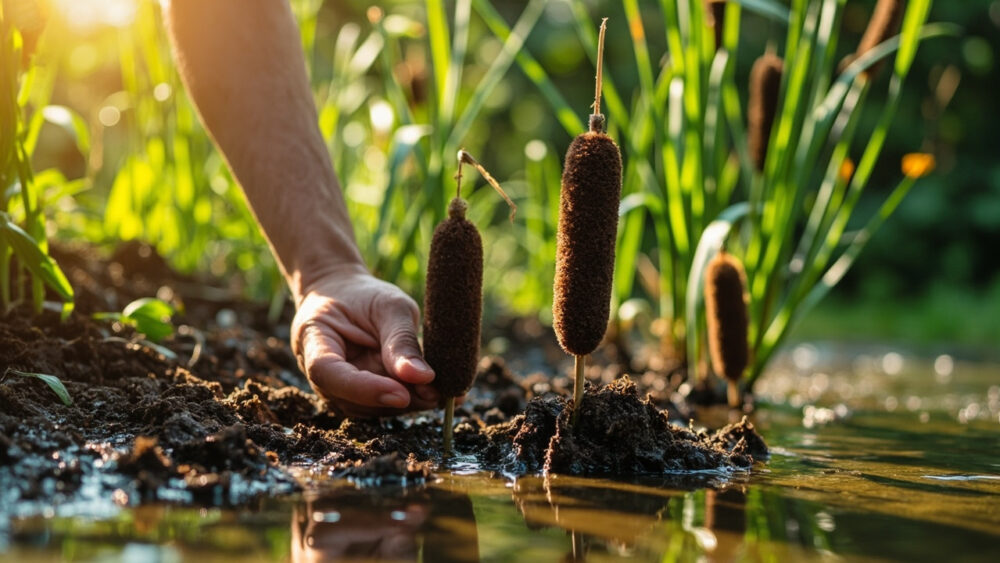
Cattails grow best planted as potted rhizomes or divisions directly into mud or shallow water, 2 to 4 inches deep, once water temperatures warm up in spring, spaced 12 to 24 inches apart depending on how fast you want them to fill in. Give them full sun, wet soil or standing water up to about a foot deep, and get out of the way. That is the whole job description, but knowing how to grow cattails well means knowing what to do before they take over your pond, not after.
Here is the part nobody tells you until it is too late: cattails do not need your help spreading, they need your help staying contained. There is one planting mistake that turns a nice border planting into a solid wall of cattail within two seasons, and it is not what most people think.
There is also a sign on the leaves that gardeners misread as disease when it is actually just normal seasonal behavior, and a very honest answer to the question you are about to ask about harvesting the fluff without it exploding into a thousand pieces in your living room. Stick around for the save-able Cattails at a Glance card at the very bottom, it has the numbers you will want pulled up on your phone at the nursery or the pond edge.
When to Plant Cattails
Plant cattails after your last frost, once soil or water temperatures sit reliably above 55 to 60°F. That usually lines up with mid to late spring in most zones, and a bit earlier in zones 8 and warmer. Cattails are hardy roughly zones 3 through 10, so winter cold is rarely the limiting factor, cold mud at planting time is.
If you plant rhizomes into water that is still icy from spring runoff, they sit and rot instead of rooting. Wait until you’d be comfortable wading in barefoot for a minute without wincing.
Container-grown starts from a nursery can go in slightly earlier than bare rhizome divisions, since the pot has already given the roots a head start.
Timing is easy, the real decision is where you let this plant loose in the first place.
Choosing the Spot and Prepping the Soil
Cattails want full sun, at least 6 hours a day, and permanently wet or submerged soil. They grow in the shallow margins of ponds, ditches, slow streams, and rain gardens, typically in water 0 to 12 inches deep, though the rhizomes will tolerate saturated mud with no standing water at all.
Here is the mistake that ruins most first attempts: planting cattails directly in an open pond bottom or a border bed with no barrier. Cattail rhizomes spread aggressively underground, often a foot or more per season once established, and they do not respect the line you drew in your head between “pond edge” and “entire yard.”
Contain them. Use a large submerged pot, a buried root barrier, or a dedicated bog section with a physical edge. This single step is the difference between a tidy stand of cattails in five years and a pond you can no longer see the water in.
Soil itself barely matters, heavy clay or ordinary garden loam both work fine as long as it stays wet. Skip potting soil with added fertilizer or perlite, it floats and clouds the water.
Once the spot and the container decision are settled, planting itself is almost too easy.
Planting Cattails Step by Step
1. Start with a healthy rhizome or potted division
Look for a firm, pale rhizome with visible growth points or an actively growing potted plant. Soft, mushy, or foul-smelling rhizomes are already rotting and won’t recover.
2. Set the planting depth
Plant the rhizome horizontally, 2 to 4 inches below the mud surface, with any visible shoot tip angled upward. In a container, cover it with 2 to 3 inches of heavy soil, then top with an inch of gravel to keep it from floating loose.
3. Space for how fast you want coverage
Space divisions 12 to 18 inches apart for a fast, full stand within a couple seasons, or up to 24 to 36 inches apart if you want to slow the spread and manage it longer before it fills in.
4. Submerge gradually
If starting in a pot, keep water level at just an inch or two above soil initially, then raise it to the target depth over 2 to 3 weeks as new growth appears. Dropping a fresh planting straight into a foot of water can drown it before roots establish.
5. Water in and walk away
Once submerged at target depth in full sun, cattails need essentially no further intervention to establish.
The planting is the easy part, the season after is where people either overwater a plant that cannot be overwatered, or underfeed one that barely needs feeding.
Watering and Feeding Through the Season
Cattails cannot be overwatered. They are a wetland plant, standing water is the point, not a risk. The only watering mistake is letting the water level drop and the mud dry and crack at the surface, which stresses the rhizomes and slows growth.
In a natural pond or bog, rainfall and the water table handle everything. In a contained pot or barrel setup, check weekly during hot, dry stretches and top off if the water line drops more than an inch or two below normal.
Feeding is optional and modest. A slow-release aquatic plant tablet pushed into the mud once in spring is plenty for potted specimens. Cattails growing in a natural pond edge with any nutrient runoff from lawns or fields usually need no feeding at all, and in fact grow too well in nutrient-rich water, crowding out other plants.
Given how little maintenance this takes, the real test of your patience comes when something actually does go wrong.
Problems to Watch For
If you see the lower leaves on established cattails turning brown and papery in late summer, that is not disease, that is normal senescence as the plant redirects energy into the rhizome for winter. This is the sign most new growers misread as a fungal problem and start treating for nothing.
Actual problems are rare but real. Watch for these:
- Rust: orange-brown pustules on leaves in humid, still conditions. Improve air movement and remove badly affected leaves; a labeled fungicide is rarely necessary or practical in standing water.
- Aphids on emerging shoots: a strong water spray usually knocks them off; they rarely do lasting damage to an established stand.
- Uncontrolled spread: the biggest real threat is the plant itself. Pull or cut unwanted rhizome runners as soon as you spot them breaching your barrier, before they thicken and toughen.
Cattails are considered invasive or aggressive in some wetland restoration contexts, so if you’re planting near a natural waterway, check local guidance before letting them spread freely.
Once your stand is healthy and behaving itself, the last question is simply when to cut.
When and How to Harvest Cattails
Cattails mature and produce their brown, sausage-shaped flower spikes in their first full growing season, typically visible by mid to late summer. For cut arrangements, harvest the spikes in late summer while they’re still firm, dark brown, and tightly closed, cutting the stalk 12 to 18 inches below the head.
Here’s the honest answer to the question you’re about to ask: once a cattail head dries out and starts to loosen, it will eventually burst into cottony fluff no matter what you do, including indoors on your mantel weeks later. There is no trick that fully stops this, only ones that slow it down.
To slow the burst, cut heads while still firm and immediately spray them with a light coat of clear craft sealant or hairspray, coating the whole seed head. Store cut stalks upright and dry, not in water, since water actually speeds up the head opening and shattering.
If you’re harvesting for pond management or root use rather than décor, cut old stalks down to the waterline in late fall after they brown fully, which tidies the stand and reduces dead thatch going into winter.
All of that, the timing, the depth, the spacing, and the harvest window, boils down to a handful of numbers worth keeping close by.
Cattails at a Glance
- When to plant: after last frost, once water or soil temps are reliably above 55 to 60°F, mid to late spring in most zones.
- Planting depth: rhizomes 2 to 4 inches below the mud surface, angled shoot tip up.
- Spacing: 12 to 18 inches apart for fast fill, 24 to 36 inches apart to slow the spread.
- Light and water: full sun, standing water up to 12 inches deep or permanently saturated mud.
- Containment: use a barrier, buried edge, or large submerged pot, they spread a foot or more per season once established.
- Hardiness: zones 3 through 10.
- Harvest window: flower spikes firm and dark brown by mid to late summer, cut before they loosen if you want to slow the fluff.
Give cattails wet feet, full sun, and a hard boundary, and they will do all the rest of the work themselves.
The only real skill in growing them is deciding how much space you’re willing to hand over.