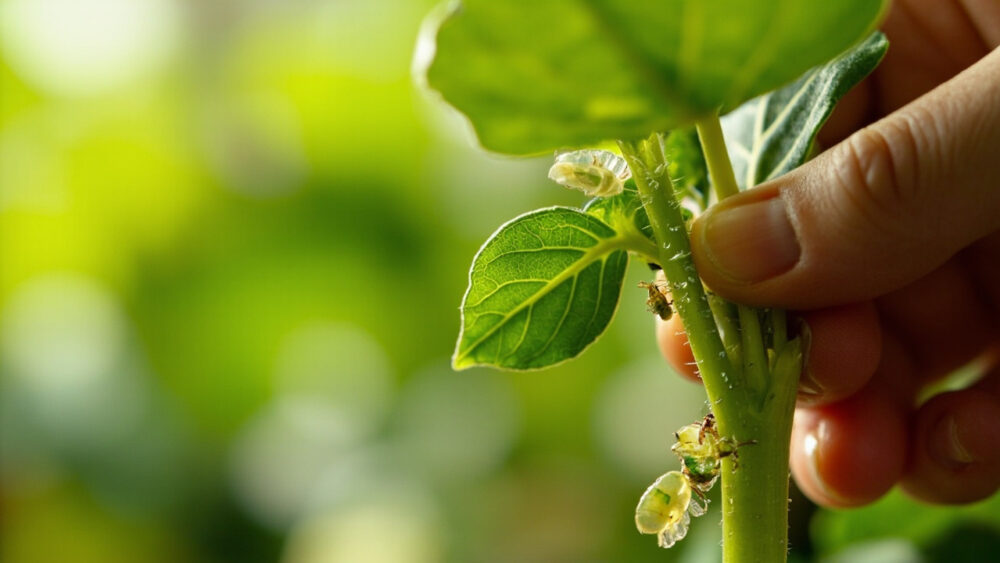
The fastest fix for aphids on a houseplant is a hard rinse in the sink or shower to knock most of them off, followed by a full spray-down with insecticidal soap or a strong dilution of dish soap and water, repeated every five to seven days for two to three weeks until no new colonies show up. That repeat schedule matters more than the product you use. One treatment never finishes the job because eggs and nymphs you missed just hatch out and start again.
Most people blame a dirty plant or bad soil the first time they see aphids clustered on a stem. That is usually not it. Aphids show up because something drew them in from outside, or they hitchhiked in on a new plant, and your indoor conditions let them multiply undisturbed with no predators to stop them.
There is also a tell on the plant itself that points straight at which situation you are dealing with, and it is not the aphids’ color. Stick with this and you will know within two minutes whether you caught it early, whether the plant will fully recover, and what to check before you touch a spray bottle. The full diagnosis checklist is at the bottom, save it before you start treating.
Why Aphids Showed Up on This Plant
1. A New Plant Brought Them In
Check the newest arrival first. If you bought or repotted anything in the last month, aphids very often ride in on soft new growth or the underside of leaves at the nursery and go unnoticed until the colony builds up indoors.
Confirm it by checking that plant specifically for clusters on new shoots, flower buds, and leaf undersides, especially near the growing tip.
Fix: isolate that plant immediately, at least a few feet from others or in a different room, then treat it on its own with soap spray or a rinse before it reinfests everything nearby.
Quarantine is the step almost everyone skips, and it is the reason aphids spread to six plants instead of staying on one.
2. Ants Are Farming Them
Look for ants walking up and down the stems, not just wandering the soil surface. Ants protect aphid colonies on purpose because they feed on the sweet, sticky honeydew aphids excrete.
Confirm it by tracing an ant trail. If it leads straight to a cluster of aphids and back down to a baseboard or windowsill, that is your source.
Fix: treat the aphids directly, but also deal with the ant trail with bait stations or by sealing the entry point. Removing aphids without addressing the ants means they will bring more.
The sticky residue on the leaves is its own clue, and it tells you something the aphids themselves do not.
3. Sticky Leaves and Sooty Mold Are a Sign, Not the Cause
People often assume the black film on leaves is a fungal disease unrelated to bugs. It is not separate. Sooty mold grows directly on the honeydew aphids leave behind, so if you see black, sooty patches, aphids (or a related pest like scale) have been there a while.
Confirm it by wiping a leaf. Honeydew feels tacky, and the black mold wipes off in a smear rather than scraping off as flakes.
Fix: wipe leaves clean with a damp cloth after you treat the aphids themselves; the mold will not return once the honeydew source is gone.
That is three causes down, but there is a fourth one that has nothing to do with what you brought inside.
4. Plants Spent Time Outdoors
Any houseplant that summered on a porch, patio, or balcony can pick up aphids outside where populations are much higher, then carry them back in when you bring the plant in for the cooler months.
Confirm it by timing: if the infestation appeared within a few weeks of moving a plant back indoors, this is almost certainly it.
Fix: same soap spray and rinse protocol, but inspect every other plant that went outside at the same time, since aphids move fast between neighboring pots.
One overlooked source keeps this going even after you think you have treated everything.
5. Overfertilizing Pushed Out Soft, Attractive Growth
Aphids prefer soft, nitrogen-rich new growth over tough, mature leaves. A plant pushed hard with fertilizer grows exactly the kind of tender shoots aphids target first.
Confirm it by checking where the colony sits. If it is packed onto brand-new leaf tips and flower buds while older leaves stay clean, overly lush growth is the draw.
Fix: ease off fertilizer for a few weeks and treat the current colony; you do not need to repot or change soil, just back off the feeding schedule.
Knowing why they arrived matters less right now than knowing exactly which one you are looking at, so here is how to separate them fast.
How to Tell the Causes Apart
Location on the plant is the biggest tell. New-plant infestations start on one pot only. Ant-farmed colonies show ant traffic on the stems. Outdoor-acquired aphids often show up on several plants that were outside together, all around the same time.
Old leaves versus new leaves matters too. Aphids cluster on soft new growth almost every time, regardless of cause, so a colony spread evenly across old, tough leaves is more likely a different pest, like spider mites or scale, worth a second look under a hand lens.
Sticky residue and black sooty film point to a colony that has been established for a while, not a fresh one.
Once you know which one you have, the next honest question is what kind of shape the plant is actually in.
Will It Recover?
Most houseplants recover fully from aphids with no lasting damage once the colony is knocked back, especially if you caught it on new growth before it spread to the whole plant.
Leaves that are already curled, yellowed, or badly deformed from feeding damage will not uncurl or green back up. That is not a treatment failure, it is just old damage. New growth that comes in after treatment should look normal.
A heavily stressed plant, one that was already struggling with low light or root problems before aphids arrived, takes longer to bounce back and may drop a few leaves during recovery. That is a normal stress response, not a sign the treatment failed.
Cut your losses only if the plant was already declining for unrelated reasons and the aphid infestation is the final straw on a root system that is not functioning. In that case, propagate a healthy cutting if one exists rather than fighting for the whole plant.
Recovery is realistic for almost every case, which makes prevention the part actually worth your effort going forward.
How to Keep It From Happening Again
Quarantine every new plant for two to three weeks before it sits near your other houseplants, no exceptions, even from a trusted source.
Inspect new growth and leaf undersides weekly on all your plants. Catching five aphids is a five-minute fix, catching five hundred is not.
If plants go outside for the summer, hose them down and inspect closely before bringing them back in for fall.
Go easy on fertilizer, since a slower, harder growth habit is naturally less attractive to aphids than a plant pushed to grow fast.
Keep an eye out for ants near your plant shelf and deal with a trail immediately rather than letting it establish.
None of this is complicated, but it only works if you actually check the plant, which is exactly what the checklist below walks you through.
Diagnosis Checklist
- Check the newest plant in the room first: if aphids are concentrated there alone, isolate it now.
- Look for ants on the stems, not just the soil: if you see a trail, treat the aphids and the ant entry point together.
- Wipe a leaf and check for tacky residue or black sooty film: this confirms an established colony, not a brand-new one.
- Ask whether any plant spent time outdoors recently: if yes, inspect every plant that was outside with it.
- Check where the colony sits on the plant: new soft growth points to aphids, old tough leaves spread evenly point to a different pest.
- Rinse the plant hard in the sink or shower to knock off the bulk of the population.
- Spray thoroughly with insecticidal soap or a mild dish soap and water solution, coating leaf undersides and stems.
- Repeat the spray every five to seven days for two to three weeks, checking for new hatchlings each time.
- Move the treated plant away from others until you see two consecutive clean checks.
- Once clear, ease off fertilizer for a few weeks and set a standing weekly habit of checking new growth on every plant you own.
Aphids are one of the most fixable houseplant problems there is, as long as you repeat the treatment instead of stopping after round one.
Stay consistent for those two to three weeks and this is a problem you solve once, not one you keep fighting all year.