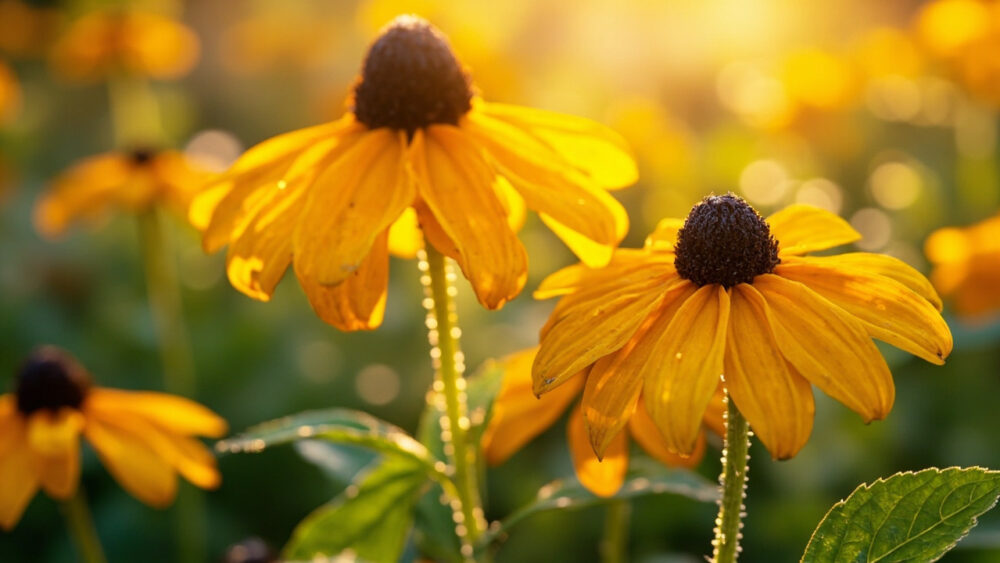
Yes, most black eyed susans come back every year, but not always the way people expect. Some of them are true perennials that return from the same root system for three to four years or more. Others are biennial or short-lived, meaning the original plant fades but drops seed that pops up as new plants the following spring, so the bed looks continuous even though the individual plants are not.
Which one happens in your yard depends on the exact species you planted, your winter conditions, and honestly, whether you deadhead too aggressively in the fall. That last part surprises people. If you cut every spent bloom off before winter, you may be removing the seed that was going to refill your bed next year.
Stick around for the part on telling a perennial type from a self-seeding type by looking at the tag or the plant itself, and the honest case for treating black eyed susans as annuals in some situations. There is a save-able quick-reference card at the bottom that sums up the whole answer in one glance.
Perennial, Biennial, or Reseeding Annual: It Depends Which One You Bought
The name “black eyed susan” covers several different Rudbeckia species, and they do not all behave the same way.
Rudbeckia fulgida, often sold as “Goldsturm,” is the reliable garden perennial. It comes back from the same crown year after year in USDA zones 3 through 9, and it spreads by rhizomes, so the clump gets wider each season.
Rudbeckia hirta, the classic wild-look black eyed susan most often sold in seed packets and cell packs at garden centers, is technically a biennial or short-lived perennial. It usually lives just one to three years, but it reseeds so freely that most people never notice the individual plants dying out.
Check your plant tag or receipt if you kept it, because that single word tells you what to actually expect.
What Your Plant Looks Like Over Winter
Once frost knocks the top growth back, black eyed susans go fully dormant. The stems turn brown and brittle, the leaves collapse, and the whole plant can look completely dead by late fall.
That look is normal and not a sign of failure. If you assumed brown, crispy foliage means the plant died, that guess is wrong more often than it is right with this genus. The roots are alive underground, storing energy for spring, as long as the crown did not sit in standing water all winter.
Come early to mid spring, once soil temperatures climb back into the 50s Fahrenheit, you will see a low rosette of fuzzy green leaves emerge right at the base of last year’s dead stems. That is your confirmation the plant is a returning perennial rather than a reseeder starting from scratch.
New growth in that exact spot is the tell, and knowing what to do with it next matters just as much.
How to Actually Help It Return Next Season
You do not need to dig, pot up, or bring black eyed susans indoors for winter. They are built for cold and handle freezing temperatures fine down through zone 3 without any protection.
A few things genuinely improve your odds of a strong comeback:
- Leave the seed heads on through fall. Birds eat some, but enough drop to refill gaps in the bed.
- Cut stems back in late winter, not fall. The dead stalks offer a little winter interest and some cold protection for the crown.
- Mulch lightly if your winters swing between freeze and thaw. Two to three inches keeps the crown from heaving out of the soil.
- Divide crowded perennial clumps every three to four years in early spring, since overcrowded plants bloom less and are more prone to fungal leaf spot.
- Avoid heavy fall watering in clay or slow-draining soil, since wet crowns rot faster than cold ones kill them.
Skip all of that and the plant likely still returns, just less vigorously.
When Treating Them as Annuals Is the Smarter Call
In a few real situations, planning for black eyed susans to be one-and-done is honest, not defeatist.
Container growers face real trouble here. Pots freeze and thaw far faster than ground soil, and roots in a container rarely survive a hard winter above zone 7 or 8 without serious insulation. If yours is in a pot, expect to replant most years unless you can move it into an unheated garage or bury the pot temporarily.
Gardeners in zone 3 or colder growing the less hardy hybrid cultivars, the ones bred for extra-large blooms or unusual colors like deep red or bicolor petals, also see lower return rates. Those traits sometimes get bred at the expense of winter toughness.
If your bed has heavy, wet clay that never drains between rains, that is often the real killer, not the cold itself.
In any of those cases, buying fresh plants or reseeding on purpose each spring is a completely reasonable strategy, not a failure.
Whichever category you fall into, the quick card below sums it up so you can check it again next spring.
Black Eyed Susans: Quick Reference
- Basic answer: most black eyed susans return year after year, either from the same root system or from self-sown seed, in USDA zones 3 through 9.
- Rudbeckia fulgida (Goldsturm type): a true long-lived perennial, spreads by rhizomes, reliably comes back for years.
- Rudbeckia hirta (common seed-packet type): biennial or short-lived, individual plants may die after one to three years but reseed heavily.
- Winter appearance: foliage browns and collapses completely, this is normal dormancy, new growth appears at the base in spring once soil warms into the 50s Fahrenheit.
- To help it return: leave seed heads through fall, delay cutback until late winter, mulch lightly in freeze-thaw climates, divide crowded clumps every three to four years.
- Biggest risk to overwintering: soggy, poorly drained soil, which rots crowns faster than cold kills them.
- Better treated as an annual: container plantings above zone 7 or 8, fancy hybrid cultivars in zone 3 or colder, or any bed with standing winter water.
Give it decent drainage and a little patience through the ugly dormant months, and most black eyed susans take care of the rest themselves.
Next spring, check that base of old stems before you assume the worst.