The best time to prune fig trees is late winter to very early spring, while the tree is still fully dormant and at least four to six weeks before your last frost. That is when you can see the branch structure clearly, cuts heal fast once growth starts, and you will not be sacrificing the fruit that is already forming. How to prune fig trees really comes down to removing the right wood at the right time, not hacking away at whatever looks unruly.
Most people who mess this up make one of two mistakes: they prune in fall thinking they are tidying up for winter, or they prune hard every single year because that is what they do with their other fruit trees. Both cost you fruit. There is also a sign almost everyone misreads on a fig they just cut back, and it looks like disaster when it is actually the tree working exactly as planned.
Stick around and I will walk through the timing, the actual cuts, what your fig looks like a few weeks after you prune it, and the mistakes that quietly erase a whole season of figs. There is a save-able Fig Trees at a Glance card at the very bottom with the numbers you will want on hand before you make your first cut.
When to Prune a Fig Tree, and When to Leave It Alone
Dormant season is the window. That means late winter into very early spring, after the coldest stretch has passed but before buds swell and leaf out begins. The tree has no leaves, so you can see every branch, and there is no active sap flow to complicate healing.
Pruning in fall is the classic misread. Gardeners see a fig dropping its leaves and think it is time to shape it up for winter. Cutting into a fig in fall, right before dormancy sets in, can push it to put out tender new growth that then gets killed by the first hard freeze, and that damage can travel back into older wood.
Once you see new leaves unfurling in spring, your pruning window is closing. Light cleanup is still fine, but heavy structural cuts after leaf-out cost you more of the current year’s crop than they are worth.
Get the timing right and the actual cutting gets a lot less stressful.
Tools and the One Prep Step That Matters
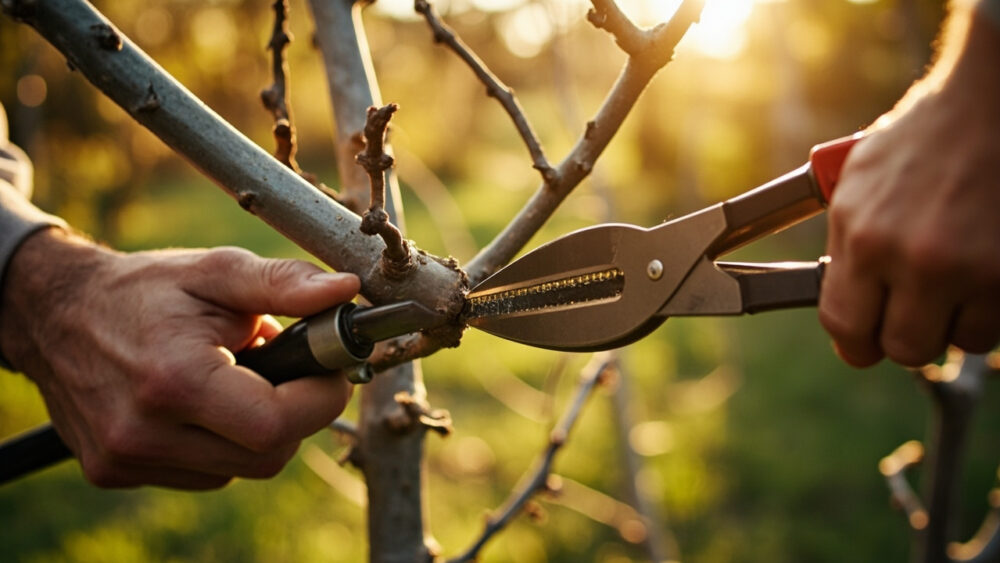
You need a clean pair of bypass pruners for anything under about half an inch thick, loppers for branches up to an inch and a half, and a pruning saw for anything bigger. That is the whole tool list. Figs do not need anything specialized.
The prep step that actually matters is disinfecting your blades before you start and between cuts on any tree showing dieback or disease symptoms. Fig wood is soft and cuts easily, which makes it tempting to skip this, but that soft wood is exactly why clean cuts and clean tools matter. A wipe with rubbing alcohol between trees, or between diseased and healthy wood on the same tree, is enough.
Skip that step and you can carry a fungal problem from one branch straight into a fresh wound on another.
How to Prune a Fig Tree Step by Step
Work from the ground up and the outside in. Deal with structure first, then move to fine-tuning.
Step 1: Remove the Dead, Damaged, and Crossing Wood
Cut out anything dead, anything with visible dieback or canker damage, and any branches rubbing against each other. Cut back to healthy wood, which shows green or cream color under the bark when you nick it, not brown or gray.
Step 2: Open Up the Center
Remove one or two of the oldest, thickest interior branches at their base to let light and air into the middle of the canopy. A fig with a dense, shaded center produces less fruit and dries out slowly after rain, which invites rot.
Step 3: Head Back Last Year’s Long Shoots
On vigorous young shoots from last season, cut back to two or three buds from where they meet older wood, about 6 to 12 inches depending on the shoot’s thickness. This is the cut that shapes the tree and controls how much new growth you get this year.
Step 4: Control Height and Width Last
Once structure and interior are handled, take the top and outer branches down to whatever height keeps the fruit within reach, typically no more than 8 to 10 feet for a tree you plan to hand-harvest. Cut just above an outward-facing bud so new growth heads away from the center.
None of this needs to be dramatic. A mature fig usually only needs 20 to 30 percent of its total wood removed in a normal year.
What Your Fig Looks Like After Pruning
Right after a proper dormant prune, your fig looks bare and a little shocking, especially if this is the first real prune it has had in years. That is normal. Give it two to four weeks and you will see buds swelling along the remaining wood as soil warms and temperatures climb.
Here is the sign almost everyone misreads. If you pruned back hard, the first flush of new shoots can come in thin and almost see-through pale before hardening off and greening up. People assume this means the cut was too harsh or the tree is struggling. In most cases it is just fast juvenile growth catching up to root reserves, and it toughens up within a couple weeks.
What is not normal is oozing, sunken, or blackened wood spreading down from a cut site weeks later. That points to disease moving into the wound, not routine recovery, and it is worth cutting further back into clean wood and disinfecting your tools again.
Healthy recovery looks awkward for a few weeks before it looks good, and that gap is exactly where most people panic.
The Mistakes That Cost You Fruit
Figs have two possible fruit crops depending on variety and climate: a breba crop that forms on last year’s wood and ripens early summer, and a main crop that forms on new growth from this year and ripens late summer into fall. Which one you are pruning for changes everything.
- Pruning hard every year: if your variety and climate rely on the breba crop, removing all of last year’s wood every winter means you never get that early crop at all.
- Fall pruning: triggers tender new growth right before frost, and that dieback can travel into wood you meant to keep.
- Topping the whole tree at once: a fig cut back severely in one go can respond with a thicket of weak upright shoots called suckers instead of productive fruiting wood.
- Ignoring the base: letting root suckers pile up around the trunk steals energy from the main canopy and its fruit.
- Pruning a stressed tree hard: a fig that just survived drought, transplant, or a hard freeze needs a light touch, not a full reshape, until it recovers.
Match your pruning style to which crop you actually want, and most of these mistakes take care of themselves.
Fig Trees at a Glance
- When to prune: late winter to very early spring, while fully dormant and four to six weeks before your last frost.
- When to avoid pruning: fall, right before dormancy, and any time after spring leaf-out for major structural cuts.
- How much to remove: about 20 to 30 percent of total wood in a normal year on a mature tree.
- Shoot heading cut: back to two or three buds from older wood, roughly 6 to 12 inches.
- Mature height to maintain: 8 to 10 feet for hand-harvesting, cutting just above an outward-facing bud.
- Recovery timeline: bare and stark for two to four weeks, then bud swell and new pale shoots that green up and toughen within a couple weeks.
- Warning sign: blackened or oozing wood spreading from a cut weeks later means disease, not normal recovery.
Prune for the crop you actually want, in the season the tree can handle it, and figs forgive almost everything else.
Get those two things right and the rest of the tree takes care of itself.