If you want to know how to grow walnut trees, here’s the answer up front: plant a bare-root or containerized sapling in early spring once the soil has thawed and drains well, give it full sun and at least 30 to 40 feet of open space, and settle in for a wait. Walnuts are not a fast nut. Most seedlings take 4 to 7 years to produce their first real nuts, and a full crop doesn’t show up until year 10 or later.
That wait is exactly where most people go wrong, and it is not the mistake you’d guess. It is not watering, and it is not soil. It is spacing, and specifically, planting a walnut too close to a vegetable garden, a patio, or another tree that will pay for it in ten years when nothing planted near a mature walnut wants to grow anymore.
There’s also a sign gardeners misread every summer, a spring where the tree looks half-dead and everyone assumes it’s dying when it’s actually doing something completely normal. And there’s the honest answer to the question you’re about to ask next, which is when you’ll actually get to eat something. Stick with me through the sections below and you’ll get all of it, plus a save-able Walnut Trees at a Glance card at the very bottom with the numbers worth keeping on your phone.
When to Plant a Walnut Tree
Plant in early springas soon as the ground can be worked and is no longer waterlogged from winter thaw. Soil temperature around 50°F at a few inches deep is a good marker. In mild-winter regions (roughly USDA zones 7 and warmer), fall planting also works well, giving roots a head start before summer heat arrives.
Bare-root trees go in while still dormant, before buds swell. Container-grown trees are more forgiving on timing but still do best avoiding the peak heat of summer.
Walnuts are hardy in zones 4 through 9 depending on species, with black walnut tolerating colder winters than English (Persian) walnut, which prefers milder climates and a longer frost-free season to properly ripen its nuts.
Getting the timing right matters less than getting the spot right, and that’s the decision you can’t undo later.
Choosing the Spot and Preparing the Soil
Walnuts need full sundeep well-drained soil, and room. Real room. A mature walnut tree can reach 60 to 90 feet tall with a canopy just as wide, and the roots extend even further than the branches do.
Here’s the mistake that ruins most attempts: planting a walnut anywhere near a vegetable bed, ornamental garden, or another tree species you care about. Black walnut roots, bark, and leaves contain juglone, a compound toxic to many other plants, tomatoes and apples especially. Even English walnut, which produces less juglone, still isn’t a good neighbor to sensitive plants.
Give the tree 40 to 60 feet from structures, septic lines, and gardens you want to keep productive. Test drainage before you commit: dig a hole a foot deep, fill it with water, and if it hasn’t drained within a few hours, pick a different spot. Walnuts hate wet feet almost as much as they hate shallow soil, since their taproot wants to run 2 to 3 feet down uninterrupted.
Once you’ve picked ground the tree can actually live in for the next fifty years, it’s time to get it in.
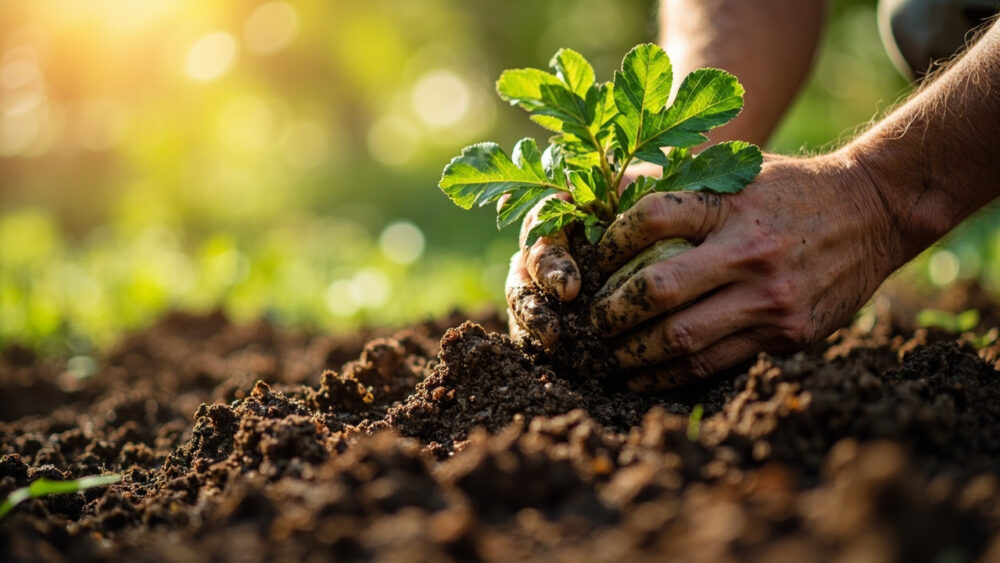
Planting a Walnut Tree Step by Step
1. Dig the hole wide, not deep
Dig a hole about twice the width of the root ball or root spread, but only as deep as the roots need. Planting too deep is one of the fastest ways to stall a young tree.
2. Set the tree at grade
The root collar, where trunk meets root, should sit level with or just slightly above the surrounding soil. Bare-root trees need their roots spread out naturally, not crammed or circled into the hole.
3. Backfill with native soil
Skip heavy amendments in the planting hole itself. Use the soil you dug out, tamping gently as you go to remove large air pockets, then water deeply to settle everything the rest of the way.
4. Stake only if needed
A young whip in a windy spot benefits from a loose stake for the first year. Remove it once the trunk can stand on its own, usually within a year.
5. Mulch, but leave the trunk bare
Spread 2 to 3 inches of mulch in a ring 2 to 3 feet out, keeping it a few inches clear of the trunk itself to avoid rot and rodent damage.
The planting is the easy part; keeping it alive through its first few summers is where patience gets tested.
Watering and Feeding Through the Season
A newly planted walnut needs consistent moisture for its first two full growing seasons, roughly 10 to 15 gallons a week during dry spells, tapering off as the tree establishes. Deep, infrequent watering beats a daily sprinkle every time, since it trains roots to grow down rather than staying shallow and dependent.
Now, the sign everyone misreads. In early spring, a lot of walnut trees look bare and lifeless well after other trees have leafed out. Owners assume winter killed it. It didn’t. Walnuts are famously among the last trees to break dormancy, often leafing out weeks behind maples, oaks, or fruit trees. Bend a twig; if it’s flexible and green inside, the tree is fine and just running on its own clock.
Feed lightly. A balanced fertilizer in early spring for the first few years helps establish growth, but mature walnuts growing in decent soil rarely need heavy feeding, and pushing too much nitrogen encourages soft, weak growth over strong wood.
Water and patience get the tree through establishment, but pests and disease are the next test.
Problems Most Likely to Strike
Walnuts are relatively tough, but a few issues show up consistently.
- Walnut husk fly and codling moth: larvae inside the husk or shell, showing up as premature nut drop or blackened husks. Monitor and treat per label directions on an appropriate insecticide if infestations are heavy in your area.
- Walnut blight: a bacterial disease causing dark lesions on leaves, shoots, and nut husks, worse in wet spring weather. Prune for airflow and avoid overhead watering during bloom.
- Crown gall and root rot: usually tied to poor drainage or injured roots at planting. Prevention through good site drainage matters far more than any treatment after the fact.
- Squirrels: the most reliable pest of all, and largely uncontrollable beyond harvesting promptly once nuts start to drop.
None of this is usually catastrophic if you caught the site selection and drainage right at the start.
Handle the tree well through its early problems and eventually you’ll get to the part you’ve been waiting years for.
When and How to Harvest Walnuts
Here’s the honest answer to the question you were about to ask: a seedling grown tree needs 4 to 7 years before its first nuts, and grafted named cultivars can shave a couple of years off that, but a genuinely productive crop doesn’t arrive until the tree is 8 to 12 years old or more. There’s no shortcut around a walnut’s own timeline.
Nuts are ready when the outer green husk starts to split or the nuts drop on their own, typically late summer into fall depending on climate and variety. Don’t wait for every husk to open. Once a good percentage have started splitting, it’s time to collect rather than let squirrels beat you to it.
Gather nuts promptly off the ground to avoid mold and pest damage. Remove husks, then cure the nuts in a single layer in a dry, ventilated spot out of direct sun for 2 to 3 weeks before storing.
Cured walnuts keep for months in a cool, dry place, and in the shell they’ll hold even longer in the freezer.
That long wait is the real trade you’re making with a walnut tree, and it’s worth having every number in one place before you plant.
Walnut Trees at a Glance
- When to plant: early spring once soil has thawed and drains well, or fall in mild climates, zones 4 through 9 depending on species.
- Spacing: at least 40 to 60 feet from structures, gardens, and other trees due to juglone toxicity and mature canopy size.
- Planting depth: root collar at or just above soil grade, hole twice as wide as the roots but no deeper than needed.
- Watering: 10 to 15 gallons weekly during dry spells for the first two years, deep and infrequent.
- Common problems: husk fly, codling moth, walnut blight, crown gall from poor drainage, and squirrels.
- Time to first nuts: 4 to 7 years from planting, full production around year 8 to 12 or later.
- Harvest window: late summer into fall, when green husks begin splitting or nuts drop naturally.
Get the spot right and give it time. A walnut tree rewards patience far more than effort.
Everything else about growing one is just details around that one decision.