English lavender wants three things above everything else: full sun, sharp drainage, and a gardener who resists the urge to baby it. Learning how to care for English lavender really comes down to treating it like a Mediterranean hillside plant instead of a garden perennial, because that is exactly what it is. Get the sun, soil, and water right and it more or less runs itself for years.
Most people who lose a lavender plant lose it to kindness. There is one watering mistake that quietly kills more established plants than drought, frost, or bad pruning combined, and it is not what you would guess.
There is also a sign of stress that looks exactly like a plant that is thriving, until it is not, and a pruning rule that most guides get slightly wrong in a way that shortens a lavender’s life by years. Stick with me and I will pay all of that off, plus give you a save-able at a glance card at the very bottom with the numbers you actually need.
Light, Placement, and Temperature
English lavender needs a minimum of six hours of direct sun a day, and eight or more is better. Anything less than full sun and you get a leggy, floppy plant with weak flower stems and gray, sparse growth reaching for the light.
It wants heat and air movement, not humidity. Plant it where air circulates freely, away from downspouts, low spots, and the damp shade cast by a fence or wall.
English lavender (Lavandula angustifolia) is hardy roughly USDA zones 5 through 9, tolerating winter cold far better than it tolerates wet feet or muggy summers. In zone 5 and colder, a sheltered south-facing spot and good snow cover matter more than any mulch you pile on.
Get the location right and watering gets a lot more forgiving.
Watering: How Much, How Often, and the Mistake That Kills Established Plants
Water a newly planted lavender regularly for its first two to three months, roughly once or twice a week, until roots establish. After that, mature English lavender wants infrequent, deep watering, about once every 10 to 14 days in summer with no rain, and often not at all once it is settled into well-drained soil.
If you assumed more frequent watering keeps it lush, that assumption is the number one killer of established lavender. Root rot from overwatering, especially in clay soil or containers without drainage holes, takes out more mature plants than any drought does. Lavender’s silvery, narrow leaves are built to handle dry spells; they are not built to sit in damp soil.
Check by feel, not schedule. Push a finger two inches down; if it is still moist, wait.
Soil drainage decides whether your watering habits can even be forgiven.
Soil, Drainage, and Feeding
English lavender wants lean, alkaline to neutral, fast-draining soil, ideally sandy or gritty, with a pH around 6.5 to 7.5. Heavy clay is the single biggest soil problem gardeners bring to this plant, and amending with coarse sand or grit, or planting in a raised bed or mound, solves it far more reliably than any fertilizer will.
Skip rich, high-nitrogen soil. It pushes soft, floppy foliage growth at the expense of flowers and makes the plant more prone to rot and winter dieback.
Feed lightly or not at all. A light application of compost or a low-nitrogen fertilizer once in spring is plenty. More than that works against you.
In containers, use a mix built for cactus or succulents, or standard potting soil cut with extra perlite or grit, and always a pot with drainage holes.
Good soil is half the job. The other half is knowing when to cut it back.
Pruning, and the Timing Rule Most Guides Get Wrong
Prune English lavender twice a year: a light shearing right after the first flush of flowers fades to encourage a second bloom, and a harder cut back in early spring as new growth just starts to show at the base.
Here is the part that trips people up. Many guides tell you to cut lavender back hard in fall.
Do not cut deep into old woody stems, and do not do a hard cut in fall. Cutting into bare wood below the green growth often will not resprout, since lavender does not regenerate from old wood the way many shrubs do. A fall hard-prune also removes the cover that helps the plant survive winter, leaving fresh cuts exposed right before cold weather.
The safe rule: always leave at least an inch or two of green, leafy growth below every cut, every time, spring or summer.
Done right, this pruning rhythm is also what keeps a lavender from turning into the woody, splayed-open shrub that gardeners eventually give up on and replace after four or five years.
Repotting and General Upkeep
Repot container lavender every two to three years, moving up one pot size, ideally in spring. Signs it is time: roots circling the drainage holes, water running straight through without soaking in, or a plant that has outgrown its base and tips over in wind.
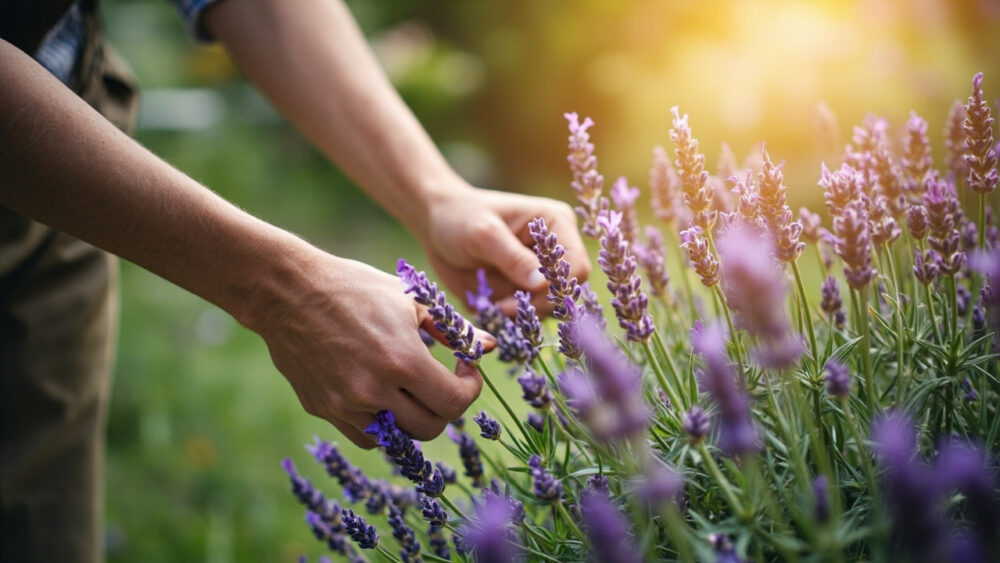
Cut spent flower stalks for drying right as the lowest florets on the spike start to open. This is also when oil content and fragrance peak.
Clear fallen leaves and debris from around the base through the season. Lavender resents mulch piled against its stems, since it holds moisture right where you do not want it.
That same moisture-against-the-stem problem is behind most of the diseases that actually bother this plant.
Problems, Pests, and the Sign That Looks Like Health but Isn’t
The two real threats to English lavender are root rot and fungal issues, both caused by excess moisture, poor drainage, or crowding that blocks airflow. Watch for gray or blackened stem bases, wilting despite moist soil, or a general collapse that spreads from the center outward. That combination means root or crown rot, and it is usually the soil, not the plant, that needs fixing next time.
Pests are a minor concern. Occasional aphids or spittlebugs show up but rarely do real damage. A strong water spray usually handles them, and any insecticidal soap should be used exactly per its label.
Here is the sign that fools people: a lavender putting out a huge flush of soft, fast, floppy new growth looks vigorous, but that kind of growth usually means too much nitrogen or water, not good health. It is weak growth dressed up as strong growth, and it is often the first stage on the way to a plant that rots or splays open.
Real vigor looks different, and it is worth knowing exactly what that looks like before you decide anything is wrong.
How to Tell It Is Actually Thriving
A genuinely healthy English lavender has tight, compact, mounded growth, silvery-gray foliage, and a strong herbal scent released the moment you brush the leaves. New growth should be slightly stiff and gray-green, not soft and floppy.
Flower spikes should be dense and upright, held on stiff stems that do not flop under their own weight. A plant that blooms reliably in its second summer and holds a neat rounded shape without staking is doing exactly what it should.
Woodiness at the very base is normal and even desirable on a mature plant. It is bare, leafless wood higher up the stems that signals decline, usually from overwatering, dense shade, or pruning too hard into old growth.
If your plant matches that description, you have already done the hard part, and everything below is just the numbers to keep it that way.
English Lavender at a Glance
- When to plant: spring after the last frost, or late summer to early fall in mild-winter climates, once soil has warmed and dried out.
- Light: full sun, six to eight or more hours of direct light daily.
- Soil: lean, sandy, fast-draining, pH 6.5 to 7.5. Amend clay heavily with grit or sand, or plant on a mound.
- Watering: weekly while establishing, then deep watering only every 10 to 14 days once mature, less in cool or humid weather.
- Spacing: 18 to 24 inches apart to keep airflow around each plant.
- Pruning: light shear after first bloom, harder cut in early spring at new growth, always leaving an inch or two of green growth below every cut.
- Hardiness: USDA zones 5 through 9, tolerant of cold, intolerant of wet roots and humid summers.
Lavender rewards neglect far more than it rewards attention. Get the sun and drainage right, water sparingly, and prune with restraint, and it will outlast almost anything else in your garden.