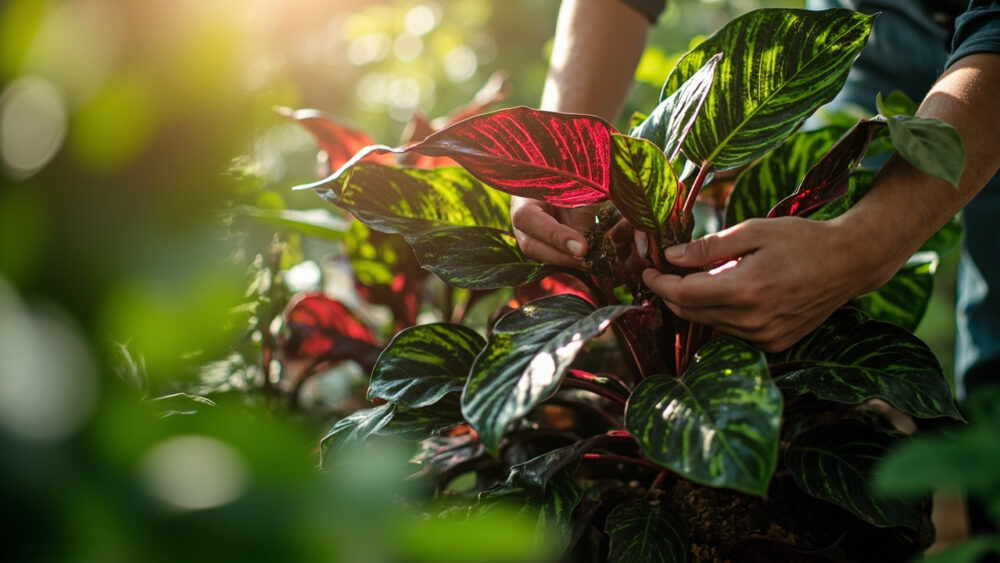
Calathea light requirements come down to one word: bright, indirect light, the kind you’d get sitting a few feet back from an east or north window. No direct sun on those leaves, ever, but not a dim corner either. That’s the range that keeps the leaves patterned and upright instead of curling, fading, or rotting at the base.
Most people who kill a calathea think they’re doing it with water. They’re usually doing it with light, and the plant is too polite about it to make the cause obvious right away.
Here’s what’s coming: the specific window setups that actually work, the sign of too much light that everyone mistakes for a watering problem, why your calathea sulks every winter even if you never move it, and a couple of placement fixes that don’t involve buying a grow light or moving to a sunroom. There’s also a save-able Calathea at a Glance card at the very bottom with everything on one list.
The Plain Answer: Bright, Indirect, Never Direct
Calathea wants bright indirect light for most of the day, roughly the brightness of a spot where you could comfortably read a book without a lamp, but never a patch where sun actually lands on the foliage. In the wild these grow under taller plants on a rainforest floor, catching filtered light through a canopy, not open sky.
Too little light and the plant survives but stops performing. Leaf patterns wash out, growth slows to almost nothing, and stems stretch and lean toward whatever light source exists.
Too much light, especially direct sun, scorches leaves fast. You’ll see bleached or brown patches within days, not weeks.
Getting this one variable right solves more calathea problems than fussing over humidity or fertilizer ever will.
What the Right Spot Actually Looks Like
An east-facing window is close to ideal. Gentle morning sun for an hour or two won’t hurt most calathea, and the room stays bright and even the rest of the day.
A north-facing window works too, placed within 2 to 4 feet of the glass, since north light is soft but can run low in winter.
South and west windows are trickier. Direct sun there is genuinely too strong, so keep the plant 5 to 8 feet back, or filter the window with a sheer curtain and place the calathea closer, within 3 feet.
If you’re unsure, check the shadow test: hold your hand a foot above the plant. A soft, blurry-edged shadow means the light is right; a sharp, dark-edged shadow means it’s too intense for calathea.
Once the spot is right, the next question is how to read the plant’s own complaints.
The Sign of Too Much Light Everyone Blames on Water
If you assumed curling leaves mean the plant is thirsty, that guess is wrong more often than it’s right with calathea. Curling and rolling leaves, especially paired with faded or bleached-looking patches, are a light problem, not a watering one.
Too much light shows up as leaves that curl inward to reduce surface exposure, colors that look washed out or silvery instead of deep and contrasted, and brown, papery patches on the sections that face the window directly.
Too little light shows up differently: leaves stay flat and open, but the plant stretches, new growth comes in smaller and paler, and the bold pattern contrast calathea is known for starts to disappear entirely.
Move the plant back a foot or two from a bright window before you touch the watering can, and give it two weeks to respond.
Light and water problems mimic each other constantly, which is exactly why the next section on seasons matters so much.
Why It Sulks Every Winter Even Without Moving It
Here’s the honest answer to the question most people are about to ask next: no, you probably didn’t do anything wrong, and yes, your calathea really does need to move seasonally even if the pot never budges from that shelf.
Daylight intensity and duration both drop in winter, sometimes by half compared to summer, even in a window that hasn’t changed at all. A spot that was perfectly bright in July can be genuinely dim by December.
The fix isn’t complicated. Slide the plant a foot or two closer to the window from late fall through late winter, then pull it back again once the sun gets stronger and higher in spring.
Growth naturally slows in winter regardless of light, so don’t panic if the plant looks like it’s doing nothing between roughly November and February. That’s normal dormancy-adjacent behavior, not a symptom.
Once you’ve adjusted for the season, the next fixes are about the room itself, not the calendar.
Placement Fixes That Don’t Require a Greenhouse
You don’t need a plant room with skylights to get this right. A few practical adjustments cover almost every home setup.
- Sheer curtain trick: hang a light sheer over a south or west window and place the calathea 2 to 3 feet back, cutting direct sun to safe indirect light.
- Rotate the pot: turn it a quarter turn every week or two so growth doesn’t lean permanently toward one side.
- Use a nearby room, not the window room: a spot a few feet inside a doorway from a bright window often gets ideal indirect light without any direct rays reaching it at all.
- Grow light as backup, not requirement: a basic full-spectrum LED on a timer for 8 to 10 hours can rescue a genuinely dark apartment corner, but it’s a fix for a bad room, not a default calathea needs.
- Watch the glass, not just the direction: tinted or UV-filtering windows soften light more than you’d expect, so a south window behind heavy-tint glass can sometimes suit calathea without any curtain at all.
Get the placement right and calathea is genuinely low-drama about everything else it’s known for being fussy about.
Save the card below and you’ve got the whole picture in one glance.
Calathea at a Glance
- Light needed: bright, indirect light all day, no direct sun touching the leaves.
- Best windows: east-facing within a few feet of glass, or north-facing within 2 to 4 feet.
- South or west windows: keep the plant 5 to 8 feet back, or filter with a sheer curtain and move closer.
- Too little light looks like: stretching stems, pale new leaves, faded pattern contrast.
- Too much light looks like: inward curling, bleached patches, papery brown edges facing the window.
- Winter adjustment: shift the pot a foot or two closer to the window from late fall through late winter.
- Backup option: a full-spectrum grow light for 8 to 10 hours daily in rooms with genuinely weak natural light.
Get the light in that range and most other calathea drama quiets down on its own.
When something still looks off, check the light first, the leaves usually already told you the answer.