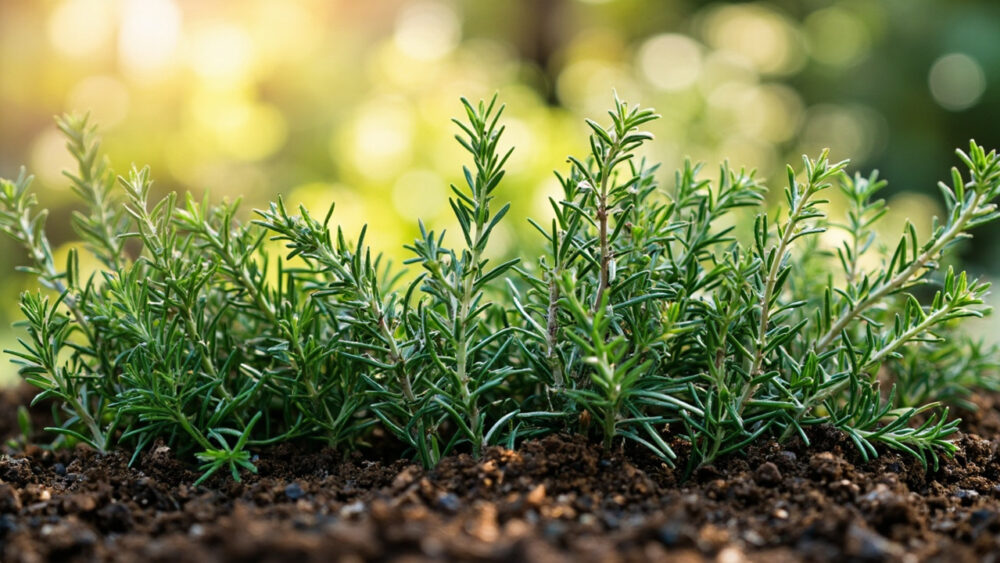
The best soil for rosemary is a lean, fast-draining mix that stays on the dry side, think a gritty, sandy or rocky base with little to no rich compost worked in. Rosemary evolved on Mediterranean hillsides in thin, alkaline, mineral soil, and it performs worst in exactly what most gardeners assume is good dirt: dark, moisture-holding, nutrient-dense potting mix. Get the drainage and pH right and rosemary is nearly indestructible. Get it wrong and you’ll watch a healthy-looking plant die from the roots up within weeks.
Here’s the mistake that kills more rosemary than cold ever does: planting it in regular potting soil or amended garden beds meant for vegetables. It looks generous. It’s a death sentence for the roots.
There’s also a sign almost everyone misreads as underwatering when it’s actually the opposite problem, and a straight answer to the question you’re about to ask next: can you fix soil that’s already wrong without starting over. Both are below, and so is the save-able Rosemary at a Glance card at the very bottom of this page, the one worth screenshotting before you dig.
What “Well-Draining” Actually Means for Rosemary
Well-draining doesn’t mean water runs through fast and disappears. It means the soil structure itself has enough grit, sand, or small gravel mixed in that water can’t cling to individual soil particles and suffocate the roots.
Rosemary roots need oxygen almost as much as they need water. In heavy clay or rich compost, the tiny air pockets between soil particles collapse and fill with water, and roots that sit in that saturated soil for more than a day or two start to rot.
A good rosemary mix is roughly 50 to 60 percent mineral material (coarse sand, perlite, or fine gravel) to 40 to 50 percent organic matter. Cactus and succulent potting mix, straight out of the bag, works well for containers.
The texture test costs nothing: squeeze a handful of moist mix, and it should crumble apart the second you open your hand, not hold a ball shape.
The Yellowing Everyone Blames on Thirst
If you assumed yellowing, drooping leaves mean rosemary needs more water, that guess kills more plants than drought ever does. Rosemary droops and yellows from root rot far more often than from dehydration, and the two look almost identical from the top of the plant.
Check before you water, not after you see droop. Push a finger two inches into the soil. If it’s still damp from the last watering and the plant is drooping, you’re looking at root suffocation, not thirst, and more water makes it worse.
Rosemary wants to dry out almost completely between waterings, to the point where the top two to three inches feel bone dry. In the ground, established plants often need no supplemental water at all beyond rainfall once they’re past their first year.
That drooping leaf you’re staring at right now is telling you the opposite of what you think it’s telling you.
pH and Fertility: Less Is More
Rosemary wants slightly alkaline to neutral soil, in the range of 6.0 to 7.5 pH, and tolerates alkaline conditions that would stunt most other herbs. If your soil test comes back acidic, below 6.0, a light dusting of garden lime worked into the top few inches before planting will correct it.
Skip the fertilizer almost entirely. Rosemary grown in lean, low-fertility soil produces tighter growth, stronger aromatic oils, and better winter hardiness than rosemary pushed along with regular feeding.
If you fertilize at all, a diluted balanced feed once in spring is plenty. Anything more encourages soft, leggy growth that flops over and is more vulnerable to fungal problems and winter dieback.
This is the opposite of how most people treat container herbs, and it’s exactly why rosemary struggles in regular potting mix loaded with slow-release fertilizer.
Planting Depth, Spacing, and Timing
Plant rosemary at the same depth it was growing in its nursery pot, never deeper. Burying the woody base or stem invites rot at the exact spot where the plant is most vulnerable.
Space plants 24 to 36 inches apart in the ground, since most varieties spread into dense, woody shrubs 2 to 4 feet wide within a few years. In containers, one plant per pot, sized up as it grows, works better than crowding several together.
Wait until soil has warmed to at least 60°F and all frost risk has passed before moving rosemary outdoors, generally two to three weeks after your last frost date. Rosemary set out too early into cold, wet spring soil often rots before it ever gets a chance to establish roots.
Timing and drainage work together here, since even perfect soil stays soggy longer in cold weather.
Containers vs. Ground: Different Rules Apply
Containers need faster drainage than garden beds, full stop, because there’s no surrounding soil to wick excess moisture away. Always use a pot with a real drainage hole, never one that’s decorative-only, and consider unglazed terra cotta, which lets excess moisture evaporate through the walls themselves.
In the ground, heavy clay is the bigger enemy than fertility. If you’re planting in clay, don’t just dig a hole and hope; raised beds or mounded rows lift the crown above the wettest zone and solve most drainage problems without changing the whole yard’s soil.
Gardeners in genuinely rainy climates often have better luck treating rosemary as a container plant they can move under cover, rather than fighting soggy ground all season.
Which soil problem you actually have determines whether the fix is a bag of grit or a whole new planting site.
Marketing Claims That Don’t Matter Much
“Herb potting mix” on a bag doesn’t guarantee it’s right for rosemary specifically. Many blended herb mixes are formulated for moisture-loving herbs like basil and cilantro, and hold far more water than rosemary wants.
Read the ingredient list, not the front label. You want to see sand, perlite, or pumice listed high up, and you want peat or compost to be a minority ingredient, not the base.
Cactus and succulent mix, despite having nothing to do with herbs on the label, is often the closest off-the-shelf match to what rosemary actually wants. Don’t let the packaging talk you out of it.
The bag that says “herb” isn’t always the one built for this particular herb.
The Expensive Mistakes to Skip
The costliest mistake is planting rosemary in leftover vegetable garden soil or straight compost, assuming richer means better. It doesn’t; it drowns the roots within a season, sometimes within weeks in a wet spring.
The second-costliest mistake is buying a decorative pot with no drainage hole because it matches the patio furniture. No amount of perfect soil mix saves a plant sitting in a sealed container full of standing water.
Third is over-fertilizing in an attempt to “help” a struggling plant, which usually accelerates rot rather than reversing it. A stressed rosemary needs better drainage and less water, not more food.
And yes, you can fix soil that’s already wrong: for containers, repot into a proper gritty mix and a pot with drainage, trimming away any blackened, mushy roots first. In the ground, the honest answer is that heavy, wet clay usually needs a raised bed or a new spot, not a bag of amendment stirred into the existing hole.
None of these mistakes are complicated to avoid once you know the fix, which is exactly why the quick reference below is worth keeping.
Rosemary at a Glance
- Best soil mix: roughly 50 to 60 percent sand, perlite, or fine gravel to 40 to 50 percent organic matter, or straight cactus and succulent potting mix in containers.
- Ideal pH: 6.0 to 7.5, slightly alkaline is fine, correct acidic soil with a light dusting of garden lime.
- When to plant outdoors: once soil hits at least 60°F, generally two to three weeks after your last frost date.
- Spacing: 24 to 36 inches apart in the ground, one plant per container.
- Watering rule: let the top two to three inches of soil dry out completely between waterings, established in-ground plants often need none beyond rainfall.
- Fertilizer: skip it or use a diluted balanced feed once in spring, lean soil produces stronger, hardier plants.
- Container must-have: a real drainage hole, unglazed terra cotta if you have a choice.
If you remember one thing, remember this: rosemary fails from too much richness and moisture, almost never from too little.
Get the drainage right and the rest of this plant takes care of itself.