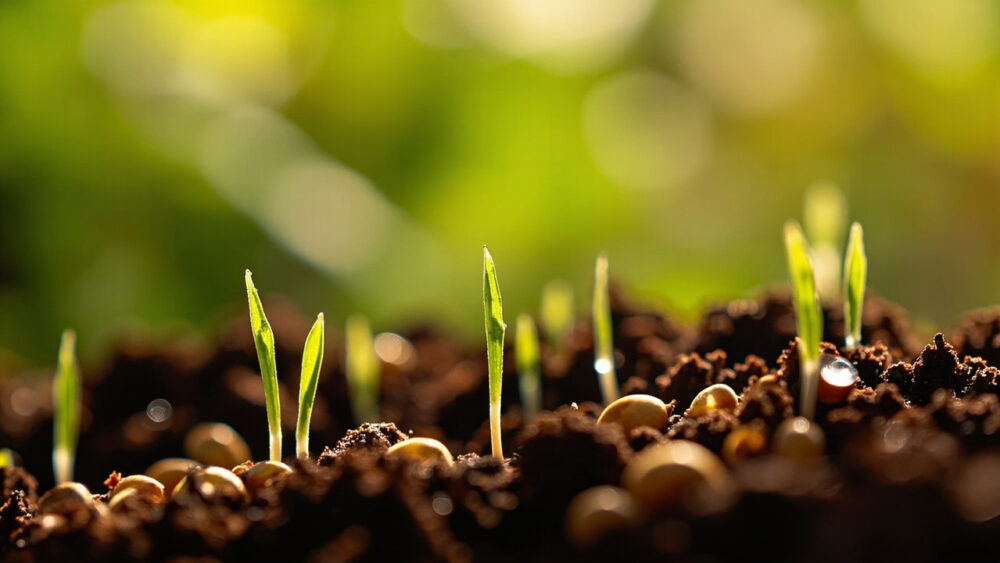
New grass seed needs water once or twice a day, every day, for the first two to three weeks, enough to keep the top half inch of soil consistently damp but never soaked. That is the whole job during germination. Once seedlings hit an inch or two tall, you back off to fewer, deeper waterings that train roots to grow down instead of staying shallow.
That sounds simple until you actually try to hold that top layer damp through a windy afternoon or a surprise 85 degree day, and this is where most new lawns fail. There is one watering mistake that kills more seed than drought does, and it is not what people expect.
There is also a sign of trouble that looks exactly like healthy growth for the first few days, which fools almost everyone who has never seeded a lawn before. Stick with this, because the Lawn at a Glance card at the bottom is the version of this whole guide you actually want saved on your phone before you drag the hose out.
The Watering Schedule, Broken Into Its Real Phases
New grass seed goes through three distinct watering phases, not one continuous routine. Phase one is germination, roughly days 1 through 14 depending on the grass type and your weather. During this phase you water lightly, one to three times a day, just enough to keep the surface from ever drying out.
Phase two starts once you see a green haze of tiny blades, usually around week two to three. Now you cut back to once a day, watering a bit longer each time so moisture reaches an inch down.
Phase three begins once the grass is tall enough for its first mow, typically 3 to 4 inches. You transition to deep watering two to three times a week, the same schedule an established lawn uses.
Get the timing of that transition wrong and you either drown a shallow-rooted lawn or starve one that is finally ready to toughen up.
Why “Once a Day” Is the Advice That Ruins Most Lawns
If you were about to set a sprinkler timer for one solid soak every morning and call it done, that guess is exactly what causes the most common failure. Grass seed dies from drying out between waterings, and in warm, sunny, or windy conditions, the top half inch of soil can dry out in just a few hours, not a full day.
One deep watering in the morning does nothing for seed that dries out again by 2 p.m. The real rule is to match frequency to your actual conditions, not a fixed schedule.
Hot, dry, or windy weather often demands three short waterings a day. Cool, overcast, humid weather might only need one.
Check the soil, not the clock, and the rest of this gets much easier.
The Feel-and-Look Test That Replaces Guesswork
Skip the timer obsession and use your finger instead. Press it into the top inch of soil.
If it feels dry, cool and slightly damp, or crumbly, water now. If it is already dark and moist, hold off, since overwatering seed causes fungal problems and can literally float small seeds out of place.
Visually, the soil surface should look consistently dark, like damp coffee grounds, never bone dry and cracked, never puddled or shiny. A light misting that just darkens the surface, run for a shorter burst two or three times a day, beats one long soak that runs off before it sinks in.
This feel test matters even more once you understand what soil temperature is actually doing underneath.
Timing Anchored to Soil Temperature, Not the Calendar
Grass seed does not care what the calendar says, it cares about soil temperature. Cool-season grasses like fescue, rye, and bluegrass germinate best when soil hits about 50 to 65°F, which usually lines up with late summer into early fall, or a shorter window in spring. Warm-season grasses like Bermuda and zoysia want soil closer to 65 to 70°F and up, meaning late spring into early summer.
Seed spread into soil that is too cold just sits there, and that dormant seed still needs damp soil or it will rot before it ever sprouts. Seed into soil that is genuinely too hot dries out faster than you can keep up with, no matter how often you water.
Check soil temperature with a simple soil thermometer a couple inches down, not air temperature, since the two can differ by 10 degrees or more on a sunny day.
Get the timing right and the watering itself becomes far more forgiving.
Step by Step: Watering From Seeding Through First Mow
Here is the practical sequence once seed is down and lightly raked or rolled in:
- Day 1 to germination: water lightly 1 to 3 times daily, enough to darken the top half inch, never enough to puddle.
- First green haze appears: drop to once daily, watering slightly longer so moisture reaches 1 inch deep.
- Grass reaches 1 to 2 inches: water every other day, encouraging roots to reach further down for moisture.
- After first mow: shift to deep watering 2 to 3 times per week, about half an inch to an inch total per week including rainfall.
Adjust every step for weather, since a heat wave or a rainy stretch will move you off this schedule in either direction.
That flexibility is also where most people quietly waste an entire season.
The Mistakes That Cost People a Whole Growing Season
The single biggest mistake is letting seed dry out even once during the first week. A few hours of dry, crusted soil can kill germinating seed outright, and you often will not know until nothing comes up two weeks later.
The second mistake is the sneaky one: mistaking algae or moss for early grass growth. A greenish, slick film on constantly wet soil is algae, not your lawn coming in, and it means you are overwatering, not underwatering.
Third, walking on new seed to check on it compacts soil and snaps fragile roots, undoing days of progress in seconds.
And skipping the transition to deep, infrequent watering keeps roots shallow permanently, which is why so many new lawns struggle the moment summer heat arrives.
Avoid those four traps and the rest of establishing a lawn is mostly patience.
Lawn at a Glance
- Best timing: seed cool-season grass when soil hits 50 to 65°F, generally late summer to early fall, and warm-season grass when soil hits 65 to 70°F, generally late spring to early summer.
- First 1 to 2 weeks: water lightly 1 to 3 times a day, keeping the top half inch of soil consistently damp, never soaked or puddled.
- Once seedlings emerge: water once daily, deep enough to reach about 1 inch down.
- Once grass reaches 1 to 2 inches: shift to every other day watering to push roots deeper.
- After the first mow: water deeply 2 to 3 times a week, roughly half an inch to an inch total weekly.
- Check with your finger: dry or crumbly means water now, dark and moist means wait.
- Watch for algae: a slick green film means overwatering, not new grass coming in.
If you remember nothing else, remember this: water by feel and soil condition, not by the clock.
Keep that top layer damp until roots are established, then back off and let the lawn toughen up on its own.