The safe window for planting pumpkin seeds in Michigan runs from about May 25 through June 15, once soil temperatures hold at 65 to 70 F and the danger of frost has genuinely passed. In northern Michigan and the Upper Peninsula, push that to early June. In southeast Michigan around Detroit and the lakeshore counties, you can sometimes start a few days earlier.
That sounds simple, but the actual mistake that costs people their whole crop is not frost. It is planting on schedule but forgetting to count backward from when you actually want to carve or sell the thing. Get that math wrong and you either lose the pumpkin to an early October freeze while it is still green, or you get a beautiful ripe pumpkin sitting in the field for six bored weeks turning soft.
There is also a soil-temperature trap almost every impatient gardener falls into, and a prep step that matters more than the planting date itself. Stick around, because the exact numbers for your county, plus a save-able Pumpkins at a Glance card with everything condensed, are waiting at the bottom of this page.
The Real Planting Window for Michigan Pumpkins
Michigan spans two hardiness zones that matter here: zone 5 in the north and interior, zone 6 near the Great Lakes shorelines and in the southeast. Average last frost dates run anywhere from early May near Lake Michigan’s warm shoreline to late May or even early June up near Traverse City and the U.P.
Pumpkins need both warmth and time. Seeds germinate poorly below 60 F soil, and most varieties need 90 to 120 days from seed to harvest. Count backward from your target harvest date (usually mid to late October) and you land almost exactly on that late May to mid June window.
That timing is not arbitrary, it is the whole ballgame.
How to Find Your Own Window, Not the Calendar’s
Forget the date on the seed packet for a second. The soil tells you the truth your calendar cannot. Push a regular soil thermometer 2 to 3 inches deep in the morning, before the sun warms the surface, and check it for three or four days running.
You want a consistent 65 F or warmer. If you assumed that once the air feels warm enough for a t-shirt the soil is ready too, that guess is exactly what stalls half the pumpkin patches in Michigan every June. Soil lags behind air temperature by weeks, especially in clay-heavy ground or shaded low spots that stay cold and wet.
Bare soil that’s dark and crumbly warms faster than soil still matted with old mulch or grass clippings. If your patch is slow to warm, black plastic mulch laid down a week ahead can add several critical degrees.
Once that thermometer reads warm for several days straight, your personal window has opened.
What Happens If You Plant Too Early
Seeds sitting in cold, wet soil do not just wait patiently for warmth. They rot. Cold soil invites damping-off fungus, and even seeds that survive will germinate weeks slower and produce stunted, yellowish seedlings that never fully catch up to a properly timed planting.
A stray late frost, which Michigan hands out generously even after the “average” last frost date has passed, will kill young pumpkin seedlings outright. There is no bringing back a blackened, frost-hit cotyledon.
Early planting does not earn you an early harvest. It mostly just costs you seed and forces a frustrating replant three weeks later anyway, right around when you should have planted the first time.
Patience here is not caution for its own sake, it is math that actually works in your favor.
What Happens If You Plant Too Late
The opposite mistake is quieter but just as costly. Plant in early July thinking you have all summer, and you’re gambling against Michigan’s first fall frost, which typically arrives between late September in the north and mid October in the south.
A pumpkin that is still pale orange or green when frost hits will not finish ripening on the vine, and cutting it early rarely produces good color or storage quality. Miniature and pie varieties (90 to 100 days) give you more room for error than the big carving and competition types (110 to 120 days), which need every one of those days to size up and turn deep orange.
If your goal is a jack-o-lantern ready by mid October, back-calculate from there rather than trusting a generic “plant in early summer” rule.
Prep Before the Window Opens
Pumpkins are heavy feeders and heavy drinkers, and the two weeks before planting matter as much as the planting day. Work in a few inches of compost or aged manure across the whole bed, not just the planting hole, since pumpkin roots spread wide, not just deep.
Form the classic raised hills, about 12 inches across and a few inches tall, spaced 4 to 6 feet apart for smaller varieties and up to 8 to 10 feet for the giant carving types. Hills warm faster than flat beds and drain the cold, wet spring water away from the seed.
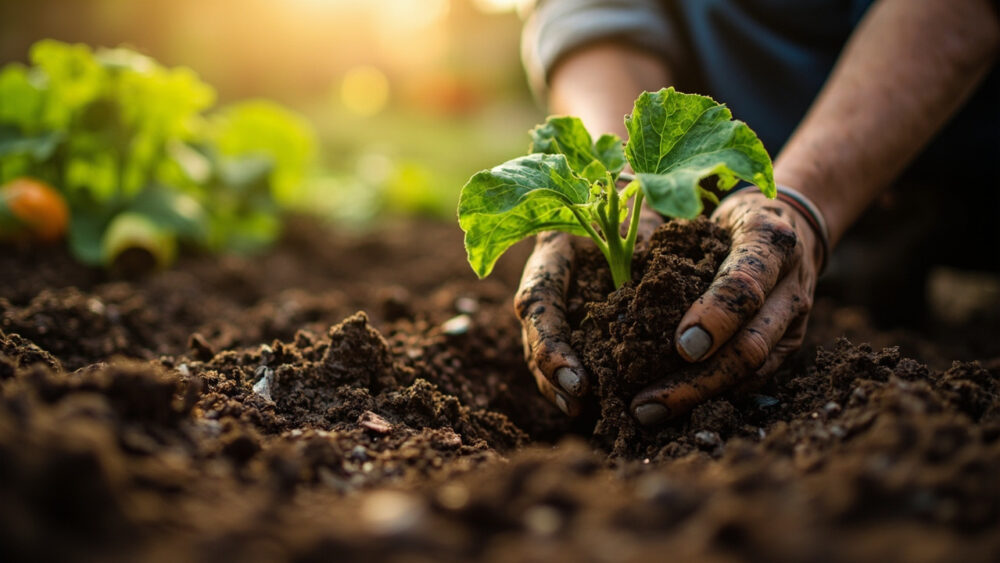
Plant seeds about 1 inch deep in warm soil, 1 to 1.5 inches deep if your soil runs sandy and dries fast. Drop 4 to 5 seeds per hill and thin to the strongest 2 or 3 seedlings once they show their first true leaves.
Good hills and good soil don’t make up for bad timing, but bad hills will absolutely sabotage good timing.
Regional Notes Across Michigan
Southeast Michigan and the Lake Michigan shoreline counties get a small head start thanks to the lake’s moderating effect, sometimes allowing planting a few days into that late-May window with less risk. Central Michigan sits squarely in the late May to first-week-of-June range most years.
Northern Lower Michigan and the U.P. should lean toward the back half of the window, early to mid June, and strongly favor shorter-season varieties (90 to 100 days) since your frost-free stretch is genuinely shorter. Pushing a 120-day giant pumpkin variety that far north is possible but risky most years.
Know your specific zone and your own yard’s microclimate before you trust any statewide date.
Pumpkins at a Glance
- When to plant: late May through mid June, after all frost danger has passed and soil holds steady at 65 to 70 F.
- Zone notes: zone 5 (northern and interior Michigan) plant closer to mid June, zone 6 (southeast and lakeshore areas) can start a few days earlier.
- Soil check: use a soil thermometer 2 to 3 inches deep for several consecutive mornings, don’t trust air temperature alone.
- Planting depth and spacing: seeds 1 to 1.5 inches deep, hills 4 to 6 feet apart for small varieties, 8 to 10 feet for giants.
- Days to maturity: 90 to 100 days for pie and mini varieties, 110 to 120 days for large carving and giant varieties.
- Harvest target: count backward from mid to late October to set your planting date, don’t just follow a general rule.
- Biggest mistakes: planting into cold, wet soil, and planting too late for your target harvest and frost date.
Get the soil temperature right and count backward from your harvest goal, and the rest of the season mostly takes care of itself.
Everything else, from vine sprawl to blossom drop, is easier to fix than a bad planting date.