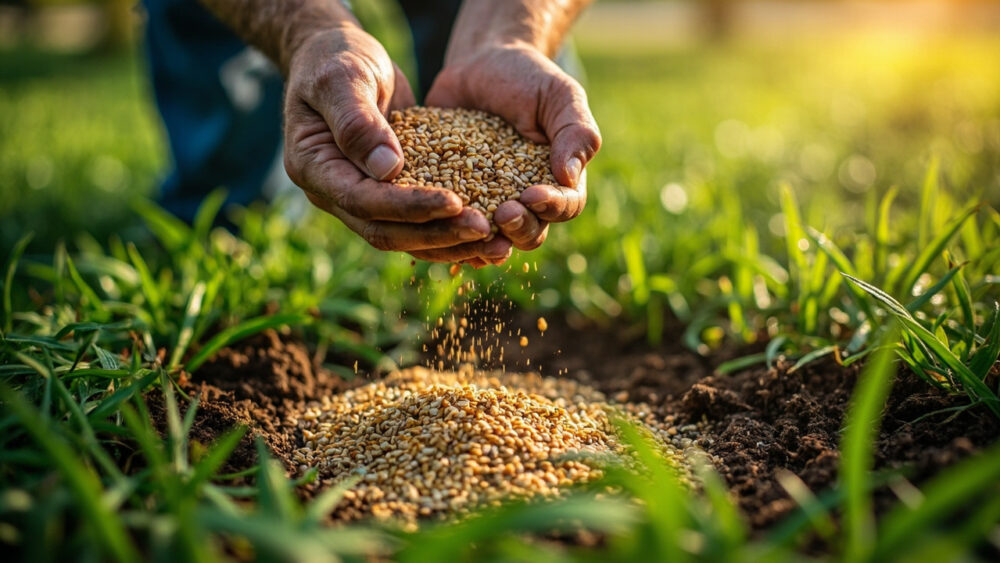
Overseeding means spreading new grass seed directly into an existing lawn without tearing it up first, and the method that actually works is simple: mow low, rough up the soil surface, spread seed at the right rate, and keep it damp until it germinates. Learning how to overseed a lawn the right way is less about fancy equipment and more about timing and follow-through. Most people who try this get a patchy, disappointing result, and it is almost never because the seed was bad.
It is usually one of three things: they seeded at the wrong time of year, they skipped the soil contact step, or they let the top inch dry out during the two weeks that actually matter. There is also a sign most people misread completely, thin grass that looks like a mowing problem when it is really a seeding problem years in the making.
I will walk through the timing, the exact steps, the aftercare that makes or breaks germination, and the mistakes that waste an entire season. Save-able specifics are down in the Lawn at a Glance card at the bottom, so keep scrolling once you have the full picture.
When to Overseed for Real Results
Cool-season grasses like fescue, ryegrass, and bluegrass overseed best in late summer to early fall, roughly six to eight weeks before your first hard frost, when soil temperatures sit between 50 and 65 degrees Fahrenheit. Early spring is a workable second window, but fall wins because seedlings face less weed competition and cooler, more forgiving air.
Warm-season grasses like Bermuda, zoysia, and centipede overseed in late spring through early summer once soil has warmed past 65 degrees and danger of frost has fully passed. Seed these too early and cold soil just sits there rotting instead of sprouting.
If you are not sure which type you have, look at when your lawn actively grows. Green and growing hard in spring and fall with a summer slowdown means cool-season. Green and growing hard in summer with winter dormancy means warm-season.
Get the calendar right first, because no technique fixes bad timing.
The Step Everyone Skips: Soil Contact
If you assumed the hard part is buying the right seed, that guess is backwards. The hard part is getting seed to actually touch soil, not just sit on top of existing grass and thatch.
Grass seed that lands on a mat of old clippings and thatch dries out in hours and never roots. This is the single biggest reason overseeding fails, more than seed quality, more than watering schedule.
Mow the lawn short first, about half your normal height, and bag the clippings. Then rake vigorously with a hard-tined rake, or run a power dethatcher or core aerator over the area, to expose bare soil in the gaps between existing grass plants.
You want to see actual dirt, not just green, in maybe 30 to 50 percent of the surface before you spread a single seed.
Once the soil is exposed, the actual spreading is the easy part.
Step by Step: Spreading and Covering the Seed
- Mow and rake as described above, removing debris so seed can reach soil.
- Choose seed matched to your grass type and your sun exposure, since shade-tolerant blends fail in full sun and vice versa.
- Spread at the overseeding rate on the bag, typically 4 to 6 pounds per 1,000 square feet for fescue blends, lighter for ryegrass and bluegrass. This is roughly half the rate used for bare-dirt new lawns, because you already have grass filling in the rest.
- Rake lightly again or drag the back of a leaf rake over the area to work seed into the exposed soil, aiming for about 1/8 to 1/4 inch of coverage. Buried deeper, it will not sprout.
- Topdress thin spots with a quarter inch of compost or peat if you want faster, more even results, though it is optional on a lawn that already has decent soil.
Once seed is down and lightly covered, watering takes over as the job that decides success or failure.
Watering: The Two Weeks That Make or Break It
New grass seed needs the top half inch of soil to stay consistently damp, not soaked, for germination, which usually takes 5 to 10 days for ryegrass, 10 to 14 for fescue and bluegrass, and up to 21 for some warm-season types.
Water lightly once or twice a day for the first two weeks rather than deeply once every few days. A single deep watering does nothing if the surface dries out between sessions, and dry-out is what kills germinating seed.
Once you see a uniform haze of green, about half an inch tall, start stretching the interval and watering a bit deeper and less often. This trains roots to grow down instead of staying shallow at the surface.
By three to four weeks in, you can fold the new grass into your normal watering schedule for the lawn.
Skip a few days of watering during that first critical stretch and you can undo two weeks of progress in an afternoon.
Mistakes That Waste an Entire Season
Mowing too soon is the most common one. Let new grass reach at least 3 to 3.5 inches before the first cut, and make sure the mower blade is sharp so it does not yank tender seedlings out by the roots.
Applying weed killer at the same time as seed is another season-killer. Most pre-emergent herbicides that stop crabgrass will also stop your new grass seed from germinating. Wait 8 to 10 weeks after overseeding before any pre-emergent, and check the label on any product for its specific seeding restrictions.
Seeding into full shade or heavy foot traffic areas without addressing the actual problem, whether that is a tree canopy or a well-worn path, just means repeating the job again next year.
Skipping fertilizer entirely also slows things down. A starter fertilizer, lower in nitrogen and higher in phosphorus, applied at seeding time helps roots establish faster.
Get the timing, the soil contact, and the watering right, and everything else becomes small stuff you can fix as you go.
Lawn at a Glance
- When to plant: late summer to early fall for cool-season grass, six to eight weeks before your first hard frost, or late spring to early summer for warm-season grass once soil is past 65 degrees.
- Soil prep: mow short, bag clippings, then rake or dethatch until 30 to 50 percent bare soil is visible before spreading seed.
- Seeding rate: about 4 to 6 pounds per 1,000 square feet for most cool-season overseed blends, roughly half the rate used on bare dirt.
- Seed depth: rake in lightly to about 1/8 to 1/4 inch of soil coverage, no deeper.
- Watering schedule: light watering once or twice daily for the first two weeks, then deeper and less frequent as grass reaches half an inch tall.
- First mow: wait until new grass hits 3 to 3.5 inches tall, and use a sharp blade.
- Herbicide timing: hold off on pre-emergent weed killers for 8 to 10 weeks after seeding, checking the product label for exact restrictions.
Timing and soil contact do more work than any bag of premium seed ever will.
Get those two right, keep the surface damp for two weeks, and the rest of the lawn fills in on its own schedule.