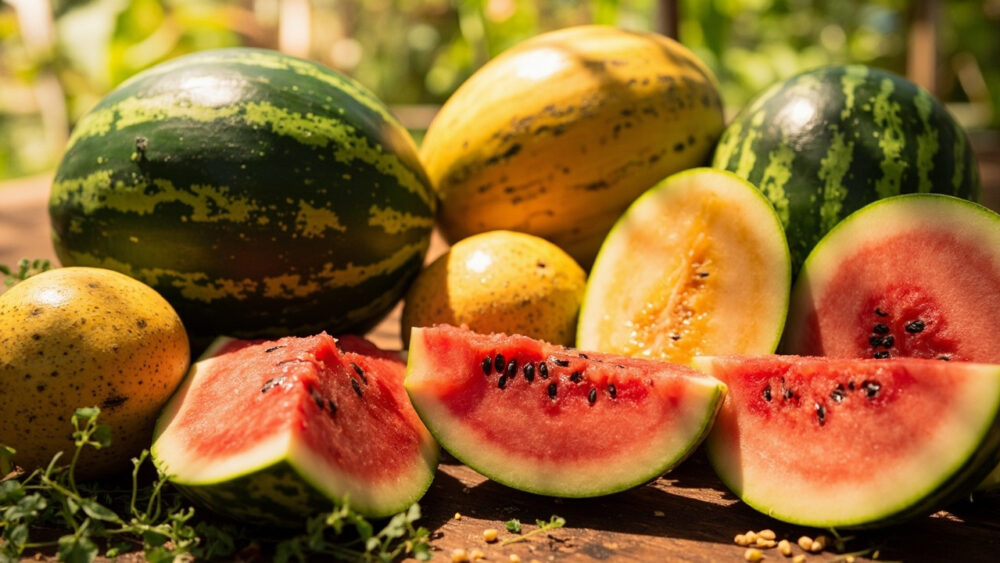
The fastest way to sort out types of watermelon is by size and rind pattern, not flavor, because size tells you instantly whether it fits your garden and your fridge. A 3 pound icebox melon and a 30 pound picnic melon are grown almost the same way but solve completely different problems. Get the size category right first and the variety choice practically makes itself.
Most first-time growers pick the giant striped picnic type because it is the one they grew up eating, and then they run out of garden space by July because they did not plan for 12 to 20 foot vines. Meanwhile the gardeners who have done this for decades are quietly growing the small yellow-fleshed types nobody asks for, because they ripen faster and fit a small raised bed without a fight.
Below are 15 real types across five groups, and number 13 is the one most people misjudge completely, usually buying it for looks and getting a mediocre bite. The last few entries and the actual method for choosing, based on your space, climate, and how much fuss you want to deal with, are waiting at the bottom.
Classic Picnic Watermelons
These are the big striped melons everyone pictures, and they need the most room and the longest season.
1. Crimson Sweet
The reliable all-rounder most seed racks lead with. Round to slightly oblong, 15 to 25 pounds, sweet red flesh, and it tolerates heat and average soil better than most heirlooms. Good pick for a first-timer with a full sun spot and 80 to 85 days to spare.
2. Charleston Gray
The disease-tough Southern standard. Long oblong shape, pale gray-green rind, and genuinely good resistance to fusarium wilt and anthracnose, which matters in hot humid climates where those diseases end a season early. Flesh is bright red and firm rather than syrupy sweet.
3. Jubilee
The one bred for shipping that still tastes good off the vine at home. Oblong, striped, often 20 to 40 pounds, with a tough rind that resists cracking. Needs a long warm season, 90-plus days, so it suits gardeners south of zone 6 more than short-season northern growers.
4. Allsweet
The improved Charleston Gray cousin bred for sweeter, firmer flesh without losing the disease tolerance. Oblong, 25 to 35 pounds, dark green stripes. A solid choice if you liked Charleston Gray’s toughness but wanted more sugar.
If a 20 pound melon on a sprawling vine already sounds like too much commitment, the next group solves that.
Icebox and Personal-Size Watermelons
These stay small, mature faster, and fit small yards, raised beds, or even large containers.
5. Sugar Baby
The classic small round melon most icebox growers start with. Dark green rind with no stripes, 8 to 10 pounds, sweet red flesh, ready in as few as 75 to 80 days. Vines still run 6 to 8 feet, so it needs room to sprawl even though the fruit is small.
6. Golden Midget
The one that tells you when it’s ripe without a thump or a tendril check. The rind actually turns from green to golden yellow as it matures, which takes the guesswork out completely. Melons run 3 to 4 pounds, pink flesh, and the whole plant matures in about 70 days, making it a genuinely good choice for short-season northern gardens.
7. Tiger Baby
The compact striped type for gardeners who want the classic look in a small package. Round, 8 to 10 pounds, orange-red flesh, matures in around 80 days on a manageable vine. A dependable middle ground between Sugar Baby and the bigger picnic types.
Small melons solve the space problem, but color is where the real surprises are.
Yellow and Orange Fleshed Types
Same watermelon, different pigment, and genuinely different flavor notes than the red types most people default to.
8. Yellow Doll
The mildly honeyed icebox type that converts red-only eaters fast. Round, about 3 to 6 pounds, yellow flesh with a flavor many describe as sweeter and less acidic than red varieties. Compact vines make it workable in smaller gardens.
9. Desert King
The drought-tolerant yellow-flesh option bred for arid growing conditions. Round to oval, 15 to 25 pounds, pale rind, and noticeably better heat and drought tolerance than most yellow types. Worth seeking out if you garden in a hot, dry climate and struggle to keep bigger melons watered.
10. Orangeglo
The deep orange heirloom with a flavor edge many gardeners describe as tropical or almost apricot-like. Oblong, 20 to 35 pounds, striped rind, and needs a full 90-plus day season to hit peak sweetness. Not a melon to rush, since underripe fruit is noticeably bland.
Color changes the eating experience, but rind pattern and texture change how the melon behaves in the garden and kitchen both.
Specialty Rind and Novelty Types
These are grown as much for a specific trait, edible rind, unusual pattern, or seedless convenience, as for classic sweetness.
11. Moon and Stars
The heirloom with actual yellow spots scattered across a dark green rind, like its name promises. Oblong, 15 to 40 pounds depending on the strain, sweet red flesh, and even the leaves show small yellow speckles, which makes it easy to identify in the garden long before the fruit forms. Slower and less uniform than modern hybrids, but a genuine conversation piece.
12. Cream of Saskatchewan
The cold-climate heirloom bred in Canada for short, cool seasons. Round, 8 to 10 pounds, pale green rind, and creamy white flesh with a mild sweetness. If you garden in zone 3 or 4 and thought watermelon was off the table, this is the variety that proves otherwise.
13. Seedless Hybrid Types (like Triploid varieties)
The one most people pick for the wrong reason. Buyers assume seedless means easier to grow, but these triploid hybrids actually need a second, seeded pollinator variety planted nearby to set fruit at all, and their seed is pricier and slower to germinate. Grown well, they give you the convenience everyone wants at the table, but they are genuinely the fussiest entry on this list to start from seed, and many home gardeners have better luck buying seedless starts rather than raising them from scratch.
14. Densuke
The nearly black-rind type grown more for looks and novelty than ease. Round, dark rind with almost no visible striping, sweet red flesh, and a long 90 to 100 day season. A fun one-off for an experienced grower with space to spare, not a good first watermelon.
One category left, and it is the one most people forget is a watermelon at all.
Citron and Edible-Rind Types
These are grown less for sweet fresh eating and more for preserving, pickling, or eating the rind itself.
15. Citron Watermelon
The one grown for the rind, not the flesh. Firm, pale, nearly flavorless white flesh that is traditionally cooked into preserves or pickled rather than eaten fresh. Vigorous and easy to grow, but skip it if you were hoping for a sweet slicing melon, since fresh eating quality is genuinely poor.
How to Choose the Right One
Match the melon to your space and climate before you fall for a variety photo.
- Measure your space first: if vines cannot run 6 to 12 feet, pick an icebox or personal-size type, not a picnic melon.
- Count your frost-free days: under 90 days favors Sugar Baby, Golden Midget, or Cream of Saskatchewan; 90-plus days opens up Jubilee, Orangeglo, and Densuke.
- Decide the purpose: fresh sweet eating points to red or yellow flesh types, preserving or pickling points to citron.
- Be honest about care appetite: seedless hybrids need a pollinator variety and more attention at germination, while heirlooms like Crimson Sweet and Charleston Gray tolerate more neglect.
- Check your soil temperature before planting: wait until it holds steady at 70 degrees Fahrenheit or warmer, since cold soil stalls germination regardless of variety.
- When in doubt on a first try, start with Sugar Baby or Crimson Sweet, both forgive mistakes better than the specialty types.
Pick by size and season first, and the flavor and color you actually want will follow without a fight.