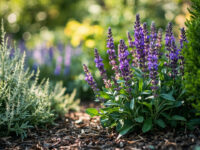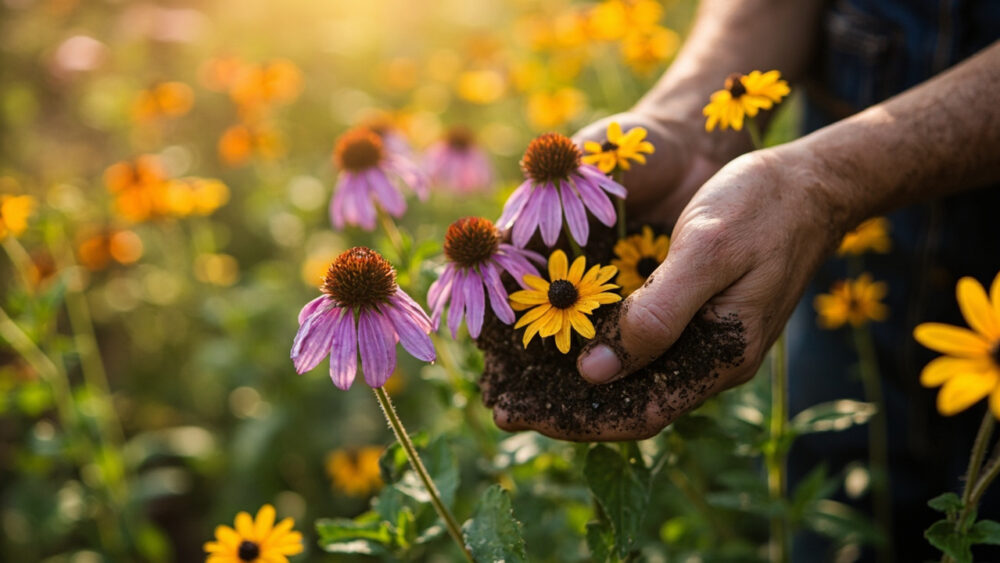
The plants that actually pull in bees, butterflies, and hummingbirds are native perennials with open, single-petaled flowers, planted in drifts of at least three to five of the same species, blooming in overlapping waves from early spring through frost. A handful of scattered single plants will not do it. Real pollinator garden plants work in numbers, in native species mixed with a few well-chosen non-natives, and in a bloom sequence that never leaves a gap longer than two or three weeks.
Most people planting a pollinator garden make one mistake that quietly guts the whole project, and it is not the plant list. There is also a sign of a healthy pollinator bed that new gardeners almost always misread as a problem and try to fix, which makes things worse.
Stick with this and you will get the save-able Pollinator Garden Plants at a Glance card at the bottom, the one worth screenshotting before you head to the nursery.
The Mistake That Ruins Most Pollinator Gardens
If you guessed the mistake is picking the wrong flowers, that is a reasonable guess and it is wrong. The real killer is a bloom gap. Gardeners load up on flashy midsummer bloomers, coneflower, bee balm, zinnias, and end up with a garden that is a buffet in July and a desert in April and September.
Pollinators need continuous food from the first warm days through the last ones before frost. A queen bumblebee emerging in March with nothing blooming nearby simply does not survive to start her colony. A monarch passing through in September with no late nectar skips your yard entirely.
The fix is planning in three tiers: early bloomers (crocus, wild columbine, serviceberry), midseason anchors (coneflower, bee balm, milkweed), and late-season carriers (asters, goldenrod, sedum). Aim for at least two species flowering at any given point in the season.
Once the bloom calendar is solid, the next decision is native versus ornamental, and this is where most people overthink it.
Native Plants Versus Ornamental Favorites
You do not need an all-native garden to help pollinators, but native plants should be the backbone. Natives evolved alongside local bees and butterflies, and many specialist insects, monarchs and milkweed being the famous example, can only use specific native hosts.
A good ratio is roughly 70 percent native, 30 percent well-chosen non-native. Lavender, zinnias, cosmos, and sunflowers are not native almost anywhere in North America, but they are heavy nectar producers that bees and butterflies use readily and they extend your bloom window cheaply from seed.
Skip the double-flowered ornamental varieties, double coneflowers, double marigolds, most double roses. Breeding for extra petals usually sacrifices the nectar-rich center or buries it so deep pollinators cannot reach it. A plant can look spectacular and feed nothing.
Getting the species right only matters if you also get the layout right, and that is where the second common misread happens.
Layout: Drifts, Not a Scattered Collection
Plant in blocks of three, five, or seven of the same species rather than one of everything. Pollinators forage by scent and color patch recognition, and a single purple coneflower lost among a dozen different plants is far less visible than a drift of five.
Group plants by height too, shortest in front, tallest in back or center if it is an island bed. This is standard border design, but in a pollinator garden it also keeps taller bloomers from shading out the low nectar sources bees rely on early and late in the day.
Leave a few bare patches of open, undisturbed soil. Many native bees are ground-nesting, not hive-builders, and a garden that is mulched wall to wall gives them nowhere to dig.
Here is the sign that trips up almost every new pollinator gardener, and it shows up right after everything starts growing.
The “Messy” Sign Everyone Tries to Fix
By midsummer your pollinator bed will look a little ragged: flopped stems, seed heads instead of fresh blooms on the earliest plants, a few leaves chewed by caterpillars. New gardeners see this and reach for pruners or, worse, a pesticide.
Do not clean it up too aggressively, and do not spray. Chewed leaves on milkweed, dill, or parsley are frequently monarch or swallowtail caterpillars doing exactly what you planted the host plant for. Spent flower heads left standing feed finches and other seed-eating birds through fall.
If you see aphids or a genuine pest outbreak, deal with it at the cultural level first: a strong water spray, hand removal, or an insecticidal soap applied per the product label. Avoid broad-spectrum insecticides entirely in a pollinator bed; they do not distinguish between the pest and the bee that just landed next to it.
A little visual chaos is the garden working, not failing, and that changes how you should think about fall cleanup too.
Timing: When to Plant and When to Leave It Alone
Plant most perennial pollinator plants in spring after the soil has warmed past about 50°F, or in early fall, six weeks before your first hard frost, so roots establish before winter. Direct-sown annual nectar plants like zinnias and cosmos go in after your last frost date, once nighttime temperatures stay reliably above 45 to 50°F.
Skip fall cleanup on most of the bed. Leave perennial stems and seed heads standing through winter. Many native bees overwinter inside hollow stems, and cutting everything to the ground in October removes next year’s bee population along with the dead foliage.
Cut back in early spring instead, once you see a few inches of new green growth at the base, and leave the cut stems in a brush pile nearby rather than hauling them off immediately, giving any overwintering insects a few more weeks to emerge.
Timing the planting is only half the job, though, spacing and depth are where a lot of new plants get lost before they ever bloom.
Spacing and Planting Depth That Actually Work
Space most perennial pollinator plants 12 to 18 inches apart for small to mid-size species like coneflower or bee balm, and 24 to 36 inches for larger ones like Joe Pye weed or native sunflowers. Crowding them tighter looks fuller the first year but invites powdery mildew and stem rot by year two.
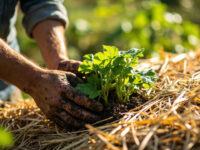
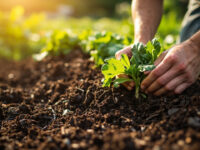
Plant at the same depth the plant sat in its nursery pot, no deeper. Burying the crown of a perennial is one of the fastest ways to rot it out over winter. For seed-started annuals, follow the seed packet depth, generally about twice the seed’s diameter.
Water new plantings deeply two to three times a week for the first month, then taper off as roots establish, most established native perennials need supplemental water only during real drought stretches.
With the bed planted and timed right, the last piece is picking varieties that cover every pollinator, not just the showy ones.
Plants for Bees, Butterflies, and Hummingbirds Specifically
Different pollinators favor different flower shapes, so a genuinely complete garden needs variety in form, not just color.
- For bees: bee balm, catmint, sedum, borage, native asters, anything flat or clustered they can land on easily.
- For butterflies: milkweed (the required host for monarchs), coneflower, zinnias, Joe Pye weed, phlox, flat-topped clusters they can perch on while feeding.
- For hummingbirds: cardinal flower, bee balm, salvia, trumpet honeysuckle, tubular red or orange flowers built for a long beak and tongue.
- For moths and night pollinators: evening primrose, four o’clocks, night-blooming jasmine where climate allows.
Mixing shapes this way is what turns a pretty flower bed into a working pollinator garden.
One honest caveat before the plant list gets locked to your phone: check a few of these against pet safety if animals share your yard.
A Quick Word on Toxicity
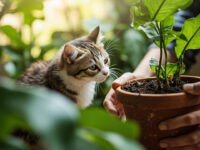
Several excellent pollinator plants are toxic to pets and, in some cases, people if eaten. Milkweed, foxglove, and larkspur are toxic to dogs and cats, and monkshood is toxic to humans as well through skin contact with sap, not just ingestion.
Watch for drooling, vomiting, lethargy, or irregular heartbeat in a pet you suspect has eaten a garden plant, and call your veterinarian right away rather than waiting to see what happens.
None of this means avoiding these plants, milkweed in particular is close to mandatory if you want monarchs, but it does mean placing riskier species toward the back of the bed if you have a chewing puppy or a curious toddler.
That is everything you need to choose and place the plants, now here is the whole thing condensed to what you actually save.
Pollinator Garden Plants at a Glance
- When to plant: perennials in spring after soil hits 50°F or in early fall six weeks before frost, annuals after your last frost date.
- Spacing: 12 to 18 inches for small to mid perennials, 24 to 36 inches for tall species like Joe Pye weed.
- Depth: same level as the nursery pot, never deeper, seeds at roughly twice their diameter.
- Bloom sequence: plant for three overlapping tiers, early spring, midsummer, and fall, so nothing goes more than two to three weeks without a bloom.
- Ratio: about 70 percent native species to 30 percent non-native nectar plants like zinnia, cosmos, or lavender.
- Layout: drifts of three to five of the same species, shortest in front, a few bare soil patches left for ground-nesting bees.
- Fall care: leave stems and seed heads standing over winter, cut back in spring once new growth appears.
Get the bloom sequence and the drifts right and the rest of the garden mostly takes care of itself.
Skip the pesticide, tolerate the chewed leaves, and give it a full season before judging the results.