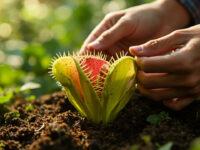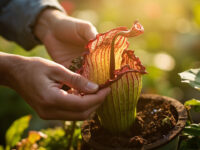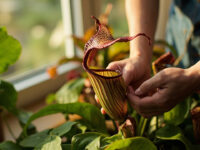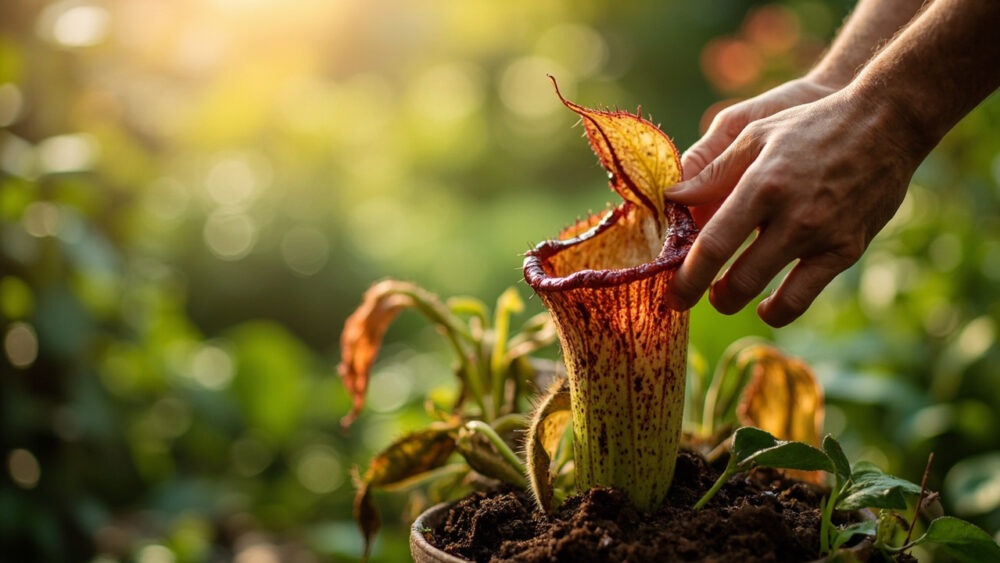
Care for a pitcher plant comes down to four things it will not compromise on: bright light, low-mineral water, poor acidic soil, and never any fertilizer poured into the potting mix. Get those four right and the pitchers keep coming all season. Get even one wrong and you will not see a dead plant right away, you will see a plant that quietly stops making traps, which is the first sign most people miss entirely.
Here is what trips up almost everyone new to these plants. It is not neglect. It is kindness in the wrong direction, tap water and houseplant fertilizer, both applied with good intentions and both capable of killing a pitcher plant slower than drought ever could.
Stick with me and you will know exactly what water to use, how to read a plant that has stopped trapping, which pest actually shows up on these things, and what a genuinely happy pitcher plant looks like versus one that is just surviving. Save-able specifics are waiting in the Pitcher Plant at a Glance card at the bottom, but the reasoning behind each number matters, so let’s get into it.
Light, Placement, and Temperature
Pitcher plants want direct or very bright light, four to six hours of actual sun for tropical species (Nepenthes), more for temperate American pitchers (Sarracenia), which want full sun most of the day. A south or west-facing window works for Nepenthes indoors. Sarracenia genuinely prefers to live outside in summer.
Indoors under weak light, the pitchers get small, pale, and eventually the plant just grows leaves with no traps at all. That is a light problem, not a watering problem, even though low water is most people’s first guess.
Temperature ranges depend on species. Highland Nepenthes want nights near 55 to 65°F and days in the 70s. Lowland Nepenthes tolerate warm, humid conditions closer to 75 to 90°F. Sarracenia are cold-hardy in USDA zones 6 to 9 and actually need a winter dormancy with temperatures dropping near freezing.
Know which type you have before you assume you know what it wants.
Watering: the Rule That Actually Matters
If you guessed that pitcher plants like to sit in a saucer of water like a swamp plant, you are half right, and the half you got wrong is the part that kills them. Water type matters more than water schedule. Tap water carries dissolved minerals and salts that build up in the poor soil these plants need and slowly poison the roots over months.
Use distilled water, reverse osmosis water, or clean rainwater, always. Keep Sarracenia sitting in an inch or two of water in a saucer during the growing season. Nepenthes prefer evenly moist soil, not standing water, watered when the top inch starts to feel dry.
Never let either genuinely dry out completely, that is the fastest route to crispy, dead pitchers.
Soil and Feeding: Why Fertilizer Is the Enemy
Pitcher plants evolved in bogs so nutrient-poor that trapping insects became their workaround for surviving at all. Regular potting soil and standard fertilizer will kill them, sometimes within weeks. The nutrients that make other houseplants thrive burn out these roots fast.
Pot in a mix of sphagnum peat moss and perlite, or peat and coarse sand, at roughly a 1:1 ratio. Never add compost, worm castings, or any commercial fertilizer to the soil.
If you want to feed a pitcher plant, feed the traps, not the roots. Drop a small dead insect, a pinch of freeze-dried bloodworm, or a diluted foliar orchid fertilizer spray (at quarter strength, misted directly onto a pitcher, never in the soil) into an open trap every month or two during the growing season. Indoor plants that catch nothing on their own genuinely benefit from this; outdoor plants usually feed themselves.
Get the mix and the feeding method right and the rest of care gets much easier.
Pruning, Repotting, and Cleaning: the Routine Work
Pitchers die back naturally, one at a time, and that is not a symptom of anything. Snip off blackened or fully dried pitchers at the base with clean scissors as they go, any time of year, to keep the plant tidy and reduce rot risk.
Repot every one to two years, in spring as new growth starts, moving up one pot size and refreshing the peat and perlite mix since it breaks down and compacts over time. Handle roots gently, they are fine and easily damaged.
Wipe dust off leaves occasionally with a damp cloth, but never touch the inside of an open trap unless you are feeding it, the digestive fluid and trigger mechanisms are easily disrupted by handling.
Most of what looks like a problem later actually starts here, at repotting time, so let’s talk about what goes wrong.
The Problems That Actually Show Up
The most common failure is not a pest, it is tap water mineral buildup, which shows as brown, crusty leaf tips and a slow decline over months with no obvious single cause. The fix is prevention: switch to distilled or rainwater immediately and flush the soil with it.
Mealybugs and aphids do occasionally show up on new growth and pitcher rims. Treat with insecticidal soap, applied to the pest directly and kept off the inside of open traps, following the product label exactly.
Fungal issues, usually a gray or black mold on dying pitchers, mean improving air circulation and trimming affected parts promptly.
And if you were waiting for the pitcher-stopped-trapping answer promised earlier: a plant that stops making pitchers and grows only flat leaves is almost always responding to low light or a nutrient source it does not need, not a disease.
Fix light and feeding before you assume you have a sick plant on your hands.
What a Genuinely Thriving Pitcher Plant Looks Like
A happy pitcher plant is constantly producing new traps, brightly colored ones, often with red or purple veining on Sarracenia or glossy deep color on Nepenthes, not just green leaves. New pitchers should appear every few weeks during the growing season.
The traps should smell faintly sweet near the rim, that is the nectar drawing insects in, and mature ones will often have a few trapped bugs inside, which is a good sign, not a mess to clean out.
If your plant checks those boxes, you are doing this right, and everything above is just maintenance from here.
Pitcher Plant at a Glance
- Light: four to six hours of bright or direct light for Nepenthes, full sun most of the day for Sarracenia.
- Water: distilled, reverse osmosis, or rainwater only, never tap water.
- Watering method: Sarracenia sit in one to two inches of standing water, Nepenthes stay evenly moist without standing water.
- Soil: peat moss and perlite or peat and sand at roughly a 1:1 ratio, no compost or potting soil.
- Feeding: small insects or diluted foliar fertilizer misted into open traps monthly, never fertilizer in the soil.
- Repotting: every one to two years in spring, moving up one pot size.
- Temperature: depends on type, highland Nepenthes want cooler nights near 55 to 65°F, Sarracenia tolerate near-freezing winter dormancy.
If you remember one thing, remember the water. Distilled or rainwater, no exceptions, no fertilizer in the soil, and this plant will outlast most of the houseplants next to it.