Pitcher plant care indoors comes down to four things the plant cannot compromise on: bright light, consistently damp roots, poor acidic soil, and humidity higher than your living room naturally offers. Get those four right and the pitchers stay plump and colorful. Get even one wrong and the plant will tell you fast by dropping pitchers and growing plain leaves instead.
Most of these plants die from good intentions. The reader who waters with tap water because it seems gentler, or feeds it like a houseplant because that seems generous, is making the two mistakes that end most indoor attempts within a few months.
There is also a sign almost everyone misreads: a pitcher plant that stops making pitchers is not necessarily dying. Stick around, because the save-able Pitcher Plant at a Glance card at the bottom of this guide has the exact numbers for light, water, and soil you will want pulled up on your phone the next time you are standing in front of this plant wondering what it needs.
Light, Placement, and Temperature
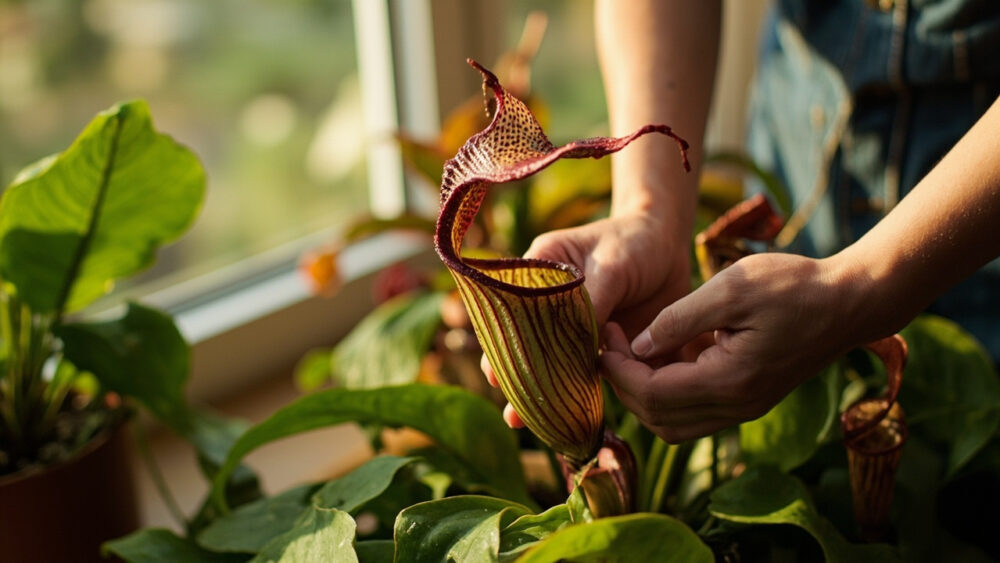
Pitcher plants (Nepenthes, the tropical vining type most commonly sold as houseplants) need bright, indirect light for at least 4 to 6 hours a day. A spot 1 to 2 feet from an east or west window works well. Direct hot afternoon sun through glass can scorch the pitchers, but too little light is the more common killer indoors.
If your plant is producing leaves but no pitchers, insufficient light is the usual reason, not lack of food or humidity as most people assume.
Temperature matters less than people expect. Most Nepenthes sold as houseplants are lowland or intermediate hybrids that do fine between 65 and 85°F during the day, with a slight nighttime drop. Avoid cold drafts below 55°F and avoid sitting the plant directly on a heat vent.
Next, the part that trips up almost everyone: how much water is actually enough.
Watering: How Much, How Often, and How to Tell
Keep the growing medium consistently moist, never bone dry and never sitting in a swamp. Check by pressing a finger into the top inch of mix. If it feels dry at that depth, water.
Most indoor plants need water every 2 to 4 days in a warm room, less often in cooler or more humid conditions. Use distilled water, rainwater, or reverse osmosis water only. Tap water and softened water carry dissolved minerals and salts that build up in the mix and kill the roots over weeks, quietly, with no dramatic symptom until it is too late.
This is the mistake that ends most attempts, and it rarely gets blamed correctly because the plant does not wilt right away.
Many growers keep the pot sitting in a shallow tray of distilled water about half an inch deep, refilling as it evaporates, which keeps the roots damp without guessing daily.
Watering correctly still will not save a plant sitting in the wrong soil, so let’s fix that next.
Soil, Potting Mix, and Feeding
Regular potting soil will kill a pitcher plant within a season. It holds too many nutrients and salts for roots evolved to grow in nutrient-poor bog conditions. Use a mix of long-fibered sphagnum moss and perlite, or sphagnum with orchid bark, in roughly equal parts.
Skip fertilizer in the soil entirely. If you assumed a hungry-looking plant needs feeding through the roots like a tomato, that guess is exactly backward here and will burn the roots outright.
Feed through the pitchers instead, not the soil. Drop one or two dead insects (a small cricket, a few dead fruit flies) into a mature pitcher every 4 to 6 weeks. Skip feeding entirely in winter when growth slows.
Now that the plant is fed and rooted correctly, here is the maintenance rhythm that keeps it that way.
Pruning, Repotting, and Routine Cleanup
Trim off dead or blackened pitchers at the base as they occur. This is cosmetic and preventive, not urgent, but rotting pitchers left on the plant can invite fungal problems in the crown.
Repot every 1 to 2 years, ideally in spring as new growth starts. Signs it is overdue: mix that has broken down to a dense, soggy sludge, or roots circling tightly and pushing out of the drainage holes. Move up one pot size at most, since these plants do not like being swallowed by too much fresh mix at once.
Wipe dust off the leaves occasionally with a damp cloth, and never use leaf shine products, which clog the pores these plants rely on.
Even with a good routine, problems still show up, and here is how to catch them early.
The Problems Most Likely to Strike
- No new pitchers, just leaves: almost always low light or low humidity, not lack of food. Move it closer to a bright window and raise humidity before anything else.
- Brown, crispy pitcher edges: humidity too low, commonly below 40 percent. Group plants together, use a pebble tray, or run a small humidifier nearby.
- Yellowing older leaves: often normal aging, but if it spreads to new growth check for mineral buildup from tap water and flush the pot with distilled water.
- Wilting despite moist soil: root rot from waterlogged, broken-down mix. Unpot, trim black mushy roots, and repot into fresh sphagnum and perlite.
- Small sap-sucking insects on new growth: aphids or mealybugs occasionally show up. Wipe them off or treat with an insecticidal soap labeled safe for houseplants, following the product label exactly.
Once those issues are handled, the harder question is knowing what healthy actually looks like.
How to Tell It Is Genuinely Thriving
A thriving pitcher plant is constantly producing new pitchers, not just leaves, with each one slightly larger or more colorful than the last. The pitchers should feel firm and hold a small pool of liquid inside, which is normal and not a sign of overwatering.
New vine growth reaching for something to climb is another strong sign, since Nepenthes are natural climbers and will send out tendrils looking for support once they are happy.
If the plant has gone quiet with no new pitchers for more than 2 to 3 months during the growing season, something in light, humidity, or water quality needs adjusting, not more fertilizer.
Here is everything above condensed into the version worth saving.
Pitcher Plant at a Glance
- Light: bright, indirect light 4 to 6 hours daily, near an east or west window, out of direct hot afternoon sun.
- Water: keep mix consistently moist, check the top inch by feel, water every 2 to 4 days using only distilled, reverse osmosis, or rain water.
- Soil: sphagnum moss mixed with perlite or orchid bark, never regular potting soil.
- Feeding: drop a small dead insect into a mature pitcher every 4 to 6 weeks, no soil fertilizer, skip feeding in winter.
- Humidity and temperature: aim for 50 percent humidity or higher, keep temperatures between 65 and 85°F, avoid drafts below 55°F.
- Repotting: every 1 to 2 years in spring, moving up only one pot size.
- Trouble signs: no new pitchers means check light and humidity first, crispy edges mean raise humidity, mushy roots mean repot immediately.
Water quality and light are what separate a pitcher plant that limps along from one that fills a windowsill with pitchers.
Get those two right and almost everything else on this list takes care of itself.