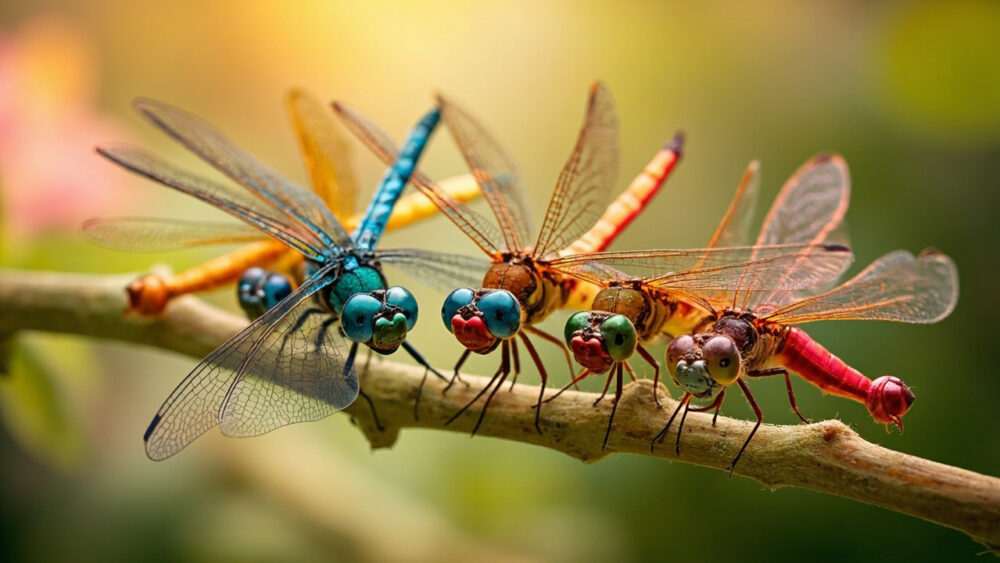
The fastest way to sort out dragonfly types is by where they hold their wings and how they fly, not by color. Skimmers and darners fly fast and hold wings flat out to the sides at rest, while their cousins the damselflies fold wings back over the body, a difference you can spot from ten feet away before you even see color. Learn that one distinction and the whole confusing swarm at your pond starts sorting itself into families.
Most people identify the ones they already know, the big blue darners and the common red skimmers, and stop there, missing the smaller, stranger species doing the real pest control work in the yard. There is also an underrated group that experienced pond watchers look for first because it tells them the water quality is genuinely good, not just wet. And number 13 on this list is the one almost everyone misnames on sight, confusing it for a completely different family.
Stick with this through all fifteen and you will hit the last few entries plus a straightforward method for identifying whatever is buzzing your garden this afternoon, no field guide required.
The Big, Obvious Ones (Skimmers)
Skimmers are the dragonflies most people picture first, chunky, patterned, and perch happily on a favorite twig or fence post.
1. Common Whitetail
The defining trait is the chalky white abdomen on mature males, paired with dark wing patches near the body. Females and young males are brown with a checkered wing pattern instead, so many people think they are seeing two different species. They favor still water, tolerate heat well, and are usually the first dragonfly you notice in a suburban yard.
2. Eastern Pondhawk
Males run powder blue, females and juveniles bright green, both with a slightly flattened, low-slung flight style close to the grass. They are aggressive hunters that will take other dragonflies, including their own kind, and they like sunny, open ground near ponds more than deep shade.
3. Twelve-Spotted Skimmer
Count the wing spots and you have the ID done for you, three dark patches per wing, twelve total, with white spots between them on mature males. It is a strong, patrolling flier that claims a stretch of shoreline and defends it, so you will often see the same individual in the same spot for days.
4. Widow Skimmer
Look for the broad dark band at the base of each wing with a pale, almost frosted tip on older males. It has a slower, more deliberate flight than the pondhawk and prefers weedy, sheltered pond edges over open water.
5. Halloween Pennant
Orange wings with dark bands are the giveaway, and it perches at the very top of tall grass stems, swaying in the wind like a tiny flag rather than sitting still. It is a warm season species that shows up in meadows and pond margins from mid-summer on.
Skimmers get all the attention, but the fast, restless fliers in the next group are doing more of the mosquito control.
The Fast Patrollers (Darners)
Darners are the big-bodied, strong-flying dragonflies that patrol at head height and rarely sit still for long, which makes them harder to identify but easier to appreciate in motion.
6. Common Green Darner
A green thorax with a blue or purple abdomen makes this one of the largest and most recognizable dragonflies in North America. It migrates in loose swarms in fall, similar to monarch butterflies, and is often the dragonfly people notice first simply because of its size, three inches long or more.
7. Blue-Eyed Darner
The eyes are the tell here, a vivid true blue that stands out even in flight, on a body striped blue and black. It favors mountain and foothill ponds in the western half of the country and tends to fly later in the day than most other darners.
8. Shadow Darner
It flies at dusk when almost every other dragonfly has quit for the day, dark bodied with pale blue-green spots that only show clearly in low light. This is the species to watch for if you are outside near water right at sunset and see one last dragonfly still working the air.
9. Swamp Darner
It is the longest common dragonfly in the eastern half of the country, often over three inches, with a green thorax marked by black seams. It prefers shaded, wooded streams and swamps rather than open ponds, so it shows up less in yard sightings and more on wooded hikes.
If darners are the pond’s long-distance fliers, the next group is built entirely for hovering and precision.
The Small Precision Fliers (Clubtails and Cruisers)
These species trade raw speed for control, hovering, backing up, and darting sideways in ways the bigger darners rarely bother with.
10. Dragonhunter
This one eats other dragonflies, including darners twice its own body length, and its thick, club-shaped abdomen tip is the identifying feature once you know to look for it. It is a river species, found along fast, clean-flowing water rather than still ponds, and a sighting is a genuinely good sign of water quality.
11. Common Sanddragon
Pale, sandy coloring lets it disappear against bare shoreline, which is exactly the habitat it needs, open sandy banks along clean streams. It is smaller and less flashy than most entries here, but it is one of the better indicator species for anyone trying to gauge stream health.
12. Stream Cruiser
It looks like a cross between a clubtail and a skimmer, with a slim brown and yellow body and a habit of cruising slow, steady loops just above the water surface. Look for it along rocky, moving streams in spring, since it is one of the earlier-emerging species in many regions.
Number 13 is coming up next, and it is the one nearly everyone misidentifies at first glance.
The Ones People Get Wrong
These two get mistaken for other families constantly, which is exactly why they belong in their own group.
13. Wandering Glider
Most people call this a darner because of its size and constant flight, but it is actually a skimmer, just one that almost never lands. It has a golden brown body and glides on thermals for miles, sometimes riding storm fronts, which is why it turns up far from any water at all, including on boats far offshore.
14. Blue Dasher
It gets confused with pondhawks constantly because of the blue coloring, but the yellow-striped thorax and habit of perching with wings angled slightly forward, not flat, sets it apart. It is one of the most heat tolerant dragonflies around, common at warm, still ponds even in the middle of a hot afternoon when other species have gone quiet.
One entry left, and it is the smallest and easiest to overlook of the whole list.
The One Everyone Overlooks
This last species proves size has nothing to do with how interesting a dragonfly is to watch.
15. Elfin Skimmer
It is the smallest dragonfly in North America, barely an inch long, and easy to write off as a large damselfly at first glance. Mature males turn powder blue like a miniature pondhawk, and it favors boggy, acidic wetlands rather than typical garden ponds, so finding one at all is a small win for a habitat watcher.
Now that you have seen all fifteen, here is the fast way to put a name to whatever just landed near you.
How to Choose the Right One
- Start with wing position at rest: flat out to the sides means skimmer, darner, or clubtail family, folded back along the body means you are actually looking at a damselfly, not a true dragonfly.
- Check size and body build next: over three inches and constantly patrolling points to a darner, under one and a half inches and perching often points to a skimmer.
- Look at habitat: still ponds favor skimmers and pondhawks, moving streams favor clubtails and cruisers, boggy acidic water favors smaller specialists like the elfin skimmer.
- Note the time of day: dusk activity narrows things toward shadow darner, midday heat tolerance points toward blue dasher.
- Match color pattern last, since color varies by age and sex within a single species and misleads more often than it helps.
- If a dragonfly is eating another dragonfly, check for a club-shaped abdomen tip first, since that behavior narrows things toward dragonhunter fast.
Fifteen species, four habits to check, and you will have a name for almost anything patrolling your pond this season.
Go stand by the water for five quiet minutes and let one come to you.