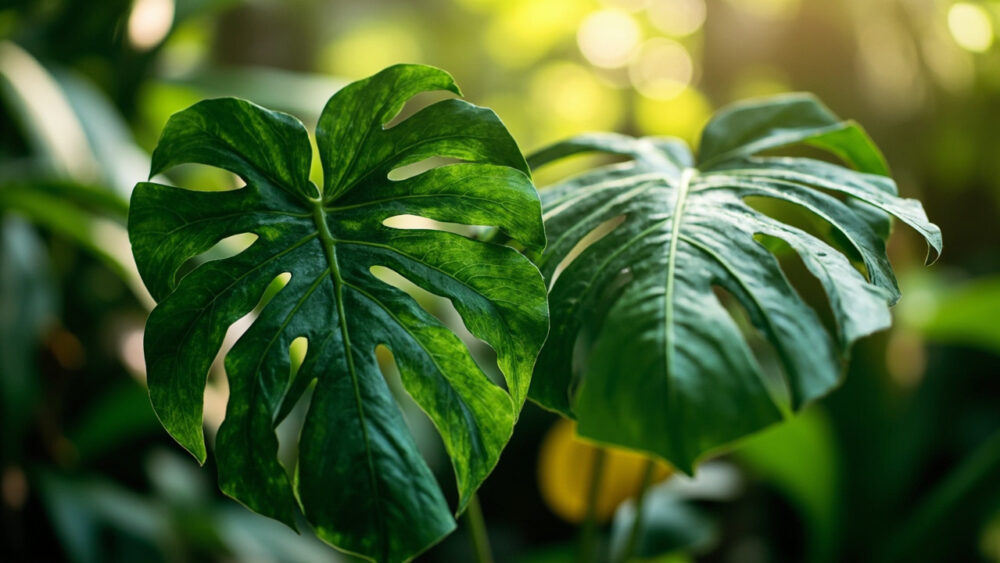
Here is the honest monstera vs philodendron answer: if you want the big dramatic statement plant with holes punched through the leaves, get a monstera. If you want something easier, faster to fill a shelf, and far more forgiving of a missed watering, get a philodendron.
Most people think the difference is just leaf shape, and that guess is not wrong, but it is not what actually decides which one belongs in your house. The real decider is how much light you have and how patient you are, and that flips the usual advice more often than you would think.
There is also the tangled family history nobody explains well, plus a couple of famous “differences” that do not actually matter once the plants are a few years old. Stick around, because the side-by-side card at the very bottom is the one worth screenshotting before you buy either one.
The Key Differences
Growth Habit
Monstera is a climber that wants to get big. Given a moss pole or a wall to grab, a mature monstera deliverata will throw leaves 12 to 18 inches across, split and fenestrated, on a plant that can reach 6 to 8 feet indoors over several years.
Philodendron covers more ground here because it is not one growth habit, it is dozens. Some, like Philodendron hederaceum (heartleaf), trail and vine gently. Others, like Philodendron selloum or Philodendron ‘Birkin’, grow as self-heading rosettes that never climb at all.
Lean: monstera for one big vertical statement, philodendron for flexibility in how the plant fills a space.
Care and Forgiveness
Monstera wants bright, indirect light, and without it you get small, unfenestrated leaves and a plant that just sits there for a year. It also wants to dry out between waterings, roughly when the top 2 inches of soil feel dry, and it sulks in low humidity.
Philodendron, especially the common heartleaf types, tolerates medium light, irregular watering, and dry apartment air far better. It is the plant that survives a forgotten week better than almost anything else in this category.
If you have already killed two plants this year, the forgiveness gap alone should decide this for you.
Climate and Placement
Both are tropical understory plants at heart and both are grown as houseplants across nearly all of the US, only surviving outdoors year round in USDA zones 10 to 12. Neither tolerates temperatures below about 50°F for long.
Monstera is pickier about draft and cold windows, dropping leaves or yellowing fast near a chilly winter pane. Philodendron shrugs off a slightly less ideal spot with less drama.
That gap in tolerance matters most in the exact rooms most people actually have houseplants in.
Toxicity
Both monstera and philodendron contain insoluble calcium oxalate crystals and are toxic to cats, dogs, and people if chewed or eaten, causing mouth and throat irritation, drooling, and vomiting. Neither is safer than the other on this point, so it is not a real tiebreaker.
If a pet or child chews on either plant, call a veterinarian or poison control rather than waiting to see what happens.
Keep both out of reach the same way, and move on to what actually separates them.
Cost and Availability
Common heartleaf philodendron is cheap, often the least expensive vining plant at any nursery or big box store, and easy to find as a small starter plant. Rare philodendron cultivars like ‘Pink Princess’ or ‘White Wizard’ can cost as much as a nice monstera, but the everyday philodendron is a budget plant.
Monstera deliciosa has gotten cheaper as it became trendy, but variegated forms and larger, fenestrated specimens still carry a real premium.
Budget shoppers usually land on philodendron by default, and that default is a good one.
When Monstera Is the Right Call
Pick monstera if you have a bright spot, ideally near an east or south-facing window with some direct morning sun, and you actually want a plant that becomes furniture over time. You need patience, since real fenestration (the splits and holes) only shows up on mature leaves once the plant has several nodes behind it.
Monstera rewards people who like a project with a visible payoff. If you are staking a moss pole, rotating the pot for even light, and wiping dust off big leaves monthly, you will enjoy owning one.
It is the wrong choice for a dim apartment or for someone who wants instant fullness this month.
If that patience sounds like a chore rather than a hobby, philodendron is about to look a lot better.
When Philodendron Is the Right Call
Pick philodendron if you want fast, forgiving growth in a medium-light room, or if you want a trailing plant for a shelf, hanging basket, or bookcase rather than a climbing centerpiece. Heartleaf philodendron will produce new leaves almost continuously in decent light and tolerates the kind of inconsistent watering real life produces.
It is also the better beginner plant, full stop. New growers get faster wins and fewer dramatic crises.
If you travel often or simply forget plants exist for stretches at a time, philodendron survives that better than monstera does.
The two are close relatives, though, which raises an obvious question.
Can You Grow Both Together?
Yes, and it is a genuinely good idea rather than a compromise. Monstera and philodendron share nearly identical light, water, and humidity preferences, so they group well on the same plant stand or windowsill without one dictating conditions the other hates.
Mixing a climbing monstera behind a trailing philodendron also reads well visually, tall structure with a softer, cascading plant in front.
Just do not assume they are interchangeable in a recipe or a plant identification sense: outside of houseplant use, do not eat any part of either plant, and never rely on a comparison like this one to identify a wild philodendron-like plant for eating.
Growing them side by side settles the practical question, but the buying decision still needs one clear answer.
The Verdict
If you are choosing one plant and you have real bright indirect light, get the monstera, it pays off in a way few houseplants do once it matures. If your light is average, your schedule is inconsistent, or this is your first big leafy plant, get the philodendron, specifically a common heartleaf, and let it prove itself before you spend more on anything rarer.
Monstera vs. Philodendron at a Glance
- Growth habit: Monstera climbs tall with large fenestrated leaves, Philodendron ranges from trailing vines to compact rosettes depending on type.
- Light needs: Monstera wants bright indirect light with some morning sun, Philodendron tolerates medium light without complaint.
- Watering: Monstera prefers drying out between waterings, Philodendron forgives missed or irregular watering better.
- Cold and draft tolerance: Monstera reacts fast to chilly windows and drafts, Philodendron handles a less ideal spot with less drama.
- Toxicity: Both are toxic to pets and people if chewed, causing mouth and throat irritation, call a vet for any suspected ingestion.
- Cost: Common Philodendron is typically cheaper and easier to find, rare cultivars of either plant can be pricey.
- Best for beginners: Philodendron, especially heartleaf types.
- Best for a statement plant: Monstera, once mature and given a pole to climb.
Either one earns its spot on a windowsill. Pick based on your light and your patience, not the hype.