Root rot almost always comes down to one thing: soil that stayed wet too long and choked the roots of oxygen, letting fungi move in and kill tissue. The fix, in most cases, is to get the plant out of that soggy soil, cut away the dead roots, and repot into something that drains fast. If you catch it before the whole root system is mush, plants often bounce back within a few weeks.
Here’s the part almost everyone gets wrong first: they blame the plant for looking thirsty and water it more. Wilting leaves on a plant sitting in wet soil is one of the most misread signals in gardening, and reacting the obvious way is exactly how root rot finishes the job.
There’s also more than one way roots rot, and the fix is different depending on which one you’re dealing with. Some cases recover fully, some plants are already past saving, and the only honest way to know which camp you’re in is to actually look at the roots. Stick around, because the full diagnosis checklist is waiting at the bottom, and it’s built to run in about two minutes with the plant right in front of you.
Causes of Root Rot, Most to Least Likely
1. Overwatering and poor drainage
This causes the vast majority of root rot cases, especially in containers. Confirm it by pulling the plant and checking the pot: if there’s no drainage hole, a liner still holding water, or soil that’s soggy more than an inch down days after the last watering, this is your cause.
Fix it by dumping any water sitting in a cachepot or saucer, switching to a pot with real drainage, and letting the top 1 to 2 inches of soil dry between waterings going forward.
Drainage is the foundation, but the soil itself matters just as much.
2. Heavy, compacted, or old potting soil
Potting mix breaks down over a year or two and starts holding water like a sponge instead of draining. Confirm it by squeezing a handful of soil from the root zone: if it clumps into a wet ball and stays that way, or smells sour and swampy, the mix has collapsed.
Fix it by repotting into fresh mix cut with perlite, bark, or coarse sand, roughly one part amendment to three or four parts potting soil, so water actually moves through instead of pooling around the roots.
Sometimes the soil is fine and the problem is what’s living in it.
3. Fungal pathogens already established in the soil
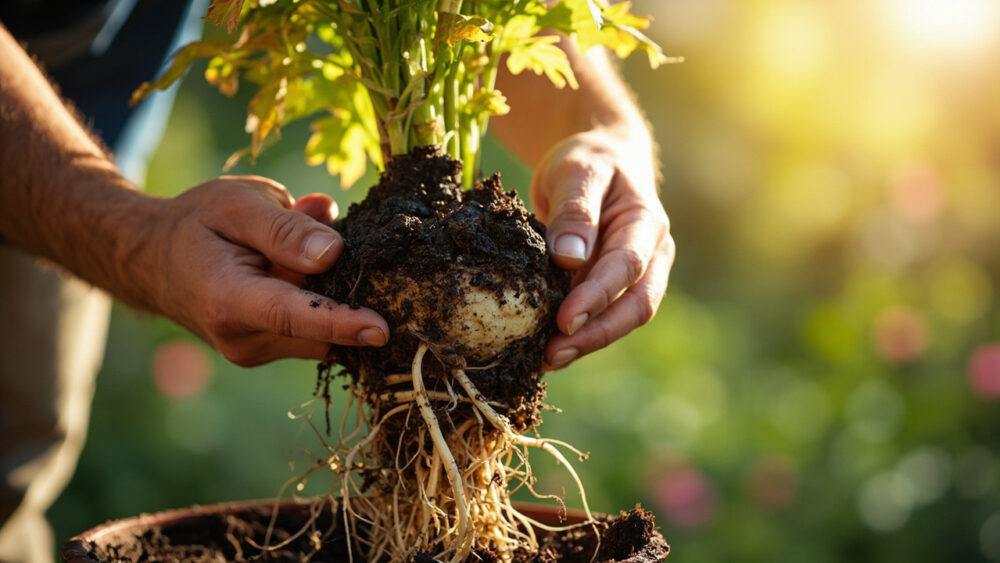
Once conditions stay wet long enough, fungi like Pythium, Phytophthora, or Rhizoctonia move in and start killing roots directly, and from that point the rot can progress even if you correct the watering. Confirm it by checking root color and texture: healthy roots are firm and white to tan, rotted ones are brown to black, mushy, and the outer layer slips off like a wet sock when you tug it, often with a sour or sulfur smell.
Fix it by trimming every affected root back to clean white tissue with sterile scissors or shears, then repotting in fresh, sterile mix. A fungicide labeled for root rot pathogens can help protect the remaining roots, always applied exactly per the product label.
How far the damage has spread often depends on how deep the soil sits in the pot.
4. Pots with no drainage or the wrong size
A decorative pot with no hole, or a pot that’s oversized for the plant’s current root mass, both create pockets of standing water the roots sit in for days. Confirm it by checking the bottom of the pot and the ratio of roots to soil: a small root ball in a large volume of soil means a large volume of water with nowhere to go and no roots pulling it out.
Fix it by sizing the pot to the root ball, going up only 1 to 2 inches in diameter at a time, and drilling or choosing drainage holes every time.
Container problems are common, but garden beds have their own version of this same mistake.
5. Low spots and poor drainage in garden beds
Outdoors, root rot shows up in the same low corner of the yard every time it rains hard, because water collects there and sits. Confirm it by checking the area an hour after heavy rain: if water is still standing or the soil stays saturated a day later, that spot is the cause, not the plant.
Fix it by building a raised bed or mound for anything planted there, or regrading so water sheds away, since no amount of careful watering fixes a spot that floods on its own.
One more cause gets blamed constantly and deserves a straight answer.
6. Underwatering (the copycat, rarely the real cause)
Underwatered plants wilt too, and the leaves can look nearly identical to a rotting plant’s leaves at first glance. Confirm it by checking the soil: if it’s bone dry an inch down and the pot feels light, this is dehydration, not rot, and the roots will be firm and pale when you check them.
Fix it by watering thoroughly and resuming a normal schedule; no repotting or root trimming needed.
Telling these apart on sight is the actual skill here, so let’s line them up.
How to Tell the Causes Apart
Where the damage starts is the biggest tell. Root rot begins at the base, older, lower leaves yellow and go limp first, often while the newest growth still looks okay for a while.
Underwatering hits the whole plant fairly evenly, and leaves feel dry, crispy, or curled rather than soft and yellow.
Smell is underrated: wet, sour, swampy soil points to fungal rot, while dry, dusty soil with no odor points to drought stress.
Texture is the tiebreaker every time: firm white roots mean the plant is fine underground, mushy brown or black roots mean rot, no matter what the leaves are doing.
Once you know which one you’ve got, the next question is whether it’s worth saving.
Will It Recover?
Plants caught early, with most roots still white and only the tips or bottom layer affected, usually recover fully within 2 to 6 weeks of a repot into dry, fast-draining soil.
Plants with more than half the root mass brown and mushy are a harder call. Trimming aggressively and repotting can work, but expect a long stall, sometimes a full growing season, while the plant rebuilds what it lost.
If the stem base is soft, dark, and mushy too, or there are no firm white roots left anywhere, that plant is not coming back. Cutting your losses and starting a new one from a healthy cutting, if the plant permits it, is the honest move.
Whatever the outcome this time, the next round is entirely up to how you manage water from here.
How to Keep It From Happening Again
Check soil before you water, not the calendar. Stick a finger 1 to 2 inches down; if it’s still damp, wait.
Use pots with drainage holes every time, and empty saucers within an hour of watering so roots never sit in standing water.
Repot into fresh mix every 12 to 24 months, since old, broken-down soil is one of the quiet drivers of rot even when your watering habits haven’t changed.
For beds that flood, raised soil beats fighting the grade every single season.
Now here’s the two-minute rundown to run at the plant, saveable for next time.
Diagnosis Checklist
- Check the soil an inch down: if damp or wet and the leaves are wilting, suspect rot, not thirst.
- Check the pot for a drainage hole and check the saucer for standing water: if either holds water, that’s a direct cause.
- Squeeze a handful of soil from the root zone: if it clumps into a soggy ball or smells sour, the mix has broken down.
- Slide the root ball out and rinse gently: note the color, firm white or tan versus brown or black.
- Tug gently on a questionable root: if the outer layer slips off like a wet sock, that root is dead.
- Check the stem base at soil level: if it’s soft, dark, and mushy, prognosis is poor.
- Estimate how much of the root mass is still firm and white: over half, expect recovery, under half, expect a long stall or a restart.
- If underwatering is confirmed instead, water thoroughly and skip the repot entirely.
Run that checklist once and you’ll know exactly which plant you’re dealing with. Fix the water and the soil, and most root rot never comes back.