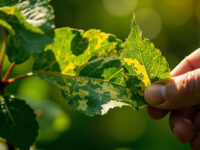
That white, flour-dusted coating on your leaves is almost always powdery mildew, and the fix that works fastest is cutting off the worst leaves, improving airflow around the plant, and spraying a potassium bicarbonate or sulfur-based fungicide right away, following the label exactly. It spreads fast once it starts, but it rarely kills an established plant outright. How to treat powdery mildew depends a little on which plant you’re looking at and how far it’s already spread, so the details matter.
Most people blame overwatering the second they see white fuzz, and that guess is almost always backwards. This disease actually loves dry leaves and humid air, not wet soil.
There’s one detail on the plant, where the coating started and which leaves it hit first, that tells you exactly what you’re dealing with and how urgent this is. There’s also an honest answer about whether the plant bounces back, and it’s not the same for every case. Stick around for the two-minute diagnosis checklist at the bottom, save it before you walk back out to the garden.
Causes, Ranked Most to Least Likely
1. Humid air with dry leaf surfaces (the classic setup)
This is the cause behind the vast majority of powdery mildew outbreaks. Unlike most fungal diseases, powdery mildew spores germinate best when the air is humid but the leaf surface itself stays dry, which is exactly what happens on warm days with cool, damp nights.
Confirm it: check your local conditions over the past week or two. Warm days, cool nights, and no recent leaf-wetting rain point straight here.
Fix it: remove the worst-affected leaves, then spray with a sulfur, potassium bicarbonate, or neem-based fungicide labeled for powdery mildew, following the label’s timing and rate exactly.
Once you’ve ruled in the weather, the next question is whether your plant’s own layout is making it worse.
2. Poor airflow from crowding or dense canopy
Plants packed too close together, or a single plant left to grow into a dense, leafy mass, trap humid air right at leaf level. That still air is a greenhouse for mildew spores even when the surrounding garden air feels normal.
Confirm it: reach into the center of the plant. If it feels noticeably stiller and more humid than the air six inches away, airflow is your problem.
Fix it: thin crowded stems, increase spacing next round, and prune out interior leaves on bushy plants like squash, cucumbers, and bee balm to open the canopy.
If thinning the plant doesn’t feel like it addresses much, look up instead of in.
3. Too much shade
Powdery mildew shows up far more on plants growing in partial shade than on the same species grown in full sun, because shaded leaves dry slower after dew or light rain and the fungus gets a longer window to establish.
Confirm it: note how much direct sun the affected plant actually gets. Under six hours, especially morning shade that delays dew from drying off, is a strong match.
Fix it: you can’t move a shrub overnight, but you can prune back overhanging branches from neighboring trees and shrubs to buy the plant more direct light and faster-drying foliage.
Sun exposure is one thing you can partly control, but genetics play a role too.
4. Susceptible variety
Some varieties are just magnets for this disease. Certain zucchini and cucumber cultivars, old garden phlox, bee balm, and many rose varieties get hit every single year almost regardless of care, while resistant cultivars of the same species barely show a spot.
Confirm it: if this exact plant gets powdery mildew every season by midsummer no matter what you change, and neighboring different varieties of the same species stay cleaner, the variety itself is working against you.
Fix it: treat this season’s outbreak as above, then next year, look specifically for mildew-resistant cultivars when you buy.
Watering habits get blamed constantly here too, so it’s worth setting the record straight.
5. Overhead watering that wets leaves late in the day
This is a smaller factor than most gardeners assume, since dry leaves actually favor the fungus. But watering overhead late in the day, then leaving foliage wet through a cool night, does encourage other rot issues and can stress leaves enough to make them more vulnerable to mildew colonizing damaged tissue.
Confirm it: if you’re watering with a sprinkler or hose in the evening and leaves stay wet past dark, this is contributing.
Fix it: water at the base of the plant in the morning instead, so foliage dries by afternoon.
One more cause gets blamed constantly and deserves to be cleared up directly.
6. Nitrogen overload (the overlooked contributor)
Heavy nitrogen feeding pushes out soft, lush new growth that’s more susceptible to fungal infection than growth fed at a moderate, balanced rate. Gardeners who fertilize generously all season, especially with high-nitrogen lawn or vegetable feeds, see mildew show up on that tender new growth first.
Confirm it: check whether the newest leaves at branch tips are the softest, floppiest growth on the plant and whether you’ve been feeding heavily this season.
Fix it: back off nitrogen for the rest of the season and switch to a balanced or lower-nitrogen feed next year.
Now that you know every likely culprit, here’s how to tell them apart on sight in under a minute.
How to Tell the Causes Apart
Where it starts matters. Weather-driven and shade-driven mildew usually starts on lower, older, more shaded leaves first, then climbs upward. Airflow problems show up in the densest interior of the plant regardless of leaf age.
Variety-driven mildew tends to appear uniformly across the whole plant almost overnight once conditions turn favorable, rather than creeping leaf by leaf.
Nitrogen-driven mildew is the outlier: it hits the newest, softest growth at the tips first, while older leaves near the base stay clean much longer.
If several causes seem to overlap, that’s normal, most outbreaks are humid weather plus one or two of these stacked on top.
Will It Recover?
Most plants survive powdery mildew just fine. It’s disfiguring and it saps some energy from the plant, but it’s rarely fatal on its own for established perennials, shrubs, and most vegetables.
Squash and cucumbers are the exception worth naming plainly. Once mildew coats a large share of the leaf surface, photosynthesis drops enough that fruit production stalls for the season, and by that point spraying mainly protects new growth rather than reversing damage on covered leaves.
Roses, phlox, and bee balm typically leaf out clean again the following spring even after a bad mildew year, as long as you clean up fallen debris.
Cut your losses on any leaf that’s more than half covered in white coating, since that tissue won’t recover, remove it rather than treating it.
Recovery is likely, but only prevention actually breaks the yearly cycle.
How to Keep It From Happening Again
Spacing solves more of this than fungicide ever will. Give plants the full mature spacing the tag recommends, not the spacing that looks right when they’re seedlings.
Water at the soil line in the morning, not overhead in the evening. Clean up and destroy infected leaves and stems at the end of the season instead of composting them, since spores overwinter in plant debris.
Choose resistant cultivars where they exist, and site mildew-prone plants in the sunniest spot you have.
None of this requires spraying anything, it just removes the conditions the fungus needs.
Diagnosis Checklist
- Look at the coating: if it’s white to gray and powdery and wipes off partially on a finger, it’s powdery mildew, proceed below.
- Check which leaves are affected first: lower and older leaves point to weather or shade, new tender tips point to overfeeding, uniform coverage overnight points to a susceptible variety.
- Reach into the center of the plant: if the air feels still and damp compared to the surrounding garden, thin the canopy and increase spacing.
- Check sun exposure: under six hours of direct sun means pruning back shade sources will help long term.
- Check your fertilizing habits: heavy recent nitrogen feeding means back off feed for the rest of the season.
- Remove any leaf more than half covered in white coating, since that tissue will not recover.
- Spray remaining foliage with a sulfur, potassium bicarbonate, or neem product labeled for powdery mildew, following label rates and timing exactly.
- Water at the base in the morning going forward, and clean up fallen leaves at season’s end instead of composting them.
Run through those eight checks and you’ll know exactly which cause you’re fighting and what to do about it today.
Fix the conditions, not just the leaves, and this stops being a yearly fight.